Article: Indian Food Delivery in Canada: Ready to Eat Meals for Students and Families
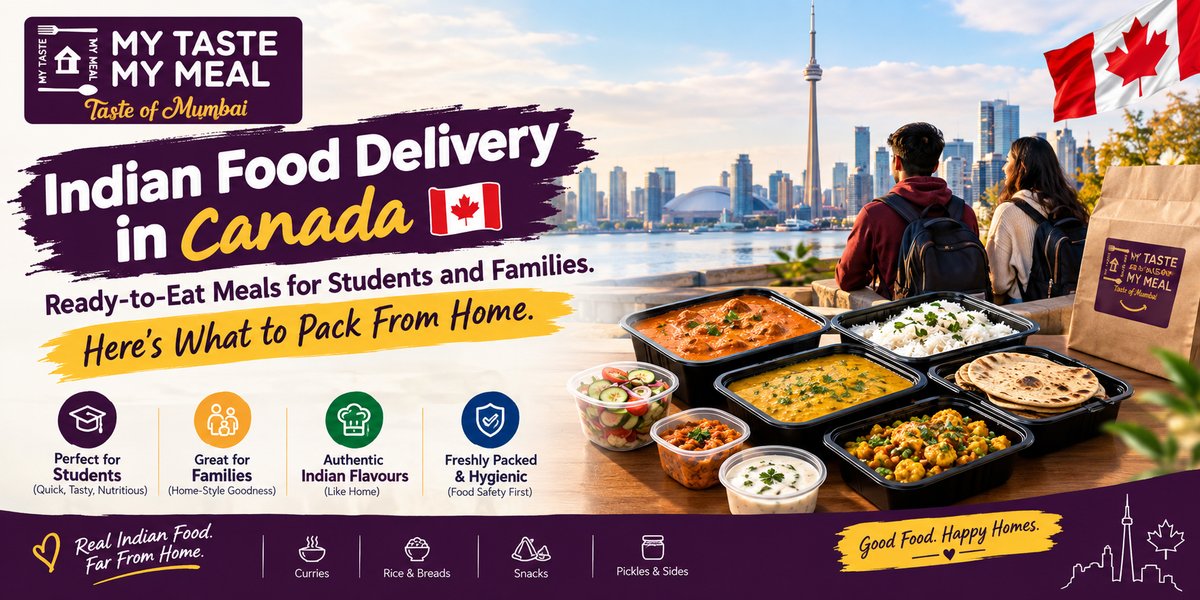
Indian Food Delivery in Canada: Ready to Eat Meals for Students and Families
Canada has one of the largest Indian communities outside India. According to the 2021 Census from Statistics Canada, close to 1.86 million people in the country identify as being of Indian origin, making up about 5.1 per cent of the total population. That number covers long-settled families, recent permanent residents, and a steady flow of international students, many of whom land in a new city with a suitcase, a laptop, and not much idea of how to cook dal without their mother's guidance on the phone.
That's the exact situation driving so many searches for Indian food delivery Canada residents rely on when a home-cooked meal feels out of reach. This guide covers what ready-to-eat Indian food actually is, how students and families can order it from outside the country, and a few dishes worth knowing about before your next grocery run.
Why Students and Families Turn to Ready-to-Eat Indian Food
A dorm kitchen with one shared stove, a tiny apartment with barely any counter space, or a work schedule that leaves no time to cook after 9 pm: these are common realities for a lot of Indian students and young professionals in Canada. Add the cost of imported spices and the trial and error of getting a recipe right without a parent nearby to call, and cooking a proper Indian meal from scratch stops being a weekly habit for many.
Families face a version of the same problem. Both parents working, kids with after-school activities, and groceries that need to stretch across a Canadian winter all add up. Weekend trips to an Indian grocery store an hour away aren't always realistic either, especially outside the bigger cities where those stores are harder to find. That's why Indian meals for students abroad in Canada and ready-to-eat meals for students and Canada shoppers are searching for keep growing in popularity. The appeal isn't just convenience. It's the ability to eat something that actually tastes like home on a Tuesday night, without three hours of prep.
What "Ready to Eat" Actually Means
Packaged Indian food isn't a single category. A few different formats exist, and they don't perform the same way.
-
Frozen meals need constant freezer space, which is limited in most shared student housing, and often lose texture once thawed.
-
Canned or retort-packed meals last a long time but tend to taste flat and carry more sodium than a home-cooked dish.
-
Freeze-dried meals are cooked fully first, then dried under low temperature and vacuum pressure until nearly all the moisture is removed. Add hot water, and the dish rehydrates close to its original texture and taste.
Freeze-Dried Indian Meals Canada Students Are Choosing
Freeze-dried meals fit student life particularly well. No freezer required, no fridge space taken up, just a shelf in a dorm room or a shared kitchen cupboard. My Taste My Meal, a Mumbai-based food company operating since 2011, uses this method across its catalogue of more than 50 dishes. The brand states its meals are made without added preservatives or MSG, carry a shelf life of up to 12 months, and are FSSAI certified, meeting India's Food Safety and Standards Authority requirements before they ship.
For students specifically, that shelf life matters. A pack that lasts through an entire semester without spoiling is a different proposition than something that needs to be eaten within a week.
How to Buy Indian Food Online in Canada
Ordering packaged meals from India works a little differently than ordering from a local grocery delivery app.
Here's the general process:
-
Choose your meals from categories like main course dishes, dal, rice, breakfast items, soups, desserts, and Jain-friendly options.
-
Confirm Canada is covered. My Taste My Meal currently ships internationally to Canada, along with the USA, UK, UAE, Singapore, and Hong Kong.
-
Check the timeline. International orders are typically processed within 24 to 48 hours and delivered within 5 to 7 business days.
-
Plan for customs. Orders shipped into Canada may be subject to duties or taxes depending on the order value. These charges are the customer's responsibility and aren't included in the price shown at checkout.
-
Track the shipment through the link sent by email or SMS once your order is dispatched.
Anyone planning to buy Indian food online Canada-wide for the first time, especially before a busy exam period or a family gathering, should order a week or two ahead rather than the night before, just to account for that shipping window.
What to Check Before You Order
A little label reading before you check out can save you from a disappointing order later, especially with food shipped internationally.
Look for:
-
A specific ingredient list, not vague terms like "spices" or "flavouring" without detail.
-
A printed shelf life and manufacturing date on the actual pack, not just a claim on the website.
-
A recognised food safety certification, such as FSSAI, confirming the product passed government inspection.
-
Jain or vegetarian labelling, clearly marked if that matters to you or your family.
-
Simple prep instructions. True, ready-to-eat food shouldn't need more than hot water and a few minutes on the stove or in a microwave.
If a seller can't answer those questions clearly, treat that as a reason to look elsewhere.
Meals Worth Knowing About on My Taste My Meal
Most Indian grocery stores in Canada, especially outside major cities like Toronto and Vancouver, carry the basics: a few packaged dals, frozen parathas, and maybe a jarred curry. My Taste My Meal online store carries a wider range, with more than 50 ready-to-eat dishes across breakfast, mains, rice, dal, desserts, soups, and baby food, several of which you won't find on a typical grocery shelf.
A few worth pointing out:
-
Dry Mysore Paper Dosa, Dry Cheese Paper Dosa, and Dry Butter Paper Dosa, a freeze-dried take on a dish that's usually impossible to pack or store long-term.
-
Sabudana Khichdi and Pot Rice, regional dishes that rarely make it into packaged form outside India.
-
Burnt Garlic Fried Rice, a restaurant-style dish reworked for the pouch-and-hot-water format.
-
A dedicated Jain range, including Dal Fry, Dal Makhani, and Dal Khichadi made without onion or garlic, for families and students who keep Jain dietary practices while living abroad.
These are the kind of meals people usually land on after typing 'Indian ready-to-eat food Canada' into a search bar and getting tired of the same rotation of frozen parathas and instant noodles. Whether they fit your routine depends on your kitchen setup, but they're worth checking if your current options have gone stale.
Storing and Preparing These Meals
One reason freeze-dried Indian meals work well for students is storage simplicity. No freezer drawer to manage, just a shelf or a drawer at room temperature until you're ready to cook.
Preparation takes about five minutes, using any of these three methods.
Stovetop method
-
Empty the packet into a pan.
-
Add the amount of water printed on the pack and heat for 3 to 5 minutes on medium flame.
-
Serve hot.
Microwave method
-
Empty the packet into a microwave-safe bowl.
-
Add water as directed and microwave for about 2 minutes.
-
Stir and serve.
Hot water method
-
Empty the packet into a bowl.
-
Pour in roughly 190 ml of hot water.
-
Let it sit for a few minutes, then stir and eat.
That last method matters most for students without stove access, since all it needs is an electric kettle, which makes it one of the more realistic options for dorm rooms and small shared apartments.
Final Thoughts
Missing home-cooked food is one of the quieter struggles of moving abroad, whether you're a first-year student adjusting to a Canadian winter or a parent trying to keep a household fed on a tight schedule. Ready to eat Indian meals won't replace a proper home kitchen, but they close the gap on the nights when cooking from scratch just isn't happening.
If you're deciding whether to try one, start with the basics: check the ingredient list, confirm the shelf life, look for certification, and see if Jain or vegetarian options are available if you need them. From there, ordering takes a few minutes, and the actual meal takes about five.
Keeping a small stock on hand also helps during the weeks that get unpredictable: exam season, a heavy work sprint, or the first few weeks after landing in a new city before your kitchen is fully set up. A shelf of familiar dishes turns a rough evening into a manageable one, which is really the point of ready-to-eat food in the first place. For families, it also means fewer nights deciding between a rushed takeout order and a meal nobody in the house actually wants to eat.
Frequently Asked Questions
Does My Taste My Meal deliver Indian food to Canada?
Yes. My Taste My Meal ships internationally to Canada. Orders are typically processed within 24 to 48 hours and delivered within 5 to 7 business days, though customs duties may apply and are the customer's responsibility.
How long do freeze-dried Indian meals last without refrigeration?
Most freeze-dried packs carry a shelf life of up to 12 months when stored in a cool, dry place. Always check the printed date on the specific pack, since shelf life can vary by dish.
Are these meals a good fit for students living in dorms?
Yes. Freeze-dried meals need no freezer or fridge space and can be prepared with just hot water, which makes them practical for dorm rooms or shared kitchens with limited stove access.
Can I order Jain food for delivery to Canada?
Yes. My Taste My Meal offers a dedicated Jain range, including dal, khichdi, and rice dishes made without onion or garlic, available for international shipping to Canada.
How do I prepare a freeze-dried Indian meal?
Empty the packet into a pan or bowl, add hot water as marked on the packaging, and heat briefly on a stove or in a microwave, or let it sit in hot water. Most meals are ready to eat in about five minutes.