Indian Ready to Eat Meals in the USA: Why NRIs Are Stocking Up
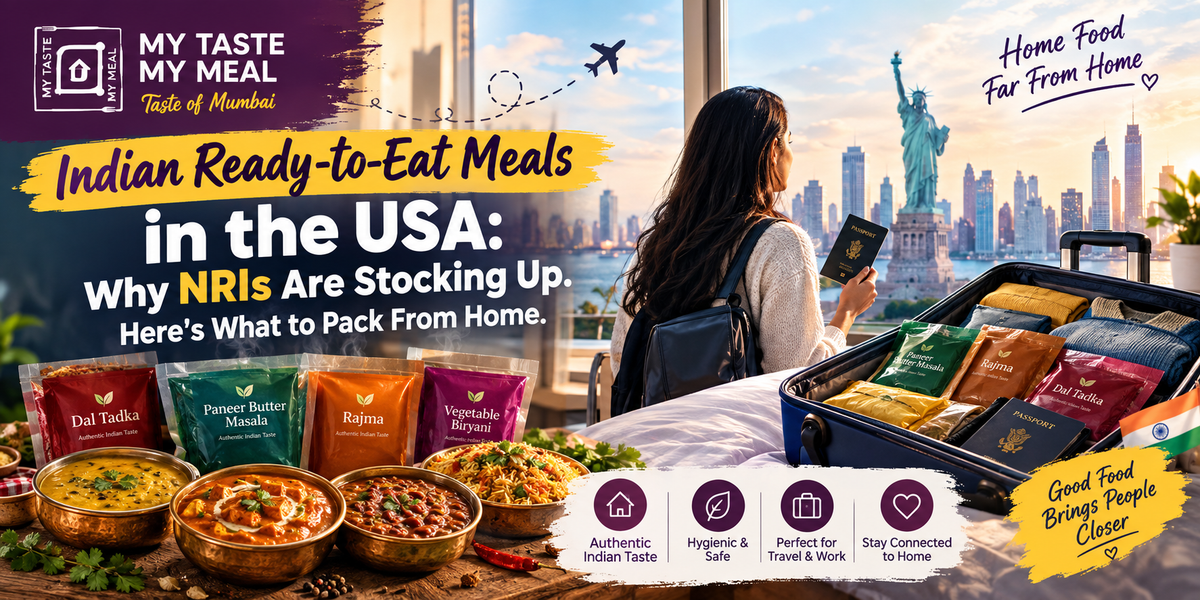
If you've ever landed back in the US after a trip home and opened your suitcase to find three extra kilos of packaged food tucked between your clothes, you already know the story. In the USA, shopping for ready-to-eat meals for Indian NRIs has become a habit for a lot of NRIs, and it's not hard to see why. A long flight, a jet-lagged first week back at work, and a fridge with nothing but condiments in it. A packet of dal or khichdi that's ready in five minutes solves a real problem.
This isn't just a snack-aisle trend. It's a pattern you'll notice among students, working professionals, and families who split their time between India and the US. Let's break it down: why the craving happens, what these meals actually are, and how people are getting them across the ocean without breaking any customs or rules.
Why NRIs Keep Craving Home-Style Food in the US
Indian restaurants in most American cities are good, but they're not home. Restaurant food tends to lean heavily on cream, butter, and oil to please a broader crowd. Home food is different. It's the dal your mother makes on a random Tuesday or the poha your roommate used to whip up in ten minutes' flat.
Cooking that food yourself after a nine-hour workday isn't always realistic either. Grinding your own masalas, soaking dal overnight, or making fresh chutney takes time most people don't have during the week. Here's why that gap matters: it's exactly where ready-to-eat Indian food USA products step in. They're not a replacement for home cooking. They're a backup plan for the days when cooking from scratch just isn't happening.
Grocery stores near Indian communities do stock some ready meals, but the choices can feel repetitive, and prices climb fast for imported goods. A lot of NRIs have found it easier to buy meals while visiting India and carry them back, rather than settle for whatever the local Indian store happens to have on the shelf that week.
What "Ready to Eat" Actually Means Here
Not all packaged Indian food works the same way. There are a few different preservation methods, and knowing the difference helps you pick the right one for your kitchen.
-
Freeze-dried meals: Cooked food is frozen, then the moisture is pulled out under low pressure. What's left is a light, dry version of the dish that rehydrates with hot water. Freeze-dried Indian meals are liked by USA shoppers because they're lightweight and keep their texture well.
-
Dehydrated meals: Similar idea, but moisture is removed using heat instead of freezing. Usually a bit denser and chewier after rehydration.
-
Vacuum-packed meals: Cooked food sealed in an airtight pouch, often shelf-stable at room temperature for weeks or months without freeze-drying.
All three skip artificial preservatives when done right, relying instead on moisture removal or airtight sealing to keep the food safe. That's a big part of why this category has grown. People want food that tastes like home without a long ingredient list of chemicals they can't pronounce.
Why These Meals Travel So Well
Freeze-dried and vacuum-packed meals are built for exactly this kind of cross-border trip. A few reasons they hold up better than fresh food:
-
No refrigeration needed. They sit fine in a suitcase for the length of a flight or on a pantry shelf for months after.
-
Lightweight. Since most of the water is gone, a serving that would weigh 300 grams cooked might weigh 80 to 100 grams dry.
-
Long shelf life. Many freeze-dried packets are rated for up to 12 months when stored properly, which matters if you're stocking up for the whole semester or a full work assignment abroad.
-
Sealed packaging. A sealed, labelled pouch travels through airport security with far less hassle than a container of fresh curry.
How NRIs Are Stocking Up Before Flying Back
Buying During a Trip Home
The most common pattern is simple. Someone visits family in India, picks up a stack of packets from a local store or orders online while they're still on Indian soil, and packs them into a spare bag before the return flight. Parents also send packets along with visiting relatives or with their kids heading back to campus after a break.
What You Can Legally Carry Through US Customs
This is where a lot of confusion happens, so here's the short version. U.S. Customs and Border Protection requires all agricultural items to be declared at ports of entry, where officers inspect them to confirm they're free of plant pests and foreign animal diseases. Here's what tends to hold up at the border:
-
Commercially packaged, sealed, and labelled dry goods generally clear without issue.
-
Meat, fresh dairy, and fresh produce are the items most likely to get flagged or confiscated.
-
Every food item should be declared on the customs form, even ones you're confident are allowed. Travellers who skip this step risk having items confiscated, and civil penalties can apply for failing to declare.
Vegetarian, dry, sealed meals like dal, khichdi, or rice packets fall into the lower-risk category, but the golden rule stands: keep it sealed, keep it labelled, and declare it honestly at arrival.
TSA Rules for Packing These Meals
On the security side, the rule is more straightforward. Solid food items, as opposed to liquids or gels, can be carried in either checked or carry-on baggage. A sealed pouch of freeze-dried sabzi or khichdi counts as solid, so it clears security the same way a bag of trail mix would. Gravies or chutneys packed in liquid form are a different story and need to follow the standard carry-on liquid limits, so checked baggage is the safer spot for those.
What to Look for in Indian Food for NRI Life in the US
Not every packet on the shelf is worth the suitcase space. A quick checklist before you buy:
-
FSSAI certification on the packaging, confirming it meets Indian food safety standards.
-
Clear ingredient list, ideally without MSG or artificial preservatives.
-
Shelf life printed clearly, so you know how long it'll last in your pantry.
-
Jain or no-onion-no-garlic options, if that matters for your household.
-
Simple prep instructions, since you'll likely be making this after a long day.
My Taste My Meal: A Mumbai Kitchen NRIs Turn To
My Taste My Meal is a Mumbai-based maker of freeze-dried and vacuum-packed Indian meals, running since 2011 under the brand name Taste of Mumbai. Their lineup covers more than 50 dishes across breakfast, main course meals, dal, rice, desserts, soups, chutneys, Indian breads, and baby food, with a full Jain menu alongside the regular one.
Customers who've carried these packets on international trips describe them as an easy fix for long journeys. One traveller packed around 130 packets across a mix of dishes for a family trip, praising the taste and hygienic packing. Another carried Jain packets to Qatar and mentioned dishes like pav bhaji, veg kolhapuri, and misal held up well and tasted good after rehydrating. That's the exact pattern this article is describing: buy in India, pack it in the suitcase, and cook it wherever you land.
The meals are FSSAI certified, made without preservatives or MSG, and rated for a shelf life of up to 12 months. Preparation only needs hot water, a stovetop, or a microwave and takes about five minutes either way.
Simple Ways to Prepare These Meals After Landing
-
Gas stove method: Empty the packet into a pan, add water as marked on the packaging, and heat for three to five minutes on a medium flame.
-
Microwave method: Empty the packet into a microwave-safe bowl, add water as directed, and microwave for about two minutes.
-
Hot water method: Empty the packet into a bowl, pour in hot water as per the packet's instructions, let it sit, stir, and serve.
No cooking skills are required, which is exactly the point for someone unpacking suitcases at midnight after a 20-hour flight.
A Quick Note on Buying Online for US Delivery
A fair number of people search for ways to buy Indian ready-to-eat meals online in the USA, hoping to place an order and have Indian meals delivered to USA addresses directly. Worth knowing before you search further: My Taste My Meal currently ships within India only, based on pin code availability at checkout. NRIs who want their products typically buy while visiting India, ask family to carry packets over, or stock up before a return flight, the same way the customers quoted above did for their trips to Qatar and Singapore. If you're planning ahead for a trip back to the US, it's worth checking current delivery coverage on the site before you place an order, since shipping regions do get updated over time.
FAQs
Can I legally bring Indian ready-to-eat meals into the US from India?
Yes, in most cases. Commercially packaged, dry, sealed, and labelled meals like dal or khichdi packets are generally allowed. Always declare them at customs on arrival, and avoid meat or fresh dairy items, which face stricter rules.
Do freeze-dried Indian meals need refrigeration?
No. Freeze-dried and vacuum-packed meals are shelf-stable at room temperature. Store them in a cool, dry place away from direct sunlight, and they'll hold their quality for months without a fridge.
How long do freeze-dried Indian meals actually stay fresh?
Most quality freeze-dried packets carry a shelf life of up to 12 months when stored properly in their sealed packaging. Check the printed date on each pack, since shelf life varies slightly by dish.
Are Jain options available in ready-to-eat Indian food?
Yes. Several brands, including My Taste My Meal, offer full Jain menus made without onion and garlic, covering meals, dal, rice, and breakfast items alongside their regular vegetarian range.
How do you prepare a freeze-dried Indian meal?
Most packets need just hot water, a stovetop, or a microwave. Empty the contents into a pan or bowl, add water as marked on the packet, heat for a few minutes, and serve.