Best Ready to Eat Meals for Train Journey: A Practical Food Guide for Indian Travellers
Long train rides in India come with a familiar problem. You get hungry somewhere between two stations, the pantry car menu is limited, and the food at the platform stall looks risky at best. If you have ever eaten a soggy vada pav at 11 pm on a moving train, you already know why planning your meals ahead makes such a difference.
This is where ready-to-eat meals for train journey trips earn their place in every traveller's bag. They are light, they do not need a fridge, and most of them are ready in a few minutes with hot water. Let's break it down and look at what makes good train travel food, which meals actually work well on Indian Railways, and how to prepare them without a kitchen in sight.
Why Train Travel Food Needs a Different Approach
A flight is over in a few hours. A train journey across India can stretch for a day or two, sometimes longer on routes like Mumbai to Guwahati or Delhi to Thiruvananthapuram. That changes how you should think about food.
Fresh food purchased from unverified vendors carries real risk on long routes. Raw or perishable items such as salads, sandwiches, and dairy-based desserts spoil faster and carry a higher chance of bacterial contamination, particularly in warm weather. Indian Railways has worked to improve this through its e-catering system, and approved vendors are expected to follow FSSAI food safety rules covering preparation, storage, and handling. Even so, pantry car food is not always available on every route, and prices and portions can vary a lot from train to train.
Here is why packing your own food changes the equation. You control what goes into the pack, you know the shelf life before you leave home, and you are not depending on a vendor showing up at the right station at the right time.
What to Look For in Travel Food Packs
Not every packaged snack survives a 20-hour journey well. When you are picking travel food packs for a train trip, a few things matter more than taste alone.
-
No refrigeration needed. Trains do not have fridges in general coaches, so anything that needs cold storage is out.
-
Long shelf life. A pack that lasts several months gives you room to buy in advance instead of scrambling the night before.
-
Light weight. Freeze-dried and dehydrated packs weigh far less than tinned or retort-pouch food, which matters when you are already carrying luggage.
-
Just add hot water. Most trains have a pantry car or attendants who can arrange hot water, so this one feature solves the cooking problem entirely.
-
FSSAI certification. This is a basic marker of a food business operating under Indian food safety standards.
If a food pack checks these boxes, it usually works well as instant Indian meals for travel, whether you are on a train, a bus, or a flight with a long layover.
Best Ready-to-Eat Indian Meals for Train Journey
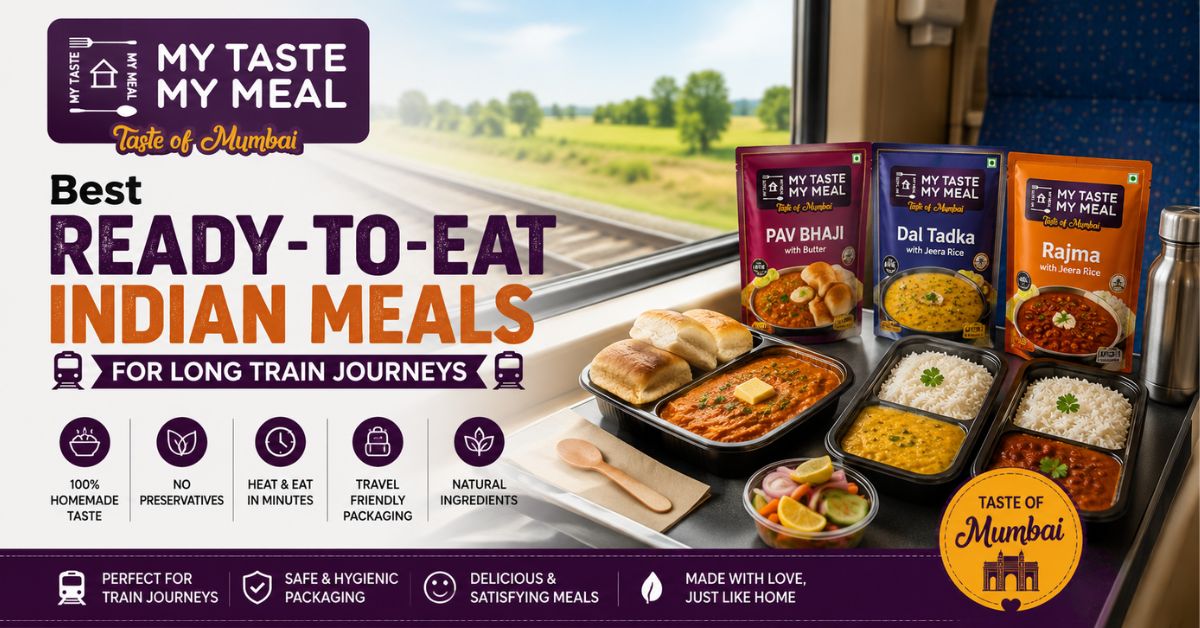
My Taste My Meal is a Mumbai-based brand that makes freeze-dried, ready-to-eat Indian meals meant for exactly this kind of travel. Their packs are made without added preservatives and are prepared using freeze-drying and vacuum-packing methods that keep the food edible for up to a year. Here are some options worth packing for your next trip, organised by meal type.
Main Course Packs
For a full meal on the train, these hold up well and taste close to home-cooked food once rehydrated:
-
Pav Bhaji – a familiar Mumbai street food classic, easy to eat with the pav bhaji straight from your bag.
-
Punjabi Chole – a North Indian chickpea curry that pairs well with rice or bread.
-
Veg Handi – a mixed vegetable curry with a slightly rich gravy.
-
Veg Kolhapuri – a spicier option for travellers who like some heat with their meal.
-
Paneer Bhurji and Paneer Tikka – good protein options for a vegetarian traveller.
-
Aloo Bhaji and Veg Makhanwala – simpler, milder choices that work for most palates.
Rice Packs
Rice-based packs are filling and easy to combine with a dal or curry pack from the same brand.
-
Veg Biryani for a one-pack meal that needs nothing else.
-
Jeera rice, tawa pulav, and pot rice as lighter sides.
-
Schezwan rice and burnt garlic fried rice if you want something with more punch.
-
Rajma rice as a combined main course in one pack.
Dal Packs
Dal is the easiest thing to get wrong on the road, since fresh dal spoils fast. A packaged version solves that.
-
Dal Fry, Dal Makhani, and Dal Khichadi are the most common picks.
-
Gujarati Dal and Sambhar add regional variety.
-
Jain versions of Dal Fry, Dal Makhani, and Dal Khichadi are available for travellers who follow Jain dietary rules.
Breakfast Packs
If your train departs early or you wake up hungry before the pantry car opens, breakfast packs solve the first meal problem.
-
Kanda Poha and Mumbai Upma for a quick, light start.
-
Idli Sambar and Mumbai Misal for something more filling.
-
Sev Khamni as a Gujarati-style option.
-
Dry paper dosa in cheese, Mysore, and butter variants for a South Indian breakfast that needs no cooking beyond hot water.
This range means a traveller can plan an entire day of meals, breakfast, lunch, and dinner, using packs from a single source instead of hunting for food at every stop.
How to Prepare Ready-to-Eat Food for Travel on a Train
You will not have a gas stove or microwave on most trains, so the hot water method is the one that matters here.
-
Ask the train attendant or pantry car staff for hot water, or carry a flask filled before you board.
-
Open the pack and empty the contents into a bowl or cup.
-
Pour in hot water as marked on the packet; roughly 190 ml is standard for most packs.
-
Let it sit for a few minutes, stir, and your meal is ready to eat.
No gas, no electricity, and no waiting in line at a pantry-car counter. This is the biggest reason freeze-dried packs work so well as the best food for train travel, especially on routes where the pantry car service is unreliable or absent.
Tips for Carrying Travel Food on Long Train Journeys
-
Pack a mix of meal types so you are not eating the same curry twice in one trip.
-
Carry a spoon, a small bowl, and tissues, since not every coach attendant will have spare cutlery.
-
Check the shelf life printed on each pack and pick ones that comfortably outlast your trip, with margin for delays.
-
If you are travelling with children or elderly family members, pick milder packs like Jeera Rice, Aloo Bhaji, or Kanda Poha over spicier options.
-
Keep a couple of extra packs for unexpected delays. Indian trains do run late, and an extra meal in your bag beats going hungry.
Final Thoughts
Good train travel food is really about removing uncertainty. You do not know exactly when the next station will have decent food, or whether the pantry car will have what you want that day. Ready-to-eat meals for train journey trips take that guesswork out of the picture. A brand like My Taste My Meal gives travellers a wide range of vegetarian and Jain options, all of them shelf stable and ready with just hot water, which makes packing food for a long train ride a lot less stressful than it used to be.
Frequently Asked Questions
1. Can I carry ready-to-eat food packs on Indian trains?
Yes. Sealed, packaged food is allowed in all classes on Indian trains. Freeze-dried and dehydrated packs are a practical choice since they do not need refrigeration and pass through security checks without any issue.
2. How long are ready-to-eat Indian meals fresh?
Most freeze-dried packs from brands like My Taste My Meal carry a shelf life of up to 12 months when unopened and stored in a cool, dry place, which makes them suitable for both short trips and longer journeys.
3. Do I need hot water to prepare these meals, or can I eat them cold?
Hot water gives the best texture and taste since it rehydrates the freeze-dried ingredients properly. Some packs can be eaten after soaking in warm water if hot water is not available, though the result is milder in taste.
4. Are Jain food options available for train travel?
Yes. Several ready-to-eat brands, including My Taste My Meal, offer Jain versions of dal and rice dishes made without onion, garlic, or root vegetables, so travellers following Jain dietary rules have proper options too.
5. Is packaged travel food safer than food bought at railway stations?
Sealed, factory-packed food generally carries lower risk than food from unverified platform vendors since it goes through standard food safety checks before packaging. Always check for FSSAI certification and an intact seal before you buy any travel food pack.