
Vacuum Sealing vs Freeze-Drying: What's the Difference?
Open two packs of stored food side by side, one vacuum sealed and one freeze-dried, and you'll notice the difference right away. The vacuum-sealed pack still feels soft and needs a fridge or freezer. The freeze-dried one feels almost weightless and sits fine on a shelf. Both methods protect food, but they work in completely different ways and solve different problems.
If you've seen both terms on packaging and wondered which one actually keeps food fresh longer, here's a plain breakdown of vacuum sealing vs freeze-drying, how each process works, and where each one fits best.
What Is Vacuum Sealing?
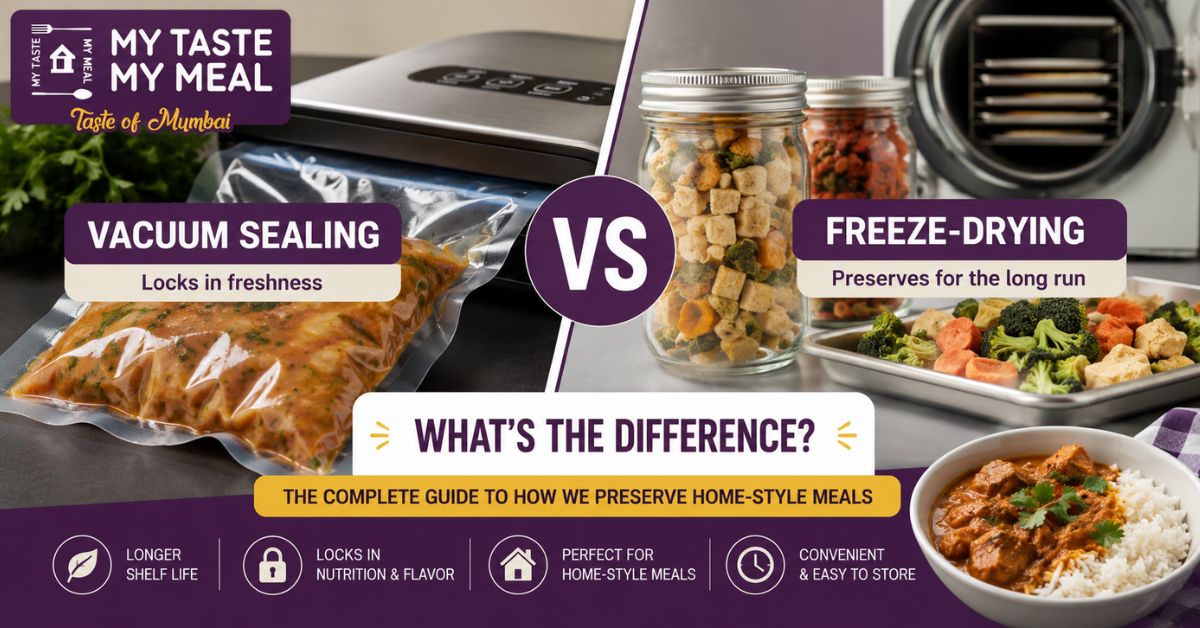
Vacuum sealing removes air from a package before sealing it shut. By removing air from the packaging, vacuum sealing creates an anaerobic environment that limits bacterial growth and oxidation, which keeps food fresh for a longer stretch of time. This is the process behind most vacuum-packed food you'd find in a grocery store, from sealed meats to coffee beans.
The food itself doesn't lose its water content. It just loses exposure to air, which is what usually speeds up spoilage, freezer burn, and mould growth. That's an important distinction, because vacuum-sealed food still needs the same cold storage a fresh or frozen product would need. Only shelf-stable items such as dehydrated or freeze-dried foods can safely sit in vacuum-sealed bags without refrigeration, while everything else still needs cold storage to stay safe.
What Is Freeze-Drying?
Freeze-drying works on a different principle entirely. The food is frozen first, then placed in a vacuum chamber where the pressure drops low enough for the ice inside to turn straight into vapour, skipping the liquid stage. The food is frozen at very low temperatures, then placed under vacuum pressure so the ice turns directly from solid to vapour, removing the water content without harming the food's structure, flavour, or nutritional value.
Because almost all the moisture leaves the food, freeze-dried products don't need refrigeration at all. They're light, shelf-stable, and hold their shape remarkably well once dried.
Vacuum Sealing vs Freeze-Drying: The Core Differences
Here's how the two methods stack up on the points that matter most:
-
What each process removes. Vacuum sealing removes air. Freeze-drying removes water.
-
Storage needs. Vacuum-sealed food often still needs a fridge or freezer, unless it's already dry or shelf-stable to begin with. Freeze-dried food sits at room temperature.
-
Shelf life. Freeze-dried foods can last up to 25 years when stored properly, while vacuum sealing extends shelf life by three to five times compared to regular storage but doesn't come close to that range.
-
Weight and portability. Freeze-dried food is much lighter since the water content is gone. Vacuum-sealed food keeps its original weight.
-
Texture after storage. Freeze drying preserves food's structure completely, while vacuum sealing can still leave items like leafy greens a little soggy once thawed, even after blanching.
When Vacuum Sealing Makes Sense
Vacuum sealing works well for short to medium-term storage, especially in the freezer. Vacuum-sealed meats can last up to three years in the freezer, compared to four to twelve months with regular packaging, and vegetables like green beans can hold for two to three years instead of the usual eight months. It's a strong option if you're prepping meat in bulk, freezing leftovers, or storing dry pantry goods like rice, pasta, or coffee for longer than usual.
It's also cheap and simple to set up at home. A basic vacuum sealer and some bags cover most household needs, and the equipment doesn't take up much counter space.
There's a food safety angle worth knowing too. Vacuum sealing lowers oxygen levels, which slows the growth of most spoilage bacteria. But a small group of bacteria, including the one behind botulism, actually thrive in low-oxygen conditions. This is exactly why fresh or cooked vacuum-sealed food still belongs in a fridge or freezer, and why room-temperature storage should stay reserved for items that are already dry, like grains, pasta, or dehydrated vegetables.
When Freeze-Drying Makes Sense
Freeze-drying is the better choice when shelf stability at room temperature matters more than anything else. Travel food, trekking supplies, emergency stock, and ready-to-eat meals all lean on this method because the food doesn't need a cold chain to stay safe. When rehydrated, freeze-dried spinach or kale tastes close to fresh, since the process keeps most of the food's original nutritional value intact.
The tradeoff is cost and equipment. Freeze-drying needs specialised machinery that most households don't have, which is why most freeze-dried products come from a dedicated production facility rather than a home kitchen setup.
Emergency preparedness is another common reason people reach for freeze-dried food. A pantry stocked with freeze-dried meals doesn't need power, ice, or a cold chain to stay usable, which matters during travel delays, power outages, or long stretches away from a proper kitchen. That same quality is what makes freeze-dried options popular for high-altitude treks and long train journeys, where carrying anything heavy or perishable just isn't practical.
How the Two Methods Work Together
These aren't always competing options. In practice, they often pair up. Vacuum packaging food is a standard final step after freeze-drying, since sealing out air protects the dried product from picking up moisture during storage. Vacuum sealing is described as an essential step in preserving freshness and extending shelf life for both freeze-dried and dehydrated foods, not a replacement for either process.
At My Taste My Meal, this combination shapes how every meal gets made. Dishes are cooked fresh, flash-frozen, then freeze-dried to pull out nearly all the moisture, and finally sealed using vacuum packaging to lock that shelf stability in place. That layered process is why meals like Dal Fry, Veg Handi, and Rajma Rice hold their flavour and texture for months without needing a fridge, and why they only need hot water to come back to life.
Which One Should You Use?
Think about how long you need the food to last and whether refrigeration is available.
-
Choose vacuum sealing if you're storing food in a fridge or freezer for weeks or a few years, and you want to cut down on freezer burn and spoilage.
-
Choose freeze-dried food if you need something shelf-stable that travels well, lasts for months without cold storage, and rehydrates quickly when you're ready to eat.
-
Choose both together if you want maximum protection, which is exactly what most commercial freeze-dried meals rely on.
Final Thoughts
Vacuum sealing and freeze-drying aren't rivals so much as two tools built for different jobs. Vacuum sealing slows spoilage by cutting off air, but it still leans on cold storage to do the heavy lifting. Freeze-drying pulls water out entirely, which is what makes food shelf-stable without a fridge in the first place. My Taste My Meal uses both freeze-drying to preserve flavour and nutrition and then vacuum packaging to seal it all in, so every pouch stays ready whenever you are.
FAQs
Is vacuum-sealed food safe without refrigeration?
Only if the food is already dry or shelf-stable, like dehydrated or freeze-dried products. Fresh, cooked, or perishable food that's vacuum sealed still needs a fridge or freezer to stay safe.
Does freeze-drying need vacuum packaging too?
Yes, most freeze-dried products get vacuum packaging as a final step. It keeps moisture and air out during storage, which protects the dried food's shelf life and texture.
Which lasts longer, vacuum-sealed or freeze-dried food?
Freeze-dried food lasts much longer. Properly stored freeze-dried meals can hold for months to years at room temperature, while vacuum sealing mainly stretches shelf life within a fridge or freezer.
Can I vacuum seal freeze-dried food at home?
Yes, and it's a good idea. Vacuum packaging freeze-dried food protects it from picking up moisture in the air, which helps it stay crisp and shelf-stable for longer.
Why does My Taste Does my meal use both methods?
Freeze-drying locks in the flavour and nutrients of a home-cooked meal, while vacuum packaging seals that quality in for travel and long storage. Together, they keep meals shelf-stable without preservatives.