

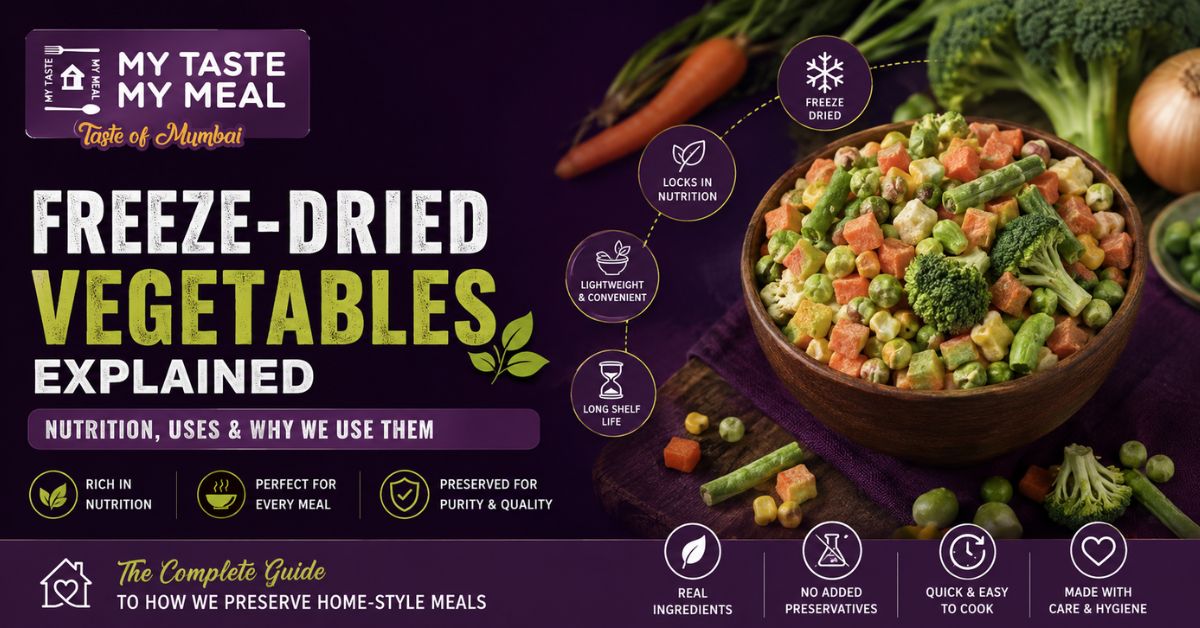
Freeze-Dried Vegetables: Nutrition, Uses & Benefits
Open a pack of freeze-dried peas and drop them in warm water. Within minutes, they plump back up, green and firm, almost like they were picked that morning. That's the whole point of this process, and it's why so many food brands, campers, and home cooks have switched to it over older drying methods.
If you've seen the term on a packet and wondered what sets it apart from regular dried vegetables, here's a clear look at what freeze-dried vegetables actually are, how they compare with dehydrated vegetables, and why this method holds up so well nutritionally.
What Are Freeze-Dried Vegetables?
Freeze-dried vegetables go through a process called lyophilisation. The vegetable is first frozen solid, then placed in a vacuum chamber where the pressure drops low enough that the ice turns straight into vapour, skipping the liquid stage entirely. Freeze-drying removes moisture from frozen food using a vacuum process, flash-freezing the food first to lock in nutrients and structure. No heat gets applied at any point.
Because the water leaves the cells without ever melting, the vegetable's shape, colour, and cell structure stay largely intact. That's why freeze-dried carrots still look like carrots and freeze-dried spinach still looks like spinach, just lighter and drier.
How Freeze-Drying Works, Step by Step
Here's the short version of the process.
-
Freezing. The vegetable is flash-frozen to a very low temperature, often around -40°C.
-
Vacuum chamber. The frozen vegetable goes into a chamber where air pressure drops sharply.
-
Sublimation. Ice inside the vegetable turns directly to vapour without becoming liquid first.
-
Drying completion. Any remaining moisture is drawn out at a slightly higher temperature, still well below what regular dehydration uses.
-
Packing. The finished product gets sealed, often with minimal air, to protect it from moisture and light.
This method keeps the food away from liquid water and oxygen, and it runs at low operating temperatures, which makes it the strongest choice for preserving the biocompound content of fruits and vegetables during drying.
Freeze-Dried Vegetables vs Dehydrated Vegetables
Both freeze-dried vegetables and dehydrated vegetables remove water to extend shelf life, but they get there in different ways, and the results aren't the same.
Nutrition Comparison
Regular dehydration uses warm air, usually somewhere between 40°C and 70°C, to slowly evaporate moisture out of the food. That heat is the main difference. Freeze-drying preserves up to 97% of vitamins through its cold process, while traditional dehydration typically holds onto only 60 to 75%, since it relies on heat that breaks down more of the nutrient content. Vitamin C takes the biggest hit under heat. Heat-sensitive vitamins like vitamin C can degrade noticeably during dehydration, while minerals tend to stay more stable since they aren't as affected by temperature.
Texture and Taste
Rehydration speed is another point where the two methods split. Freeze-dried vegetables tend to rehydrate faster than dehydrated ones, which matters in recipes where time is short, though freeze-dried products usually cost more to produce. Dehydrated vegetables, on the other hand, come out chewier and more condensed, with a flavour that leans slightly toasted compared to fresh.
Why Freeze-Dried Vegetables Hold Their Nutrition
A few things work together here. First, there's no heat involved, so vitamins that break down when warmed, like vitamin C, folate, and thiamine, stay closer to their original levels. Second, the vacuum environment limits exposure to oxygen. A vacuum environment reduces exposure to oxygen, which protects antioxidants and fats from breaking down during the drying process. Third, the process happens fast enough that the food doesn't sit around losing quality the way it might during a long, slow dehydration cycle.
Put together, this is why freeze-dried vegetables are often described as the closest thing to fresh produce you can store on a shelf for months.
What About Freeze-Dried Fruits in India?
The same lyophilisation process applies to fruit, and demand for freeze-dried fruits in India has grown steadily as more people look for snacks and ingredients that skip added sugar, artificial colour, and preservatives while still tasting close to fresh. A wide range of produce works well with this method, including popular Indian fruits like jackfruit, lychee, and papaya, along with herbs, dairy, and even fully cooked meals. The appeal is the same one that applies to vegetables: better flavour retention, a lighter product for travel, and a shelf life that stretches well past what fresh produce allows.
How We Use Freeze-Dried Vegetables at My Taste, My Meal
At My Taste My Meal, freeze-drying is the backbone of how we build our ready-to-eat range. Vegetables go into the process at peak freshness, then get sealed into meals that only need hot water to come back to life. Dishes like Veg Kolhapuri, Pav Bhaji, and Mumbai Misal all rely on this technique to hold onto their colour, texture, and flavour through months of storage and travel.
This matters most for anyone eating on the move, whether that's a student in a hostel, a family packing for a trip abroad, or someone who just doesn't have time to prep vegetables from scratch every night. My Taste My Meal ships these freeze-dried meals with no added preservatives, so what you're getting is close to a home-cooked plate, just packed to last.
Simple Ways to Use Freeze-Dried Vegetables at Home
If you're working with freeze-dried vegetables in your own kitchen, a few habits go a long way:
-
Soak them in warm water for a few minutes before adding to soups, curries, or stir-fries.
-
Add them straight into simmering dishes without pre-soaking, since the liquid in the pot will rehydrate them as it cooks.
-
Store opened packs in an airtight container away from light and moisture to protect flavour and texture.
-
Crush lightly dried leafy greens like spinach or fenugreek straight into batters or dal makhani for a quick nutrient boost.
None of this takes special equipment. Freeze-dried vegetables slot into regular cooking the same way frozen or canned ones would, just with a shorter prep step.
Shelf Life and Everyday Convenience
Beyond nutrition, freeze-dried vegetables solve a problem that fresh produce can't. A bag of fresh spinach wilts in a week. A pack of freeze-dried spinach can sit in a pantry for months without spoiling, and it weighs a fraction of what the fresh version does once the water is gone. That makes it a practical pick for travel bags, hostel shelves, trekking packs, and kitchens where fresh vegetables don't always keep pace with a busy schedule.
There's a waste angle too. Fresh vegetables that go unused often end up in the bin once they turn soft or discolour. Freeze-dried vegetables sidestep that cycle entirely, since you use only what you need, and the rest stays sealed and stable until the next meal. For households juggling long work hours or frequent travel, that small shift cuts down on both grocery runs and spoilt produce sitting at the back of the fridge.
Final Thoughts
Freeze-dried vegetables aren't a gimmick. The process holds onto more of what makes a vegetable worth eating in the first place: its colour, its nutrients, and its flavour, while dehydrated vegetables trade some of that for a simpler, heat-based method. If you're stocking a pantry, packing for travel, or just want meals that don't compromise on taste, freeze-drying is worth understanding. My Taste My Meal builds its entire range around this technology, so every pack reflects what the vegetables tasted like before they ever went into the chamber.
FAQs
Are freeze-dried vegetables as healthy as fresh ones?
Freeze-dried vegetables come close. The cold process keeps most vitamins and minerals intact, so nutritionally they sit much nearer to fresh produce than heat-dried versions do.
What's the difference between freeze-dried and dehydrated vegetables?
Freeze-drying removes moisture from frozen food under vacuum without heat, while dehydration uses warm air. Freeze-dried vegetables keep more nutrients, colour, and shape, but they usually cost more to make.
How long do freeze-dried vegetables last?
Stored in a sealed, airtight pack away from light and moisture, freeze-dried vegetables can last many months to over a year, far longer than fresh produce.
Can I get freeze-dried fruits in India easily?
Yes. Demand has grown, and more Indian brands now offer freeze-dried fruit snacks and ingredients made from produce like mango, jackfruit, and papaya alongside freeze-dried vegetable products.
Do freeze-dried vegetables need cooking before eating?
Most need a short soak in warm water to rehydrate, though many recipes let you add them directly into a simmering dish, where the cooking liquid rehydrates them as it cooks.