
Dehydrated Food in Mumbai: Best Options, Uses & Where to Buy (2026)
Mumbai never really stops. Whether you're catching a 6 AM local train, pulling an all-nighter before a deadline, or boarding a flight to another country, food can either slow you down or keep you going. That's exactly why dehydrated and freeze-dried food has found a real audience in this city it's practical, it travels well, and when done right, it actually tastes good.
This guide covers everything you need to know about dehydrated food in Mumbai: what it is, how it's made, who it's actually useful for, and where you can buy it in 2026.
What Is Dehydrated Food, and How Is It Different from Freeze-Dried?
These two terms get used interchangeably, but they're not the same thing.
Dehydrated food is made by applying heat to remove most of the moisture from cooked or raw ingredients. It's an older method, used for centuries to preserve vegetables, fruits, grains, and meats. The process works well for things like dried lentils, dried fruits, and powdered spices.
Freeze-dried food is a more precise technique. The food is first frozen, then placed in a vacuum chamber where moisture is removed through sublimation (ice turns directly into vapor without becoming liquid). This method retains more of the original texture, color, and flavor because no heat is involved. The shelf life is also longer, often 12 months or more at room temperature.
For Indian meals specifically, freeze-drying tends to produce better results. A dal or a sabzi that's been freeze-dried will rehydrate into something that actually resembles the original dish, not a gummy or flat imitation of it.
Why People in Mumbai Are Buying Dehydrated Indian Meals
The reasons are pretty practical.
Travel, both domestic and international. Mumbai has a large population of frequent flyers, students going abroad for studies, and families visiting relatives overseas. Finding proper Indian food in many countries is either expensive, limited, or just not the same. Carrying a few packets of Dal Makhani or Pav Bhaji solves that problem neatly.
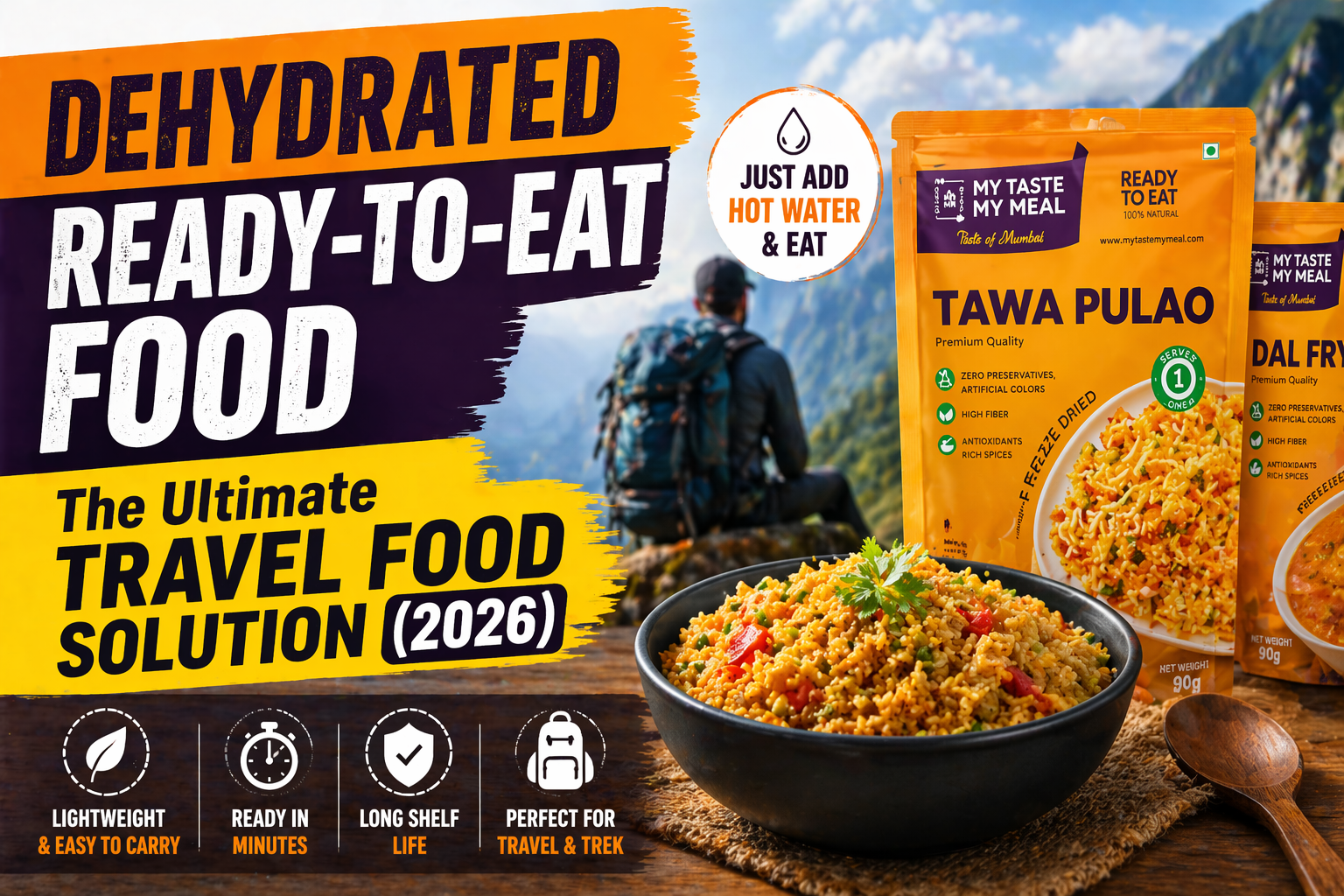
Trekking and outdoor adventures. Maharashtra has no shortage of trekking trails Rajmachi, Harishchandragad, Kalsubai, and dozens more. Freeze-dried meals are lightweight, don't require refrigeration, and can be prepared with just hot water or a small pan. For anyone doing a multi-day trek, that's a big advantage over carrying fresh food.
Busy urban schedules. Cooking a proper meal at 9 PM after a long commute takes effort many people simply don't have on weeknights. Having a freeze-dried meal in the pantry is different from ordering in there's no waiting, no delivery charges, and no guessing what's actually in the food.
Students and working professionals living alone. This is probably the largest audience in Mumbai. One-room kitchenettes, unpredictable schedules, and tight budgets make freeze-dried Indian meals a genuinely useful option rather than a novelty.
Jain dietary requirements. Finding Jain food during travel or in unfamiliar places is consistently difficult. Having Jain-certified options that can be carried anywhere addresses a real gap.
Best Dehydrated Indian Meals to Buy in Mumbai (2026)
Here's what to look for across different meal categories.
Breakfast Options
Indian breakfasts are underrepresented in the ready-to-eat space, which makes freeze-dried options here particularly useful. Kanda Poha and Mumbai Upma are good examples of breakfast dishes that rehydrate well. They're light, familiar, and take under five minutes to prepare.
Idli Sambar is another strong choice, especially for people who find Western-style instant breakfasts unsatisfying.
Main Meals
This is where the range gets interesting. Some dishes that work especially well in freeze-dried form include:
- Dal Makhani — The buttery base holds up well after rehydration
- Palak Paneer — Greens rehydrate cleanly and the paneer texture is preserved reasonably well
- Pav Bhaji — A Mumbai classic that translates to the format naturally
- Punjabi Chole — Chickpeas rehydrate consistently and the masala base stays flavorful
- Veg Kolhapuri — A spicier option for those who want something with heat
- Veg Handi — A mild, well-rounded vegetable preparation
Dal and Rice
Dal Fry, Dal Khichadi, and Gujarati Dal are worth looking for. For rice, Jeera Rice, Veg Biryani, Tawa Pulav, Rajma Rice, and Schezwan Rice all make practical additions to a travel kit or a weeknight pantry.
Desserts and Soups
Gajar Halwa in freeze-dried form sounds unusual, but it's actually one of the more pleasant surprises in this category. Soups like Sambar work well too, especially when you want something warm but light.
Jain Options
For those following Jain dietary practices, look for clearly labeled options that exclude root vegetables like onion, potato, garlic, and carrot. Jain Dal Fry, Jain Dal Makhani, and Jain Dal Khichadi are among the more commonly available options.
How to Prepare Dehydrated Indian Meals
The preparation is genuinely simple. Here's how it typically works:
Gas stove method:
- Empty the packet contents into a pan
- Add water as specified on the packaging
- Heat on medium flame for 3–5 minutes
- Serve hot
Microwave method:
- Empty contents into a microwave-safe bowl
- Add the specified amount of water
- Microwave for approximately 2 minutes
- Stir and serve
Hot water method (no cooking required):
- Empty contents into a bowl
- Add approximately 190ml of hot water
- Wait a few minutes, stir, and eat
The hot water method is particularly useful for trekking, trains, or offices where you only have access to a kettle.
Where to Buy Dehydrated Food in Mumbai
Online (Recommended)
Buying online is the most practical option for most Mumbai residents. You get access to a wider range, you can read ingredient lists carefully, and delivery is usually straightforward.
My Taste My Meal is a Mumbai-based brand specializing in freeze-dried Indian meals. Their range covers breakfast, main meals, dals, rice dishes, desserts, soups, chutneys, and Indian breads including a dedicated Jain section. Prices range from around Rs. 75 for something like Kanda Poha or Upma to Rs. 250 for Indian breads like Dry Mysore Paper Dosa. Most main meal packets fall between Rs. 160 and Rs. 230.
What sets them apart from generic ready-to-eat brands is the focus on authentic Indian regional dishes. You won't find generic "vegetable curry" here you'll find Veg Kolhapuri, Gujarati Dal, Mumbai Misal, and Kolapuri Misal, which reflects a genuine understanding of Indian regional cooking.
They also ship internationally, which makes them a practical option for NRIs or students moving abroad who want to stock up before leaving.
Other online options include Amazon India and BigBasket, which stock various brands of dehydrated and instant Indian food, though the range for freeze-dried specifically is narrower.
Physical Retail in Mumbai
Dehydrated and freeze-dried Indian meals are less commonly stocked in physical stores compared to regular ready-to-eat pouches. Some specialty stores in areas like Bandra, Juhu, and South Mumbai carry niche food products, but availability is inconsistent. For a reliable selection, ordering directly from brands like My Taste My Meal online is typically easier than store hunting.
What to Check Before You Buy
A few things worth looking at before placing an order:
Shelf life. Properly freeze-dried meals should have a shelf life of at least 12 months without refrigeration. If a product doesn't specify this clearly, ask before buying.
Ingredient list. Look at what's actually in the packet. A good freeze-dried meal should contain recognizable ingredients not a long list of artificial preservatives or flavor enhancers.
Preparation method compatibility. If you're buying for trekking, confirm the product can be prepared with just hot water. Some products require actual cooking.
Jain certification. If dietary requirements matter, verify the label rather than assuming. Not all "vegetarian" products are Jain-compliant.
Portion size. Freeze-dried packets can look deceptively small. Check the rehydrated weight or serving size before assuming one packet will be enough for a meal.
Who Should Consider Stocking Dehydrated Indian Meals
- Students going abroad for higher education
- Families planning international travel
- Trekkers and hikers in Maharashtra and beyond
- Working professionals who want a backup meal at home
- People with Jain dietary requirements who travel frequently
- NRIs visiting India who want to carry food back
- Office workers who skip lunch because ordering out is too much effort
Mumbai's food culture has always been about adapting street food reinvented for every budget, dabbawalas solving a logistics problem that still impresses logisticians today, and now freeze-dried Indian meals making it possible to eat Dal Makhani on a mountain trail or in a flat in London. The category has grown up. The options are genuinely good now, not just "acceptable for an emergency."
If you're curious to try, start with a familiar dish, something you already know and like so you have a clear reference point for how well the freeze-dried version compares. Most people are surprised.
Frequently Asked Questions
Q1: Is dehydrated food the same as freeze-dried food?
Not exactly. Dehydrated food uses heat to remove moisture, while freeze-dried food uses a vacuum process after freezing. Freeze-dried meals generally taste better after rehydration and have a longer shelf life. For full Indian meals, freeze-drying usually gives better results.
Q2: How long do freeze-dried Indian meals last without refrigeration?
Most quality freeze-dried meals have a shelf life of 12 months or more at room temperature when stored in a cool, dry place. Always check the packaging for the exact expiry date and storage instructions before buying or consuming.
Q3: Can I carry dehydrated Indian food on international flights?
Yes, sealed packaged food in dry or freeze-dried form is generally permitted in both carry-on and checked baggage. That said, regulations vary by destination country. Always check the food import rules of the country you're flying to before packing dehydrated meals in your luggage.
Q4: Are there Jain options available in dehydrated Indian food?
Yes. Brands like My Taste My Meal offer clearly labeled Jain options including Jain Dal Fry, Jain Dal Makhani, and Jain Dal Khichadi. These exclude root vegetables like onion, garlic, potato, and carrot. Always verify the label to confirm Jain compliance.
Q5: How do I prepare a freeze-dried Indian meal while trekking?
The easiest method is the hot water method: empty the packet into a bowl or pot, add approximately 190ml of hot water (boiled on a camping stove or from a thermos), wait a few minutes, stir, and eat. No cooking is required, which makes it ideal for outdoor conditions where fuel and time are limited.