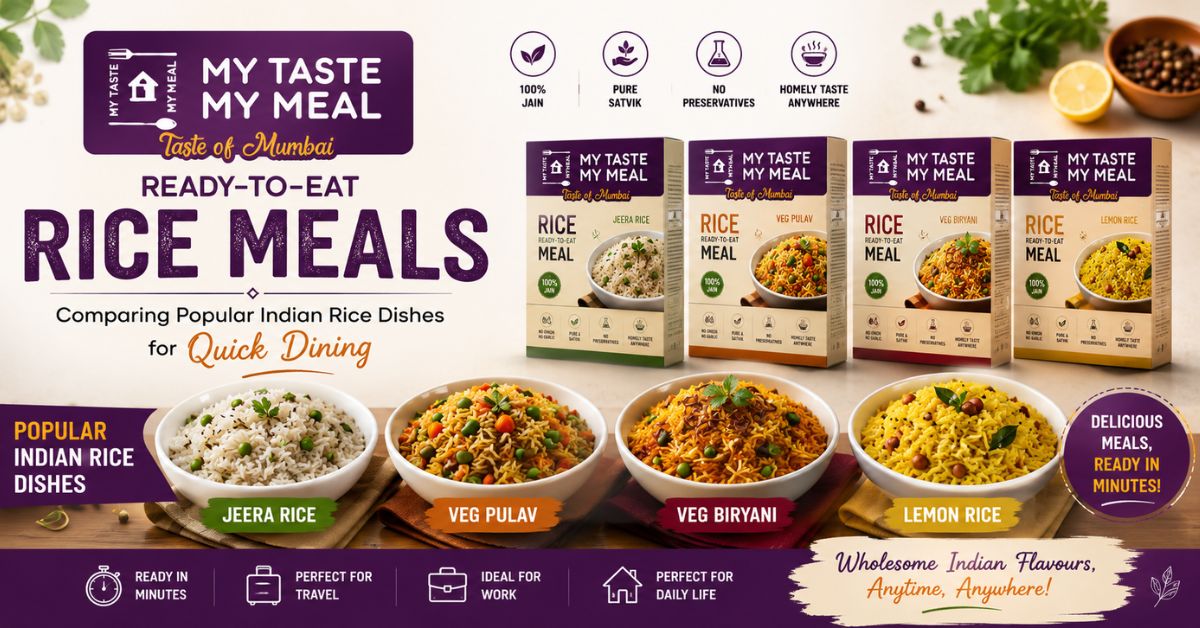
Ready-to-Eat Rice Meals: Comparing Popular Indian Rice Dishes for Quick Dining
Rice is the backbone of Indian cooking. From a weekday lunch box to a celebratory spread, some form of rice shows up at almost every Indian table. But when you're traveling, working late, living in a hostel, or just too tired to cook, getting a proper rice meal is harder than it should be.
That's where ready-to-eat rice meals have changed things. You get a fully cooked, properly seasoned rice dish in a sealed pack. Add hot water or give it two minutes in a microwave, and you're eating. No vessel to wash, no grocery run, no compromise on taste.
This post compares the most popular Indian ready-to-eat rice options available today, looks at what makes each dish different, and helps you figure out which ones suit your lifestyle and mood.
Why Indian Rice Dishes Work So Well as Ready-to-Eat Meals
Rice has a natural advantage when it comes to packaging and preservation. It holds its texture reasonably well through freeze-drying and vacuum sealing. The spice and oil used in Indian rice cooking also act as preservatives, which means flavor holds up longer than you'd expect.
Here is why rice-based meals are among the best candidates for ready-to-eat homemade food formats:
-
They're complete meals. A biryani or rajma rice packs carbohydrates, protein, and fat in one dish. You don't need sides.
-
They heat evenly. Unlike gravies that can separate or breads that go soggy, rice reheats predictably.
-
They travel well. Sealed rice packs don't leak, don't need refrigeration until opened, and are easy to carry.
-
They taste close to fresh. Good spice work and quality rice varieties mean the flavor survives the packaging process.
Let's break down the specific options and what sets each one apart.
A Side-by-Side Comparison of Popular Indian Ready-to-Eat Rice Dishes
1. Veg Biryani
What it is: Basmati rice cooked with whole spices, saffron, and vegetables using the dum method. Biryani gets its character from slow cooking with sealed steam, which pushes the spice flavor into every grain.
Flavor profile: aromatic, mildly spiced, fragrant. The whole spices (star anise, bay leaf, cardamom, and cloves) do most of the work.
Who it's for: Anyone who wants a complete, satisfying meal. Biryani is both filling and flavorful enough to eat on its own.
Texture: Long-grain basmati with distinct, non-sticky grains. The vegetables stay soft but not mushy.
Pairs well with raita or pickle. Fine on its own, too.
Verdict: The go-to option when you want something that feels like a proper meal, not just food to fill a gap. The Veg Biryani at My Taste My Meal carries a 5-star customer rating, which reflects how well this dish translates into a ready-to-eat format.
2. Tawa Pulao
What it is: A Mumbai street food staple. Cooked rice tossed on a flat iron tawa with vegetables, tomatoes, pav bhaji masala, and butter. The tawa adds a slight char and smokiness that sets this apart from regular pulao.
Flavor profile: Bold, tangy, spicy. Pav bhaji masala gives it that distinctly Mumbai street food character.
Who it's for: People who like punchy, street-style flavors. If you've eaten at a Mumbai street stall, you'll know exactly what this tastes like.
Texture: Slightly firmer than biryani, with a more rustic mix of rice and vegetables.
Pairs well with: Papad or just a glass of buttermilk.
Verdict: Among the most underrated ready-to-eat rice options. Tawa Pulao feels homemade in the best sense. The Tawa Pulav at My Taste My Meal holds a 5-star rating, which tells you the street food flavor comes through even in a packaged format.
3. Schezwan Rice
What it is: Indo-Chinese fried rice cooked with Schezwan sauce, vegetables, soy sauce, and vinegar. It sits at the intersection of Chinese wok cooking and Indian spice preferences.
Flavor profile: Spicy, tangy, smoky. The Schezwan sauce provides heat and a distinctive chili-pepper depth.
Who it's for: Anyone in the mood for something different from typical Indian flavors? Good for people who enjoy Indo-Chinese food from restaurant menus.
Texture: Fried rice texture, slightly drier than pulao or biryani. Each grain is separate and well-coated with sauce.
Pairs well with manchow soup or just a side of chili sauce.
Verdict: A strong option when you want a change from traditional Indian rice. Works well as a complete meal or as part of an Indo-Chinese combination.
4. Jeera Rice
What it is: Plain basmati rice tempered with cumin seeds, ghee, and sometimes whole spices. Jeera rice is a restaurant staple across North India, served as a side with dal, curry, or kadhi.
Flavor profile: Light, subtly aromatic, clean. The cumin flavor is present but not overpowering.
Who it's for: People who want a neutral, well-cooked rice that pairs with other dishes rather than standing alone.
Texture: Fluffy, long-grain basmati with a light ghee coating.
Pairs well with dal fry, dal makhani, and any North Indian curry. The dish is designed to complement, not compete.
Verdict: If you're pairing rice with a separate curry or dal, jeera rice is the right call. It's also the mildest option for people who prefer subtle flavors. Good for kids and anyone who finds spiced rice too heavy.
5. Burnt Garlic Fried Rice
What it is: Fried rice made with garlic that's been cooked until it turns a deep golden-brown, bordering on charred. This process releases a smoky, slightly bitter depth that ordinary fried rice doesn't have.
Flavor profile: Smoky, umami-rich, with a distinct roasted garlic character. More complex than regular fried rice.
Who it's for: Food lovers who appreciate restaurant-quality rice dishes. This is a step up from standard fried rice in terms of flavor sophistication.
Texture: Dry fried rice with well-separated grains and visible bits of burnt garlic throughout.
Pairs well with: Any Indo-Chinese gravy or soup. Also great on its own.
Verdict: One of the more distinctive options in the ready-to-eat rice category. If you've had burnt garlic rice at a Chinese restaurant in Mumbai, you know the appeal. Getting that flavor in a packaged format is genuinely useful.
6. Rajma Rice
What it is: Kidney beans cooked in a North Indian masala, served with steamed rice. This combination is the unofficial comfort food of Punjab and Delhi. It's a complete protein-carbohydrate meal in one dish.
Flavor profile: Rich, earthy, mildly spiced. The rajma gravy has depth from tomato, onion, and a good masala base.
Who it's for: Anyone who grew up eating rajma chawal on Sundays at home. It also works well for people who want a protein-rich meal from a ready-to-eat homemade food option.
Texture: Thick, creamy rajma gravy with soft beans, served alongside cooked rice. The two components complement each other perfectly.
Pairs well with: Pickled onion or a simple raita.
Verdict: For pure comfort and nutrition, Rajma Rice is hard to beat. It delivers the most homemade-feeling eating experience in the rice category.
7. Pot Rice
What it is: A slow-cooked, one-pot rice preparation where rice, vegetables, and spices are cooked together in a sealed vessel. The result is a moist, deeply flavored rice that absorbs all the spice and vegetable stock as it cooks.
Flavor profile: Mellow, layered, and satisfying. The flavor is more integrated than pulao or biryani because everything cooks together from the start.
Who it's for: People who prefer comfort food over bold, punchy flavors. Pot rice sits in the same category as khichdi but with more texture and complexity.
Texture: Softer and more cohesive than biryani, with rice and vegetables well integrated.
Pairs well with papad, pickle, or a simple dal.
Verdict: A good option for evenings when you want something warm and satisfying without too much spice. Also suitable for older family members or anyone recovering from illness who needs gentle food.
Quick Comparison Table
|
Dish |
Flavour |
Spice Level |
Best Use Case |
|
Veg Biryani |
Aromatic, layered |
Medium |
Full meal, travel |
|
Tawa Pulao |
Bold, tangy |
Medium-High |
Street food craving |
|
Schezwan Rice |
Spicy, smoky |
High |
Indo-Chinese mood |
|
Jeera Rice |
Light, clean |
Low |
Pairing with dal/curry |
|
Burnt Garlic Fried Rice |
Smoky, umami |
Medium |
Flavour-forward dining |
|
Rajma Rice |
Earthy, rich |
Medium |
Comfort meal, protein boost |
|
Pot Rice |
Mellow, wholesome |
Low-Medium |
Light, comforting dinner |
How to Choose the Right Ready-to-Eat Rice for Your Situation
Next steps: match the dish to the moment.
Travelling by train or flight: Pick Veg Biryani or Schezwan Rice. Both are filling enough to replace a full meal and flavorful enough that you won't feel like you're eating food out of obligation.
Office desk lunch: Tawa Pulao or burnt garlic fried rice. Both heat up well and have strong enough flavor to feel satisfying even when you're eating at your desk.
Late-night hunger: Pot rice or rajma rice. Both are comforting and don't leave you feeling heavy before sleep.
Pairing with a packaged dal or curry: jeera rice. It's designed to step back and let the main dish shine.
Picky kids at home: pot rice or jeera rice. Mild flavors and soft textures work well for children.
What to Check Before Buying Ready-to-Eat Rice Online
Here is a short checklist before you place an order.
-
Check the preparation method. Freeze-dried rice rehydrates better and retains more nutritional value than some other preservation methods.
-
Read the ingredient list. Good ready-to-eat rice should use actual spices, not just flavor enhancers or artificial additives.
-
Check the shelf life. Most well-packaged options last several months without refrigeration. This matters especially for travel and stocking up.
-
Look at serving size. Some packs are a single portion; others serve two. Know what you're buying.
-
Choose a transparent brand. My Taste My Meal, based in Mumbai, uses vacuum packaging, dehydration, and freeze-drying to preserve authentic flavors without artificial preservatives. Their rice collection spans seven different dishes with clear ingredient information.
FAQs About Ready-to-Eat Rice Meals
Q1. Is ready-to-eat rice safe to eat without reheating?
Technically, most packaged ready-to-eat rice is pre-cooked and safe at room temperature, but heating it always improves texture and flavor. For best results, follow the preparation instructions on the specific pack.
Q2. How long does ready-to-eat rice last without refrigeration?
This depends on the preservation method. Freeze-dried and vacuum-packed rice can last several months when stored in a cool, dry place away from direct sunlight. Always check the best-before date printed on the packaging.
Q3. Which ready-to-eat rice dish is best for travel in India?
Vegetable biryani and Schezwan rice are the best travel options because both are complete meals with bold flavors. They hold up well after heating and feel satisfying on a long journey.
Q4. Does ready-to-eat homemade food actually taste like home cooking?
It depends on the brand and dish. Simple preparations like Jeera Rice and Pot Rice translate very well into packaged formats. Dishes like Tawa Pulao and Rajma Rice also retain their home-style character if made with good spice blends and quality ingredients.
Q5. Can I buy Indian ready-to-eat rice meals online and get them delivered across India?
Yes. My Taste My Meal ships its rice collection across India. The sealed packaging handles transit well, so the product arrives in good condition even for deliveries to smaller cities and towns.