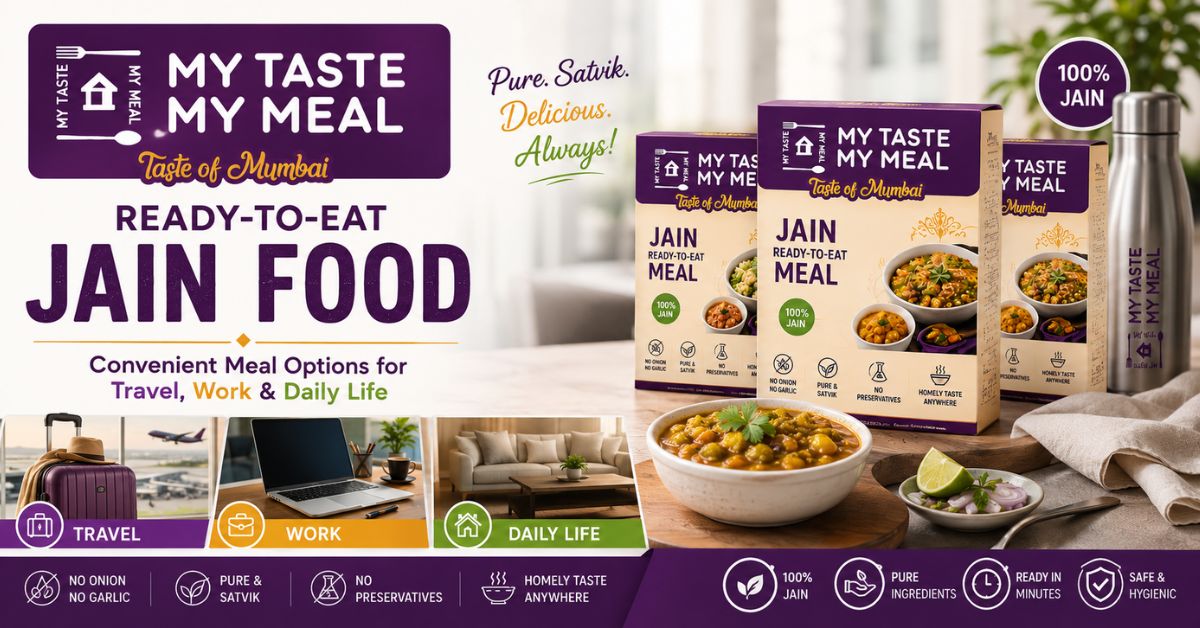
Jain Ready to Eat Food: Convenient Meal Options for Travel, Work and Daily Life
Finding a good meal as a Jain traveler or working professional can be genuinely challenging. Most restaurants add onion and garlic to almost everything. Hotel kitchens don't always get the no-root-vegetable rule right. And cooking fresh every single day is not always possible when you're managing a packed schedule.
That's where Jain ready-to-eat food makes a real difference. These are fully cooked, properly packaged meals made without onion, garlic, potato, carrot, or any other root vegetable. You heat them for five minutes and eat. No compromise on your dietary principles, no stress about ingredients.
This guide covers what Jain ready-to-eat meals are, why they work for modern lifestyles, and what kinds of options are actually available.
What Makes Food "Jain"? Let's Break It Down
This extends to food. Jain dietary rules, rooted in scripture and tradition, prohibit eating root vegetables because harvesting them kills the entire plant and the organisms living in the soil around it.
Here is what Jain food avoids:
-
Onion and garlic (considered tamasic and harmful to the body and mind)
-
Root vegetables like potato, carrot, beetroot, radish, and turnip
-
Underground produce that requires uprooting the whole plant
Jain food also avoids meat, eggs, and alcohol. What you get is a purely plant-based, above-ground vegetable diet. The challenge is that Indian cooking relies heavily on onion and garlic for flavor. Building flavor without them takes skill and good spice work.
Good ready-to-eat Jain food solves this by using asafoetida (hing), cumin, coriander, tomatoes, and regional spice blends to create the depth that onion and garlic normally provide.
Why Ready-to-Eat Jain Meals Are Getting More Popular
The demand for no-onion, no-garlic packaged food has grown steadily over the past decade. Here is why.
Travel is difficult for Jain eaters. Train journeys, flights, road trips, and hotel stays put Jain travelers in situations where there is simply no compliant food available. A sealed, shelf-stable, ready-to-eat meal solves this cleanly.
Office lunches are stressful. When you're working in a city far from home, finding a Jain thali near your office is not always possible. Having a couple of meals in your desk drawer changes the equation completely.
Hostel and PG living. Students and young professionals often live without proper kitchen access. Ready-to-eat options let them eat without depending entirely on outside food, which is rarely Jain-safe.
Festival and Paryushana periods. During paryushana and other observance periods, many Jains follow stricter eating rules. Having trusted, pre-made Jain meals at home helps during these times.
The Full Range of Ready-to-Eat Jain Meals Available Today
At My Taste My Meal, the Jain collection covers a wide range of meal types: breakfast, dal, rice dishes, curries, soups, and more. All items are made without onion and garlic, and they're based on authentic Mumbai flavors using advanced food preservation methods like vacuum packaging and freeze-drying.
Here is a look at the categories:
Breakfast Options
Poha (Jain) is a classic Maharashtra breakfast made with flattened rice. Without onion, the seasoning relies on mustard seeds, green chili, turmeric, and lemon. Simple, light, and ready in minutes.
Upma (Jain) uses semolina cooked with vegetables and spices. The Jain version skips onions and uses above-ground vegetables like tomato and capsicum.
Idli Sambar (Jain) is a South Indian combination that works beautifully without onion and garlic, since good sambar gets its character from tamarind and a proper South Indian spice blend.
Sev Khamni (Jain) is a Gujarati snack-style breakfast made from chana dal. Light, slightly sweet, and topped with sev, it's a good option when you want something different.
Dal and Lentil Dishes
Dal Fry (Jain) is yellow lentils tempered with mustard seeds, hing, and dry red chilies. No onion needed. The hinge does the flavor lifting here.
Dal Makhani (Jain) is one of the harder dishes to make well without onion and garlic, but it's doable with a good tomato base and cream.
Gujarati Dal (Jain) is the sweet-sour-spicy dal that Gujarat is known for. It uses jaggery, tamarind, and a distinct spice profile that makes it stand apart from North Indian dals.
Moong Masala (Jain) uses whole or split green moong cooked with spices. It's high in protein and a lighter option compared to cream-heavy curries.
Jain sambhar is a South Indian lentil and vegetable stew made with above-ground vegetables only. It pairs with idlis or rice.
Rice and Biryani
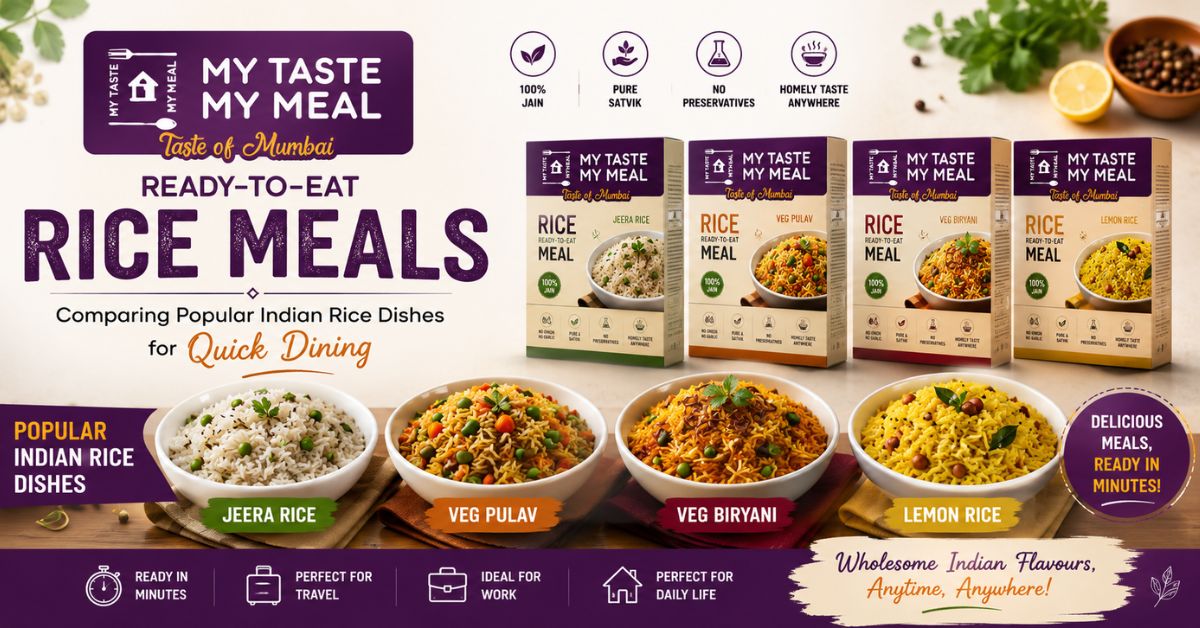
Veg biryani (Jain) is what most people search for when they look for Jain biryani. A proper biryani relies on whole spices, saffron, and dum cooking for flavor. Without onion and garlic, the spice work has to be precise. The My Taste My Meal version has a 5-star rating from customers.
Tawa Pulao (Jain) is a Mumbai street food-style rice dish cooked with tomatoes, capsicum, green peas, and spices on a flat tawa. The Jain version skips the onion but keeps the signature bold flavor.
Schezwan Rice (Jain) is the Indo-Chinese favorite made Jain-safe. Schezwan sauce is normally made with garlic, but the Jain version uses a modified spice blend.
Curries and Mains
Paneer Tikka (Jain) is marinated paneer with spices and capsicum, without any onion or garlic in the marinade or base.
Paneer Bhurji (Jain) is scrambled paneer with tomatoes, green chili, and spices. Normally made with onion, the Jain version uses capsicum and tomato for texture.
Mattar paneer (Jain) is peas and paneer in a tomato-based gravy. One of the most popular North Indian dishes, it works naturally well without onion.
Veg Makhanwala (Jain) is a makhani-style gravy with mixed vegetables. The base is buttery tomato with cream and mild spices.
Veg Handi (Jain) is a rich mixed vegetable curry cooked in handi style with a thick gravy.
Veg Kolhapuri (Jain) draws from the fiery Kolhapuri cuisine of Maharashtra. The Kolhapuri masala blend carries the dish even without onion and garlic.
Chole (Jain) is chickpea curry, normally a Punjabi Jain favorite. The Jain version skips onion and garlic but keeps the amchur, anardana, and whole spice depth that makes chole so good.
Punjabi Gravy (Jain) is a North Indian-style thick gravy base that pairs with rice or roti. The Punjabi Jain flavor profile comes through from the tomato-based spice blend.
Soups
Tomato Soup (Jain) is a straightforward roasted tomato soup without any onion or stock cube, thickened with cream or cornflour.
Manchow soup (Jain) is an Indo-Chinese hot soup with vegetables, soy sauce, and crispy noodles. The Jain version removes the garlic and onion while keeping the soy and vinegar tang.
Street Food
Pav bhaji (Jain) is one of Mumbai's most iconic street foods. The Jain version replaces potato with raw banana or lauki (bottle gourd) and skips onion. The bhaji spice mix and butter keep the flavor close to the original.
Mumbai Misal (Jain) is a spicy sprout and farsan dish from Maharashtra. The Jain version uses mixed sprouts with a hot, tangy rassa (gravy) and farsan topping.
Dal Khichadi (Jain) is comfort food in its purest form: rice and lentils cooked together with ghee and mild spices.
How to Use Jain Ready-to-Eat Meals Practically
Here is how different groups of people use these meals day to day.
For travel: Pack 3-5 meals for train or flight journeys. Most of these have a shelf life suited to short trips. You don't need refrigeration for freeze-dried or vacuum-packed products until they're opened.
For the office: Keep two or three options in your office bag. When the canteen serves non-Jain food, you have a proper meal ready in five minutes using the office microwave or a cup of hot water.
For students: Stock your hostel room with a week's worth of variety. Mix breakfast options, a couple of dal or curry options, and a rice dish to cover different meals.
During Paryushana: Plan your daily meals using packaged options. You know exactly what goes into each pack, so there's no doubt about compliance.
What to Look for When Buying Jain Ready-to-Eat Food Online
Next steps before you order: check these things.
-
Ingredient list: Confirm no onion, garlic, potato, or other root vegetables appear anywhere, including under spice mix or natural flavoring.
-
Preservation method: Freeze-dried products have a longer shelf life and retain nutrition better than some other methods.
-
Preparation instructions: Most require just hot water or a 2-5 minute microwave or stove heat. Check this before buying for travel.
-
Meal variety: A good Jain ready-to-eat range should cover breakfast, lunch, dinner, and snack options so you're not eating the same thing twice.
-
Source and brand: Buy from brands that are transparent about their kitchen and sourcing. My Taste My Meal, based in Mumbai, prepares these meals with authentic regional flavors and proper Jain food standards.
FAQs About Ready-to-Eat Jain Food
Q1. Is ready-to-eat Jain food truly free of onion and garlic?
Yes, if you buy from a brand that specifically labels products as Jain. My Taste My Meal's Jain collection is made entirely without onion, garlic, and root vegetables. Always read the ingredient label before buying from any source.
Q2. How long does Jain ready-to-eat food last without refrigeration?
Shelf life varies by product and preservation method. Freeze-dried and vacuum-packed products can last several months when unopened and stored away from heat and moisture. Always check the best-before date printed on the pack.
Q3. Can I carry Jain ready-to-eat meals on domestic flights in India?
Yes, sealed packaged food is generally allowed in cabin baggage on domestic Indian flights. It's a practical option for Jain travelers who can't rely on airline meal options. Confirm with your airline for international travel.
Q4. What is the difference between regular ready-to-eat vegetarian food and Jain ready-to-eat food?
Regular vegetarian food may contain onion, garlic, potato, and other root vegetables. Jain food specifically excludes all root vegetables along with onion and garlic, following the Jain dietary code. The two are not interchangeable.
Q5. Is Jain biryani available in a ready-to-eat format, and does it taste good?
Yes, Jain biryani is available as a ready-to-eat option. My Taste My Meal's Veg Biryani (Jain) has a 5-star customer rating, which suggests the flavor holds up well even without onion and garlic. The key is good whole spice work and proper dumb-style rice.