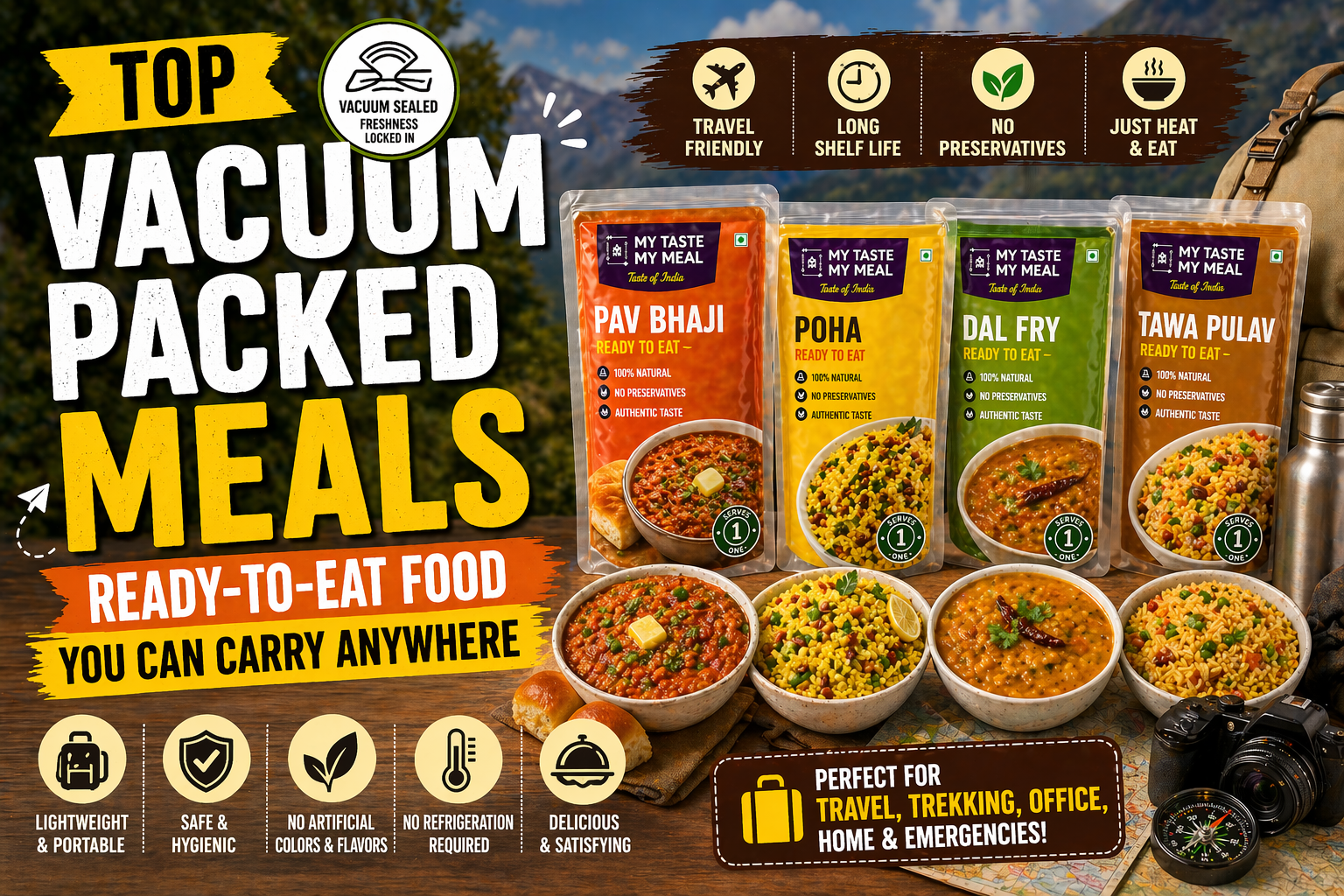
Top Vacuum Packed Ready-to-Eat Foods You Can Carry Anywhere
Eating well while you travel, trek, study abroad, or work through long shifts has always been a challenge. Packing fresh food is messy. Relying on restaurants is expensive and unreliable. That is where vacuum packed ready-to-eat food has quietly become the smart traveler's best friend.
Vacuum packaging removes air from the pouch before sealing it. No air means no oxidation, no bacterial growth, and no spoilage for weeks or even months. The food inside stays exactly as it was when it was sealed the same flavor, the same texture, the same nutritional value. This is not a new idea, but the quality and variety available today make it genuinely worth paying attention to.
Here is a breakdown of the best categories of vacuum-packed ready-to-eat foods, why they work so well, and what to look for when picking them.
Why Vacuum Packaging Food Works So Well for Travel
Before getting into specific foods, it helps to understand what makes vacuum packaging food different from ordinary packaged snacks.
Standard packaged food often uses preservatives to extend shelf life. Vacuum-sealed food takes a different approach. By removing oxygen from the pack, manufacturers stop the two main causes of food spoilage: oxidation and microbial activity. Both bacteria and mold need oxygen to grow. Take that away, and the food stays stable at room temperature for far longer than it would in an open container.
When you combine vacuum sealing with freeze-drying or dehydration, the shelf life extends even further. Freeze-drying removes moisture while keeping the food's structure intact. Once you add hot water or heat the pack, the food rehydrates to something very close to freshly cooked.
That makes these pouches genuinely useful — not just emergency rations, but everyday carry food for trains, flights, offices, hostels, and hiking trails.
Best Vacuum Packed Ready-to-Eat Foods by Category
1. Indian Curries and Lentil Dishes
For anyone who travels internationally or relocates abroad, the craving for home-cooked Indian food hits hard. That is exactly why freeze-dried Indian meals in vacuum sealed pouches have found such a loyal following.
Dishes like Dal Makhani, Dal Fry, Palak Paneer, Rajma, and Punjabi Chole hold up extremely well to freeze-drying. The spice blends stay intact, the legumes rehydrate cleanly, and the result tastes genuinely close to home-cooked food.
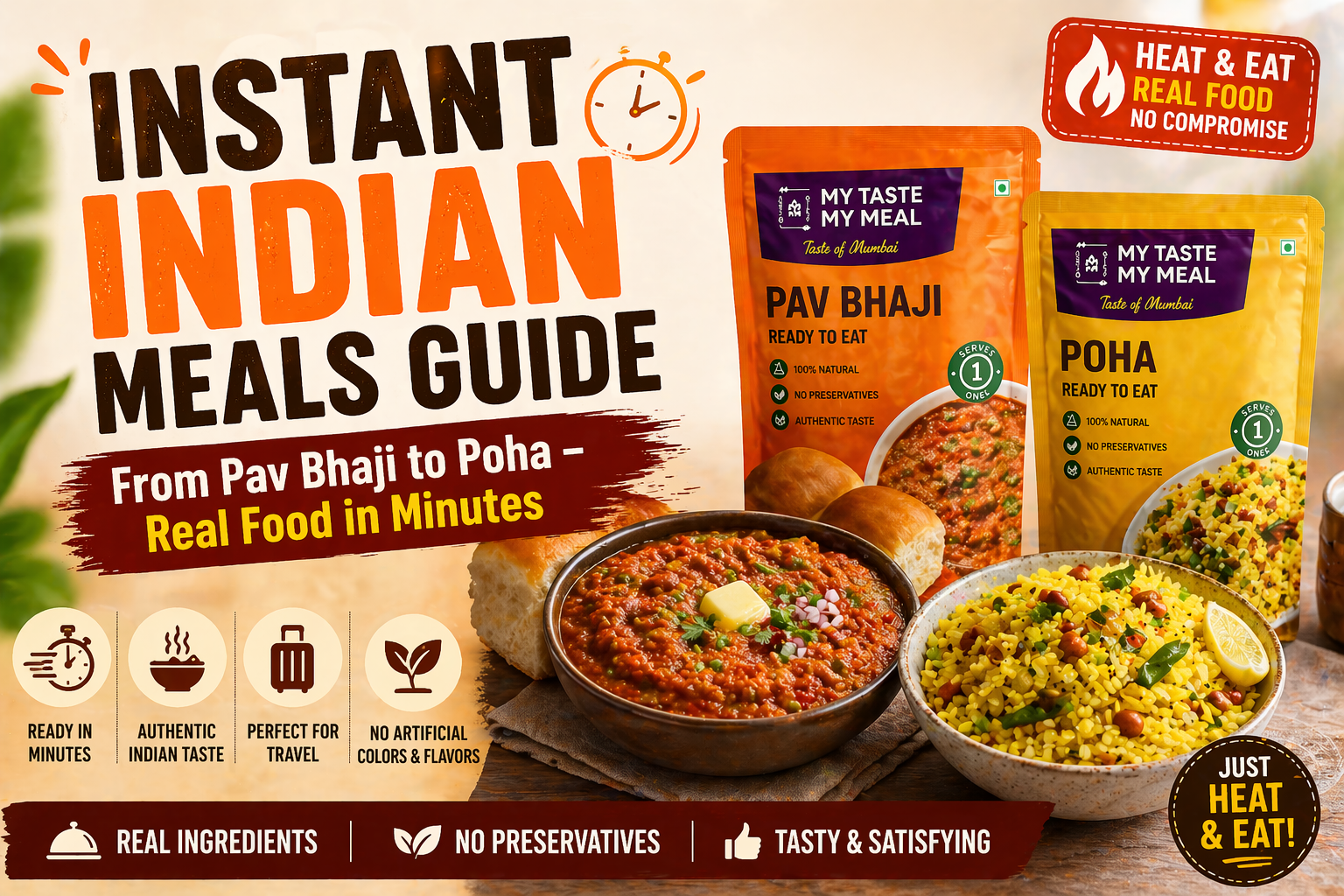
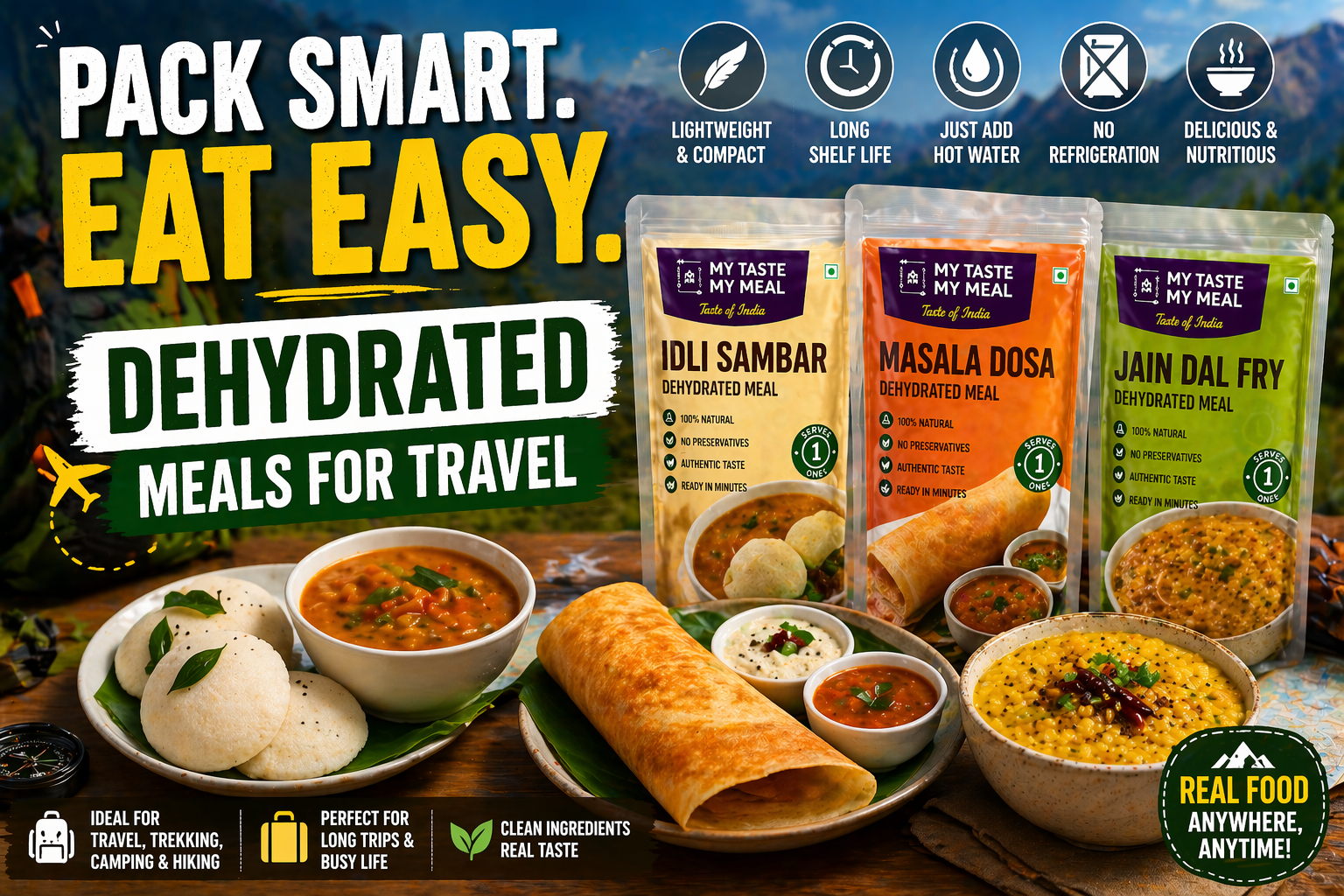
My Taste My Meal (mytastemymealstore.com) specializes in exactly this kind of product. Their range covers everything from breakfast items like Kanda Poha and Idli Sambar to full meals like Veg Biryani, Tawa Pulav, Pav Bhaji, and Veg Kolhapuri. They also carry a dedicated Jain category with onion- and garlic-free versions of popular dishes like Dal Fry Jain and Dal Makhani Jain.
These pouches are lightweight, don't need refrigeration, and can be prepared in under five minutes with just hot water, a microwave, or a gas stove. For students studying abroad, business travelers, or trekkers, they solve a very real problem.
What to look for:
- Shelf life of at least 6 to 12 months
- No added preservatives (freeze-drying makes them unnecessary)
- Clear preparation instructions on the pack
- Jain or specific dietary options if needed
2. Rice and Grain-Based Meals
Cooked rice is one of the harder things to carry because it spoils fast. Vacuum sealed and freeze-dried rice dishes, on the other hand, travel beautifully.
Jeera Rice, Veg Biryani, Schezwan Rice, and Rajma Rice all freeze-dry well. The grains rehydrate evenly without turning mushy, and the seasoning gets locked in during the process. A single 200-250g pouch typically covers one full meal for an adult.
Rice and grain dishes are also versatile. You can eat them alone or pair them with a vacuum-sealed curry pouch to build a complete meal. That flexibility makes them a staple in any long-distance traveler's bag.
3. Breakfast Items
Most travel breakfast options are either sugary snacks or overpriced hotel buffets. Vacuum-sealed Indian breakfast items give you a proper, warm meal even when you are far from a kitchen.
Options like Kanda Poha, Mumbai Upma, Mumbai Misal, and Idli Sambar are common in freeze-dried pouches. These are light, quick to prepare, and genuinely filling. They also pack a lot more nutritional value than a granola bar or a bag of chips.
If you are the kind of person who skips breakfast while traveling because the options are bad, a few breakfast pouches in your bag can change that habit quickly.
4. Soups
Vacuum-sealed soups are one of the more underrated categories. A hot soup in a cold mountain camp or a long flight does more for morale than almost any other food.
Freeze-dried or dehydrated soups typically come in individual-serving pouches. You add hot water directly to the pouch or to a cup, wait a couple of minutes, and eat. The servings are light, so you can carry several without adding much weight to your bag.
Tomato-based soups, lentil soups, and spiced broths work particularly well in this format because their flavors actually concentrate during drying and bloom again when rehydrated.
5. Chutneys and Condiments
This is a small but important category. A plain rice or roti from a local shop immediately becomes more enjoyable with a good chutney. Vacuum-sealed chutneys, like mint chutney, tamarind chutney, or coconut chutney, come in small pouches that slip easily into a side pocket.
They are available at room temperature, need no refrigeration until opened, and pair with almost anything. If you are traveling with freeze-dried main dishes, carrying a couple of chutney sachets is a smart move.
6. Desserts
Carrying a dessert feels indulgent, but vacuum-sealed Indian desserts like Gajar Halwa or similar sweets are genuinely good travel companions. They are dense, satisfying, and provide a quick energy hit when you need one.
Freeze-dried desserts rehydrate into something that tastes and feels much closer to the real thing than you might expect. A small pouch of something sweet after a long day of travel or hiking is a very worthwhile thing to have.
How to Choose the Right Vacuum-Sealed Meal Pouches
Not all vacuum-sealed food is created equal. Here is what to check before you buy.
Shelf life: Look for at least 6 months, ideally 12. Products using freeze-drying rather than just dehydration usually last longer and taste better.
Ingredients list: Fewer artificial preservatives is better. If the product relies on vacuum sealing and freeze-drying for shelf life, it generally doesn't need chemical preservatives.
Preparation method: Check whether the product needs a stove, microwave, or just hot water. Hot water pouches are the most travel-friendly because they work anywhere.
Weight and size: For trekking or air travel, every gram matters. Look for pouches under 250g for a single serving.
Dietary requirements: If you follow a Jain diet, are vegetarian, or have specific allergies, confirm the product labeling before buying. Brands like My Taste My Meal explicitly label Jain-friendly items and use only vegetarian ingredients across their range.
Practical Tips for Traveling with Vacuum-Sealed Food
Pack a small travel kettle or portable stove. Many freeze-dried meals just need hot water, and a travel kettle that fits in your bag opens up your options considerably.
Check customs rules for your destination. Most countries allow commercially packaged, shelf-stable food. Some countries restrict certain ingredients, so check the rules if you are traveling internationally.
Don't rely solely on packaged food. Use vacuum-sealed meals as a backup and for convenience, not as your only food source for an entire trip. They are meant to fill the gaps.
Keep a few in your desk drawer or office bag. Vacuum-sealed meals aren't just for travel. They are genuinely useful for busy workdays when you don't have time to step out for lunch.
Featured Snippet: How to Prepare a Vacuum-Sealed Freeze-Dried Meal
- Open the outer packaging and remove the sealed pouch.
- Empty the contents into a bowl or pan.
- Add the amount of water specified on the pack (usually 150–200ml).
- Heat on a medium flame for 3–5 minutes, microwave for 2 minutes, or pour boiling water and wait 3 minutes.
- Stir gently, serve hot, and enjoy.
Total preparation time: under 5 minutes.
Why More Travelers Are Switching to Freeze-Dried Indian Meals
The global appetite for convenient, authentic food that doesn't require refrigeration has grown steadily over the past decade. Indian food, with its complex spice profiles and legume-heavy base, is particularly well-suited to freeze-drying because the flavors hold up well through the process.
Brands like My Taste My Meal have built a following among students living abroad, NRIs, long-haul travelers, and outdoor enthusiasts precisely because they offer something that generic international packaged food doesn't: the specific, familiar taste of home.
Customers have carried their pouches to Singapore, Qatar, and across Europe. The consensus in reviews is consistent: the flavor holds, the preparation is genuinely simple, and the variety makes it easy to rotate through meals without getting bored.
Final Thoughts
Vacuum packed ready-to-eat food has come a long way from the bland, rubbery meals most people associate with emergency supplies. Today's freeze-dried options, particularly in the Indian food category, are genuinely good. They taste like real food because they are real food, just preserved properly.
Whether you are a student overseas missing home-cooked meals, a professional who skips lunch too often, or a trekker who needs lightweight nutrition on the trail, building a small stash of quality vacuum-sealed pouches is one of the more practical things you can do for yourself.
Start with a mix of breakfasts, a few dal or curry options, and a rice dish. Add a chutney or two. Then see how quickly you wonder how you managed without them.
FAQs About Vacuum Packed Ready-to-Eat Food
Q1. How long does vacuum packed ready-to-eat food last?
Most vacuum-sealed and freeze-dried meals last between 6 and 24 months at room temperature when stored in a cool, dry place away from direct sunlight. Always check the best-before date on the specific product you buy, as shelf life varies by brand and preparation method.
Q2. Is vacuum packaging food safe to eat without cooking?
Many vacuum-sealed meals are pre-cooked before packaging, so they are technically safe to eat without further cooking. That said, warming them up improves both flavor and texture significantly. Most manufacturers recommend heating or rehydrating with hot water before eating.
Q3. Can I carry vacuum-sealed food pouches on international flights?
Yes, commercially packaged and sealed food is generally allowed in checked baggage on international flights. Some carry-on restrictions may apply if the pouch contains liquids over 100ml. Check the specific airline and destination country customs rules before you fly.
Q4. Are freeze-dried Indian meals nutritionally complete?
Freeze-dried meals retain most of their original nutrients because the process removes moisture without significant heat exposure. A lentil-based dish like Dal Makhani will still deliver protein and fiber after freeze-drying. They are not a replacement for a balanced diet over the long term, but they hold up nutritionally better than most other shelf-stable options.
Q5. Where can I buy good quality vacuum-packed Indian ready-to-eat meals online?
My Taste My Meal (mytastemymealstore.com) is one of the well-reviewed sources for freeze-dried Indian meals in India. They offer over 50 varieties including breakfast, rice, dal, curries, desserts, soups, and Jain options. Orders ship nationally and the products are certified for international travel.