
Why Dehydrated Food for Travel is the Smartest Thing You Can Pack
There is a certain kind of travel stress that nobody puts on their Instagram. It is 11 PM, you are somewhere between two time zones, your flight got delayed, the airport food court closed an hour ago, and whatever you ate for lunch is a distant memory. Now imagine instead reaching into your bag and pulling out a meal that is ready in five minutes, weighs almost nothing, and actually tastes like something you would choose to eat.
That is the real argument for dehydrated food for travel. Not survival gear. Not astronaut novelty. Just a genuinely practical answer to one of the most consistent problems modern travelers face: eating well when the world makes it inconvenient.
What Dehydrated Food Actually Is (and Why It Works)
Dehydration is one of the oldest food preservation methods humans have ever used. The science is straightforward: remove the water from food, and the bacteria, yeast, and molds that cause spoilage lose the environment they need to survive. No moisture means no microbial growth, which means a dramatically longer shelf life without refrigeration.
Food dehydration reduces the moisture content of foods, preventing the growth of harmful contaminants including bacteria and fungi that may cause illness, while also reducing the weight and bulk of foods.
There are several ways to dehydrate food. Sun drying is the oldest. Air drying, oven drying, and electric dehydrators are common for home use. More advanced methods like freeze-drying remove moisture at very low temperatures, which tends to preserve texture and rehydration quality even better. Freeze-drying is slightly more effective at removing moisture, so freeze-dried meals tend to have a longer shelf life than conventionally dehydrated meals, though dehydrated foods often retain their original texture better after rehydration.
The key point for travelers is this: both methods produce shelf-stable food that you can carry without a cooler, prep without a kitchen, and eat without compromise.
The Weight and Space Argument
Ask any experienced backpacker what they obsess over and the answer is almost always weight. But you do not have to be hiking the Himalayas for this to matter. Even on a standard trip, overpacked luggage costs money, slows you down, and drains your energy. Food takes up more space and weight than almost anything else in a bag when it is fresh.
Dehydrated food is lightweight, easy to prepare, and has a long shelf life, making it a popular choice for backpacking, camping, and long-distance travel. When you dry food, you strip out the water that makes up the majority of its mass. A meal that would weigh 400 grams fresh might weigh under 80 grams dried. For anyone counting kilograms at the airport check-in counter, that math matters.
The space savings follow naturally. Compact, sealed packaging means you can carry several days' worth of meals in the corner of a backpack without reorganizing everything else.
Shelf Life: The Real Freedom
This is where dehydrated travel food separates itself from other "convenient" options. Pre-packaged sandwiches go stale in a day. Granola bars are fine, but they are not a meal. Canned food is too heavy. Refrigerated items are useless the moment you leave a kitchen behind.
Dehydration eliminates the water content from food, improving its shelf life and inhibiting the growth of bacteria, yeast, and molds. Grains, beans, and rice, when dehydrated and stored correctly, can last for an entire year, while dehydrated fruits vacuum-sealed and kept at a cool temperature can remain fresh for up to two years.
Military MREs include dehydrated sides, drinks, and desserts with a three-to-five-year shelf life. Airline meals use dehydrated components for consistent quality and reduced spoilage risk.
That kind of durability gives travelers something genuinely useful: flexibility. You can buy in advance, stock up before a long trip, and stop worrying about whether the next city or trailhead will have anything edible at a reasonable price.
Does Dehydrated Food Actually Keep Its Nutrition?
This is the question that comes up every time. The honest answer is: mostly yes, and often better than people expect.
Almost all of the nutritional value is retained in dehydrated food. Due to low drying temperatures, the dehydration process loses very little nutritional value. Compared to other food preservation methods like canning and freezing, dehydration compares favorably.
The dehydration process keeps the nutritional value of the food. Dehydrated apple chips or mango have the same sugar, calories, fat, fiber, and protein as their fresh counterparts. Because dehydrated foods lose water content, they tend to be more calorically rich on a per-ounce basis, which is worth keeping in mind with portion sizes.
Research published by the University of British Columbia Faculty of Land and Food Systems compared air drying, freeze-drying, and vacuum microwave drying across broccoli, carrots, and oranges. Microwave vacuum-dried samples retained significantly higher levels of vitamin C and antioxidants than traditionally dehydrated counterparts, with some results approaching those of freeze-dried samples while cutting processing time substantially.
The fiber content also deserves a mention. Dehydrated foods often have a concentrated amount of fiber, which aids digestion and keeps you feeling full for longer, which can help reduce unhealthy snacking between meals. For travelers who tend to graze on airport junk out of boredom or hunger, that satiety factor is worth something.
The Indian Traveler's Problem (and a Very Good Solution)
Indian travelers face a specific challenge that most "travel food" products completely ignore. The Western outdoor food market is saturated with pasta, oatmeal, and freeze-dried chili. None of that helps if what you actually want is a proper dal or a bowl of poha.
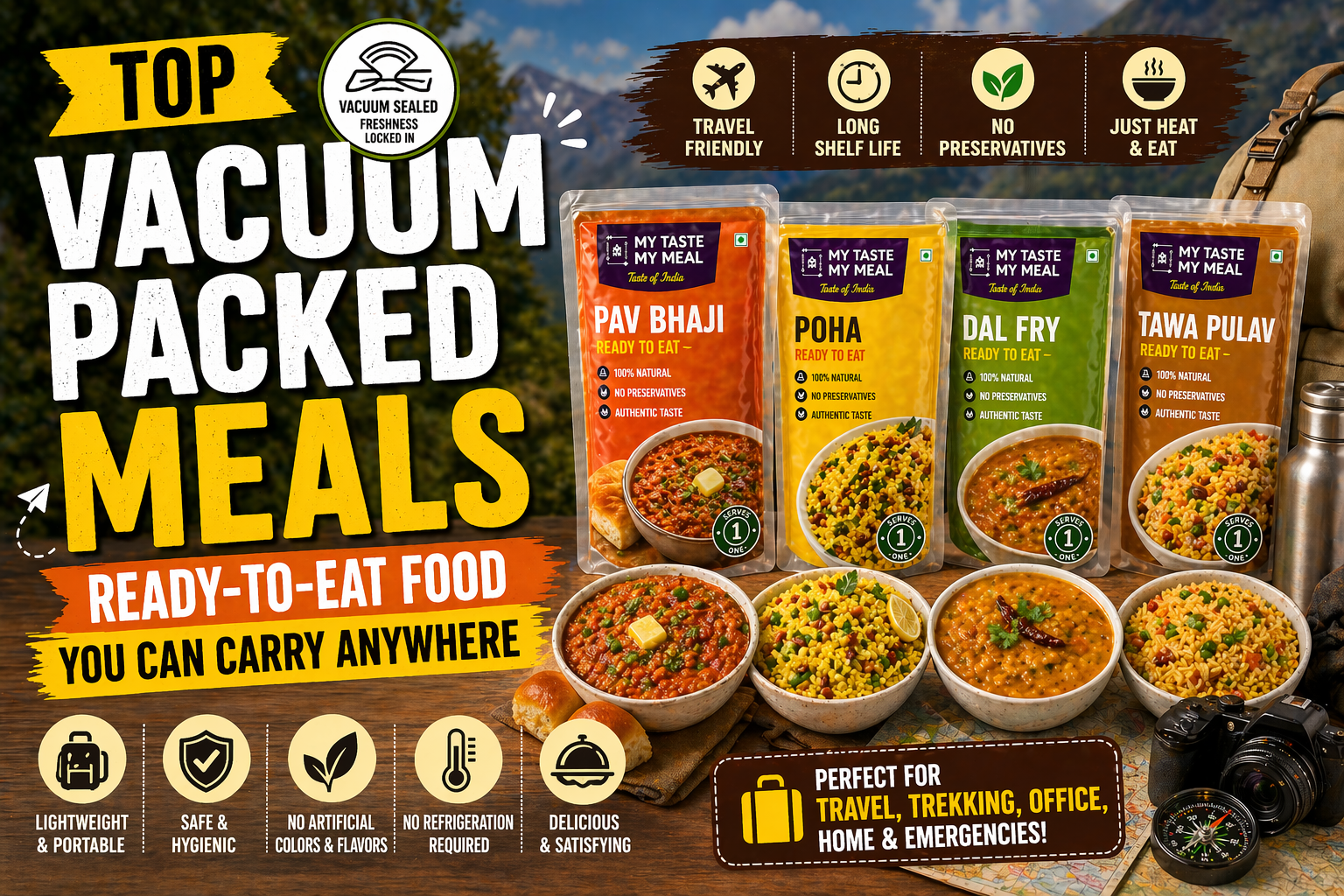
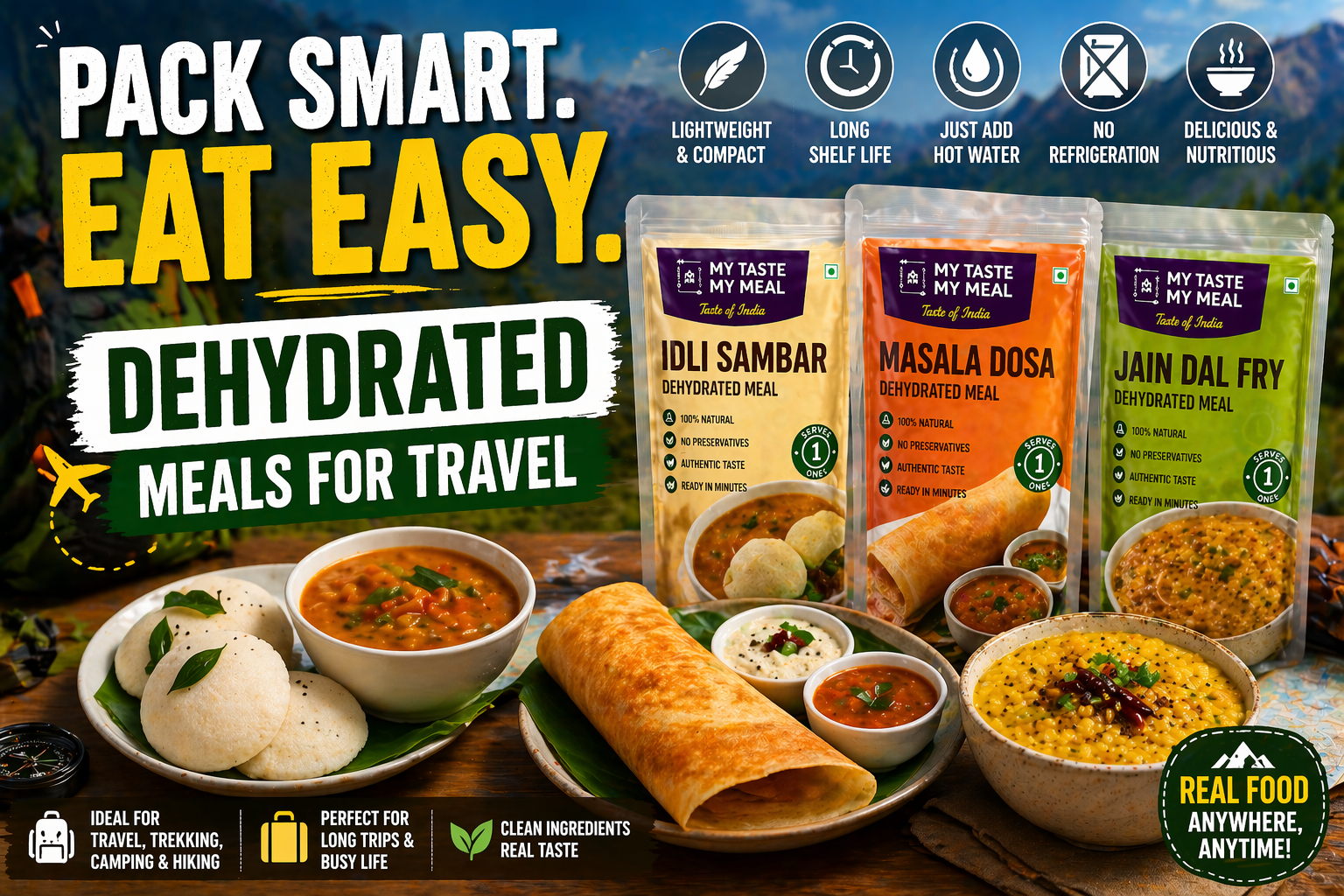
This is the gap that My Taste My Meal fills directly. The brand makes dehydrated Indian meals designed specifically for travel and convenience, covering everything from breakfasts like Kanda Poha to full meals like Dal Makhni, Palak Paneer, Punjabi Chole, Pav Bhaji, and more. They also carry desserts like Gajar Halwa, soups, chutneys, and Indian breads. The product range covers Jain options as well, which is a detail that matters to a lot of families and is routinely overlooked by other brands.
The idea is simple: you should not have to eat food that does not taste like home just because you are away from home.
How to Use Dehydrated Meals When You Travel
Getting the most out of dried food for travel does not require any special skill. Here is the basic process that works in most situations:
- Check what you need to rehydrate. Most freeze-dried and dehydrated meals just need hot water. Some ready-to-eat options need no water at all.
- Pack a small portable kettle or ask hotels for hot water. Every hotel room has an electric kettle or can provide one. Train pantry cars usually have boiling water available too.
- Follow the rehydration time on the package. This usually ranges from three to ten minutes. Let the meal sit covered so the steam does its job.
- Store extras in a cool, dry part of your bag. Avoid direct sunlight and humidity. A ziplock bag over the packet adds extra protection in humid climates.
- Keep a few packets for emergencies. Delayed flights, missed connections, and unexpected stopovers happen. A pouch of dal and rice weighing under 100 grams is worth more than a power bank in that moment.
Dehydrated Food vs. Other Travel Food Options
Here is a quick honest comparison:
|
Option |
Shelf Life |
Weight |
Preparation |
Taste Variety |
|
Fresh food |
1-3 days |
Heavy |
Needs kitchen |
High |
|
Canned food |
Years |
Very heavy |
Opener needed |
Medium |
|
Granola/snack bars |
Months |
Light |
None needed |
Low |
|
Restaurant/airport |
Same day |
None |
None needed |
Variable, expensive |
|
Dehydrated meals |
Months to years |
Very light |
Hot water |
High |
For multi-day travel, extended trips, or anyone who wants a reliable backup option, dehydrated meals win on almost every practical point.
Who Should Keep Dehydrated Travel Food in Their Kit
You do not need to be a trekker or an outdoor enthusiast to find real value here. Dehydrated food makes sense for:
Long-haul flyers who want a proper meal and do not trust what the airline will serve, or want something waiting for them on arrival.
Train travelers on overnight or multi-day journeys where pantry options are limited and expensive.
Trekkers and adventure travelers where weight and pack space are non-negotiable constraints.
Pilgrims and religious travelers who follow specific dietary rules and cannot guarantee that suitable food will be available at every stop.
Families with children who need familiar, reliable food on the road rather than experimenting with whatever is available locally.
My Taste My Meal specifically caters to travelers who want authentic Indian flavors in a format that works anywhere in the world, whether that is a tent in Ladakh, a hotel room in Singapore, or a transit lounge in Dubai.
A Note on Storage and Quality
Not all dehydrated products are made the same way. Commercially freeze-dried products generally hold their quality longer and rehydrate more cleanly than home-dehydrated food. When you are buying packaged options, look for:
- Sealed, airtight packaging
- Clear best-before dates
- No added preservatives or excess sodium where possible
- Products stored away from heat and direct sunlight before purchase
Many commercial dehydrated foods contain high levels of sugar, salt, and preservatives, so checking the ingredient list before buying is worth the extra thirty seconds.
Frequently Asked Questions
Q1: Is dehydrated food safe to eat during travel in terms of hygiene?
Yes. The dehydration process removes the moisture that bacteria need to survive, making properly packaged dried food one of the safer options for travel. As long as you use clean water for rehydration and follow the preparation instructions, hygiene is not a concern with commercially produced products.
Q2: Can I carry dehydrated food on international flights?
Generally yes, though rules vary by country. Most dried or freeze-dried foods in sealed commercial packaging pass through customs without issues. Always declare food items if required and check the destination country's import rules, especially for meat-based products.
Q3: How do I rehydrate dehydrated Indian meals if I do not have a stove?
Most freeze-dried Indian meals from brands like My Taste My Meal only require hot water, which you can get from a hotel room kettle, a train pantry car, or even a café. No cooking equipment is needed, which is part of what makes them practical for travel.
Q4: Does freeze-dried food taste as good as freshly cooked food?
It depends on the product, but quality freeze-dried meals made from real ingredients come surprisingly close. The key difference is texture in some cases. Good manufacturers pay close attention to rehydration ratios and seasoning so that the final result is genuinely satisfying rather than just edible.
Q5: How long can I store dehydrated food before a trip?
Commercially packaged freeze-dried meals can last anywhere from one to several years depending on the product and storage conditions. Keep them in a cool, dry place away from sunlight. Check the best-before date on the packaging for the specific product you are buying.