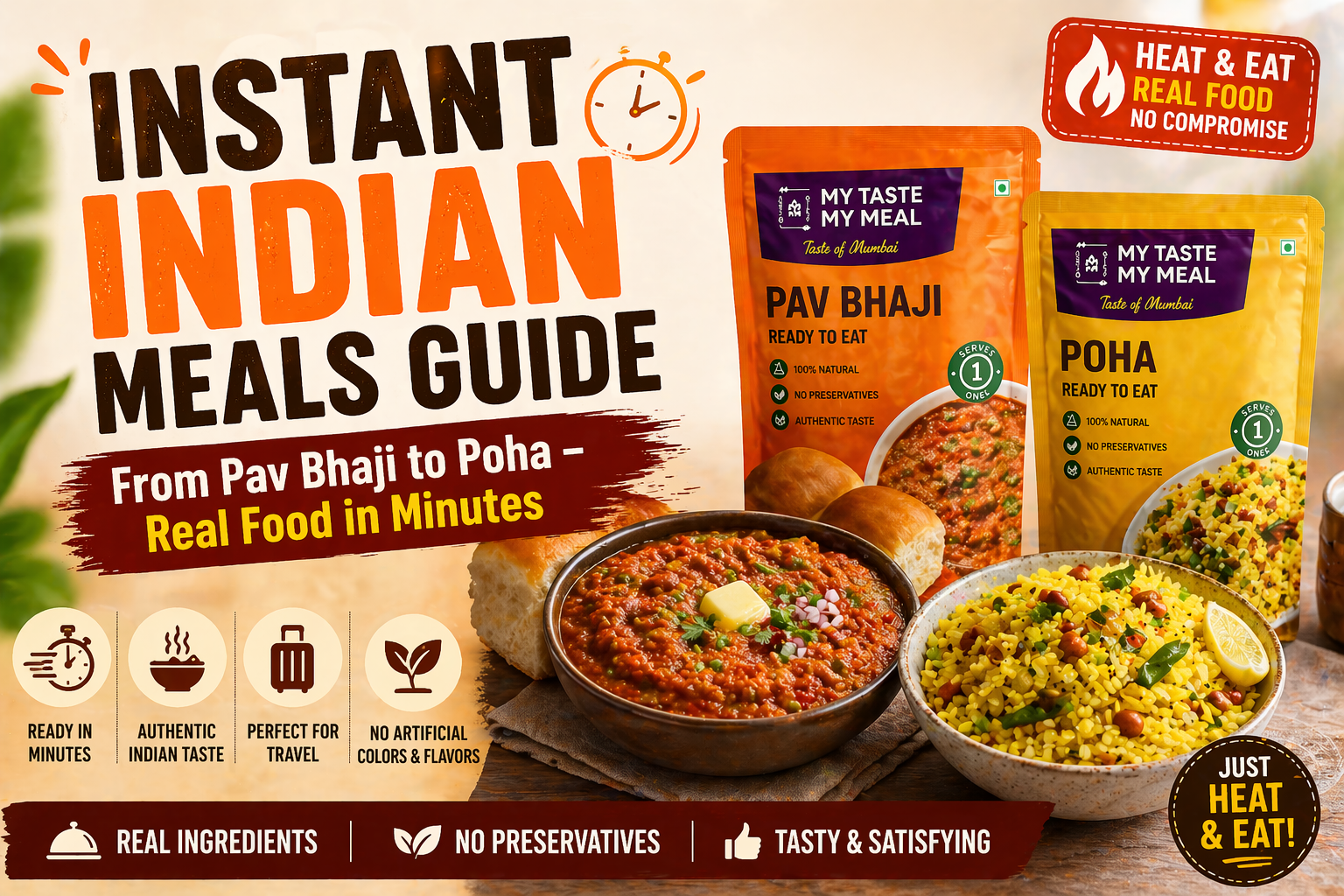
Instant Indian Meals Guide: From Pav Bhaji Ready to Eat to Poha – Real Food in Minutes
There's a particular kind of hunger that hits when you're far from home. Maybe you're in a hostel in Amsterdam, a hotel room in Dubai, or a cramped train compartment somewhere between Pune and Nagpur. You want real food. Not a granola bar. Not overpriced room service. You want something that tastes like home.
That's exactly where instant Indian meals have changed the game. And before you picture sad, mushy packets with artificial flavour, let's clear the air. Today's freeze-dried and dehydrated Indian ready-to-eat meals are a different story entirely.
This guide breaks down the most popular instant Indian dishes you can now eat anywhere, how they're made to last without losing flavour, and what to look for when you pick a brand.
What Makes an Instant Indian Meal Actually Good?
Not all packaged food is equal. The difference between something that tastes like cardboard and something that tastes like your mum's kitchen comes down to the preservation method.
Here's how it works:
Freeze-drying removes moisture from fully cooked food by first freezing it and then exposing it to a vacuum, which causes the ice to evaporate directly without going through liquid form. This is called sublimation. Because the food is never exposed to high heat during this stage, most of the original flavour, colour, and texture survives. Once you add hot water back, you're essentially rehydrating the same meal you started with.
Dehydration (using airflow and moderate heat) is the older method. It works well for simpler dishes but can affect texture more noticeably in complex curries.
The best instant Indian meal brands use freeze-drying for curries, dals, and rice dishes, and pair it with quality spice blends that actually taste like the real thing.
Pav Bhaji Ready to Eat: Why It Travels So Well
Pav bhaji is arguably the most beloved Mumbai street food in existence. A thick, spiced vegetable mash, cooked on a massive tawa with butter, served with soft ladi pav. Getting it right in a packaged format sounds like it shouldn't be possible. But it is.
A good ready to eat pav bhaji works because the bhaji itself is essentially a cooked-down, spiced vegetable blend. When freeze-dried properly, those flavours concentrate and rehydrate beautifully. The key markers of a good one:
- Deep colour from the tomato and kashmiri chilli base
- Real spice balance that includes amchur, coriander, and the right amount of butter flavour
- Smooth-but-chunky texture after rehydration, not a watery paste
Pav bhaji ready to eat is also one of the most flexible instant meals. Eat it as a main, stuff it into a roll if you're on the move, or pair it with chapati if the bread situation isn't great.
Kanda Poha: The Breakfast That Never Gets Old
Poha is one of those dishes that's eaten from Kashmir to Kanyakumari, with every region swearing their version is the correct one. But the Maharashtra-style Kanda Poha, made with flattened rice, sautéed onion (kanda), mustard seeds, turmeric, and curry leaves, is what most people mean when they say poha.
In its freeze-dried form, it holds up well because the main ingredient (flattened rice, or chivda) doesn't have a complex structure to preserve. What makes or breaks it is the masala mix and the onion flavour.
A well-made instant poha should:
- Rehydrate within 3 to 5 minutes in hot water
- Have visible texture, not a mush
- Carry the warmth of mustard seeds and turmeric without being heavy
It's the ideal light breakfast when you're travelling or pressed for time at home.
The Full Spread: Other Instant Indian Dishes Worth Knowing
Beyond pav bhaji and poha, the range of quality freeze-dried Indian meals has grown significantly. Here's a quick look at some of the most popular categories and why they work:
Dal (Lentil Dishes)
Dal Makhani and Dal Fry are the two most common. Dal Makhani, with its slow-cooked black lentils in a buttery tomato gravy, might sound like a stretch for a packet meal, but freeze-dried versions retain the creaminess and depth surprisingly well. Dal Fry is lighter and works even better in instant format.
Rice Dishes
Veg Biryani, Tawa Pulao, Jeera Rice, and Rajma Rice all travel well. Tawa Pulao is a personal favourite because the spice mix is complex enough to feel satisfying, but simple enough to rehydrate cleanly.
Breakfast
Idli Sambar and Mumbai Upma round out morning options. Upma is particularly well-suited to this format since the semolina base absorbs liquid uniformly.
Curries and Mains
Palak Paneer, Veg Kolhapuri, Veg Handi, and Veg Makhanwala cover everything from mild and creamy to robustly spiced. Mumbai Misal is a good pick if you like something punchy with texture.
Jain Options
A notable addition in better brands is a dedicated Jain food range, which avoids root vegetables like onion, garlic, potato, carrot, and beet. Dal Khichadi (Jain), Dal Fry (Jain), and Dal Makhani (Jain) let followers of Jain dietary practices eat comfortably without compromise.
How to Prepare Instant Indian Meals: Three Methods
Most freeze-dried Indian meals can be prepared in under five minutes. Here's how:
Gas Stove Method:
- Empty the packet into a pan.
- Add water as directed on the packet.
- Heat on medium flame for 3 to 5 minutes.
- Serve hot.
Microwave Method:
- Empty the packet into a microwave-safe bowl.
- Add the recommended amount of water.
- Microwave for 2 minutes.
- Stir and serve.
Hot Water Method (best for travel):
- Empty the packet into a bowl.
- Add approximately 190ml of hot water (check the packet for exact amounts).
- Cover for 3 minutes, stir, and eat.
The hot water method is what makes these meals genuinely useful for trekking, international flights, dormitory stays, and long train journeys.
Shelf Life and Storage: What You Should Know
Freeze-dried Indian meals typically have a shelf life of 12 months or more when stored correctly. Here's what that means in practice:
- Keep packets in a cool, dry place away from direct sunlight.
- Avoid storing near strong-smelling items, since the packaging can absorb odours.
- Once opened, consume immediately. These are not resealable in the traditional sense.
- Check the manufacturing date and "best before" date before purchasing in bulk.
The long shelf life is what makes these meals practical not just for travel but also for emergency food storage, student kitchens, and office drawers.
Who Actually Uses Instant Indian Meals?
The short answer: more people than you'd expect. Here's who finds them useful:
Indian students abroad. When you're studying in the UK, Canada, or Germany, you don't always have time or access to cook proper Indian food. A packet of Dal Makhani or Palak Paneer that takes five minutes is the closest thing to home on a Tuesday night before an exam.
Business travellers. Hotel food gets old fast. A small stash of ready-to-eat Indian meals means you always have a fallback.
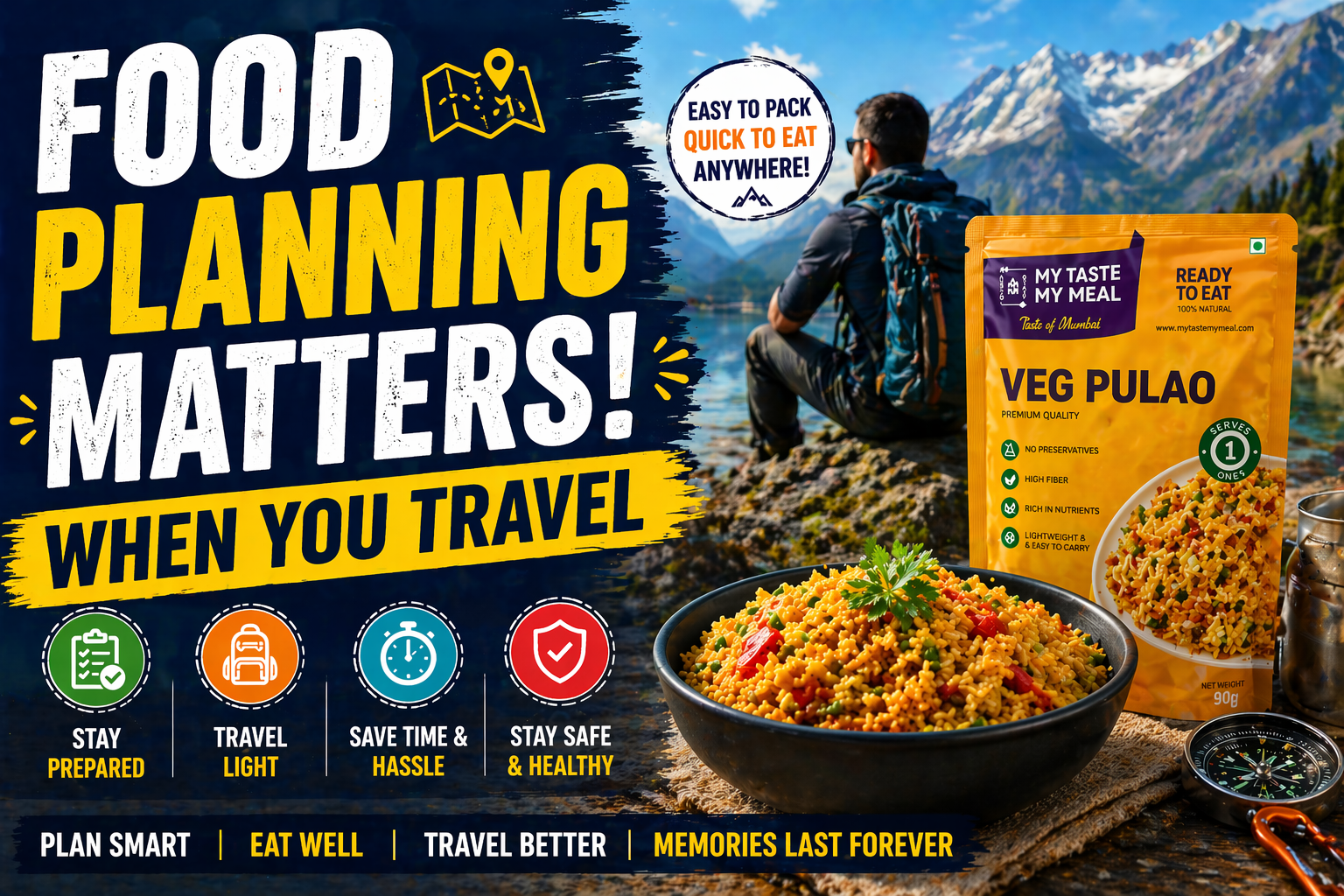
Trekkers and hikers. Lightweight, calorie-dense, easy to prepare with just hot water. Veg Biryani or Pav Bhaji on a mountain campsite is a serious upgrade from energy bars.
Jain families travelling internationally. Finding Jain food outside India is genuinely difficult. Having pre-vetted, clearly labelled Jain-compliant packets removes that stress entirely.
People who just don't feel like cooking. Completely valid. Having two or three packets at home for tired weeknights is simply sensible.
What to Look for in a Brand
When choosing a brand for instant Indian meals, keep these points in mind:
- Ingredient transparency: The ingredient list should be short and readable. Real spices, real vegetables, no unpronounceable fillers.
- Preservation method: Freeze-dried is generally better than dehydrated for complex dishes.
- Variety: A wider range means you're less likely to get bored on a long trip.
- Jain options clearly marked: If you or someone you're buying for follows Jain dietary rules, this matters.
- Customer reviews: Look for consistent feedback on taste, not just convenience.
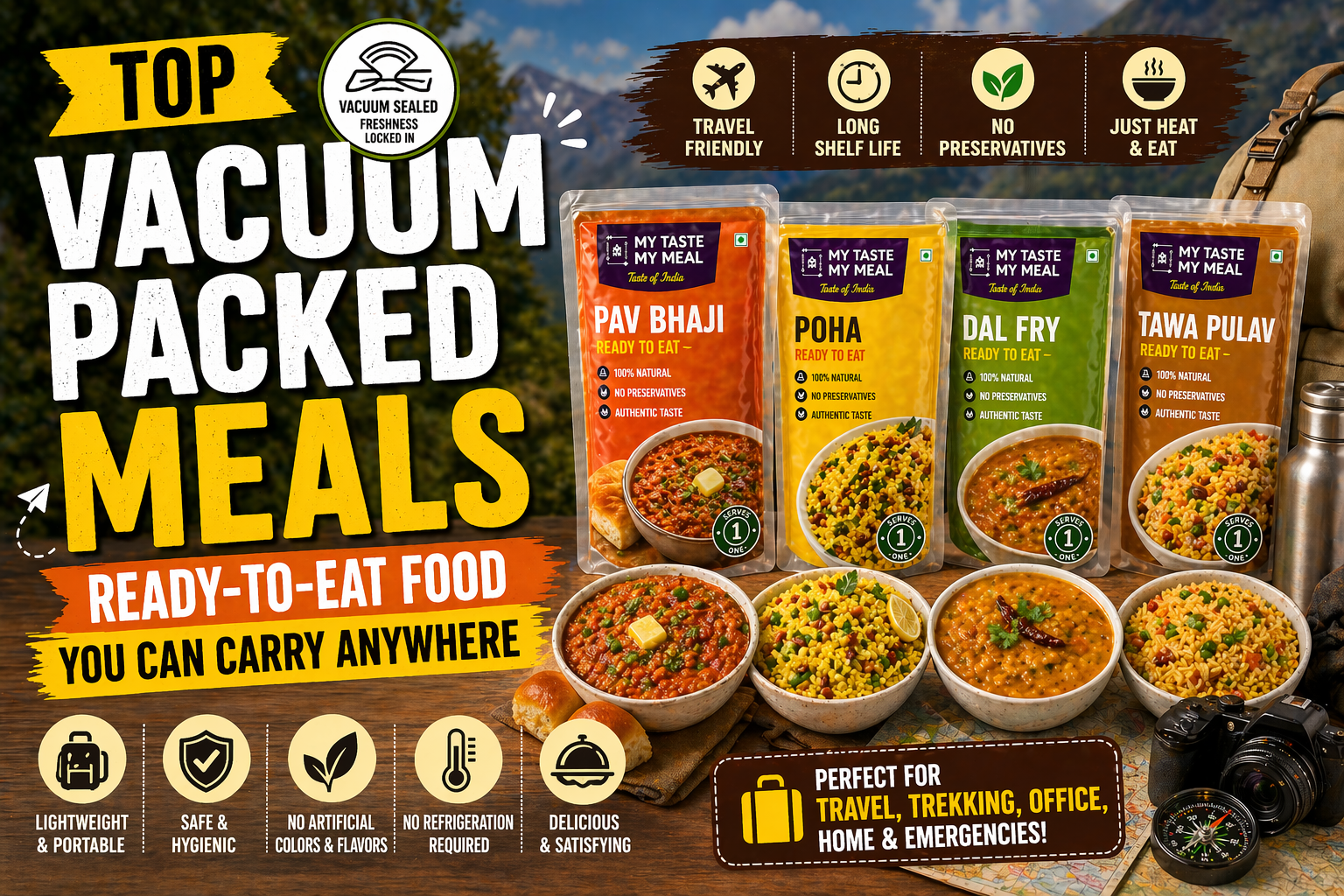
My Taste My Meal, for example, offers over 50 freeze-dried Indian meals including a dedicated Jain category, breakfast options, dals, curries, rice dishes, and even desserts. Their products are built around the idea that food should travel with you without sacrificing taste.
Instant Indian Meals for Travel: Planning Your Pack
If you're packing for a trip, here's a practical way to think about it:
- Short trip (3 to 5 days): Pack 2 breakfasts (Poha or Upma), 2 mains (Dal Makhani + Pav Bhaji), and 1 rice dish (Tawa Pulao or Veg Biryani). That gives you flexibility without overpacking.
- Long trip (10+ days): Go for variety. Mix breakfast, lunch, and dinner options. Include at least one dessert (Gajar Halwa travels well). Budget around 100 to 150g per meal packet.
- Trekking: Prioritise hot water compatibility. Stick to meals that work without a stove. Poha, Khichadi, and Upma are your best friends here.
Instant Indian meals have quietly become one of the most practical food solutions for anyone who wants real flavour without real cooking time. From a pav bhaji ready to eat that actually tastes like the real thing, to morning poha on a mountain trail, the options available today are genuinely good. You just need to know where to look and what to pick.
Whether you're a frequent traveller, a student far from home, or someone who simply wants a proper Indian meal in five minutes on a weekday, it's worth stocking a few of these in your bag, your desk drawer, or your kitchen shelf.
FAQs About Ready to Eat Indian Meals
Q1. Is pav bhaji ready to eat actually healthy?
Most freeze-dried pav bhaji packets contain real vegetables like potatoes, tomatoes, capsicum, and peas with spices. They're free from artificial preservatives in quality brands. Compared to fast food or processed snacks, they're a reasonable choice, though they're not a substitute for freshly cooked meals daily.
Q2. How long does ready to eat pav bhaji last without refrigeration?
Quality freeze-dried pav bhaji typically lasts 12 months or more from the manufacturing date when stored in a cool, dry place. Always check the best before date printed on the packet. Once opened and rehydrated, eat it immediately.
Q3. Can I carry instant Indian meals on an international flight?
Yes, dry packaged food is allowed in both checked and carry-on luggage on most international flights. Freeze-dried packets are not liquids and pass through airport security without issue. Check the destination country's customs rules, as some nations restrict bringing food items across borders.
Q4. Are there Jain-friendly ready to eat Indian meal options?
Yes. Brands like My Taste My Meal offer a dedicated Jain range that includes Dal Fry, Dal Makhani, and Dal Khichadi, all prepared without onion, garlic, potato, carrot, or other root vegetables. Always verify the label and ingredient list before buying.
Q5. What's the best way to prepare instant Indian meals when travelling without a stove?
The hot water method works best. Boil water in a travel kettle or ask for hot water at a hotel. Pour it into your bowl with the meal packet contents, cover it for 3 minutes, stir, and eat. Most freeze-dried Indian meals are designed to work this way.