
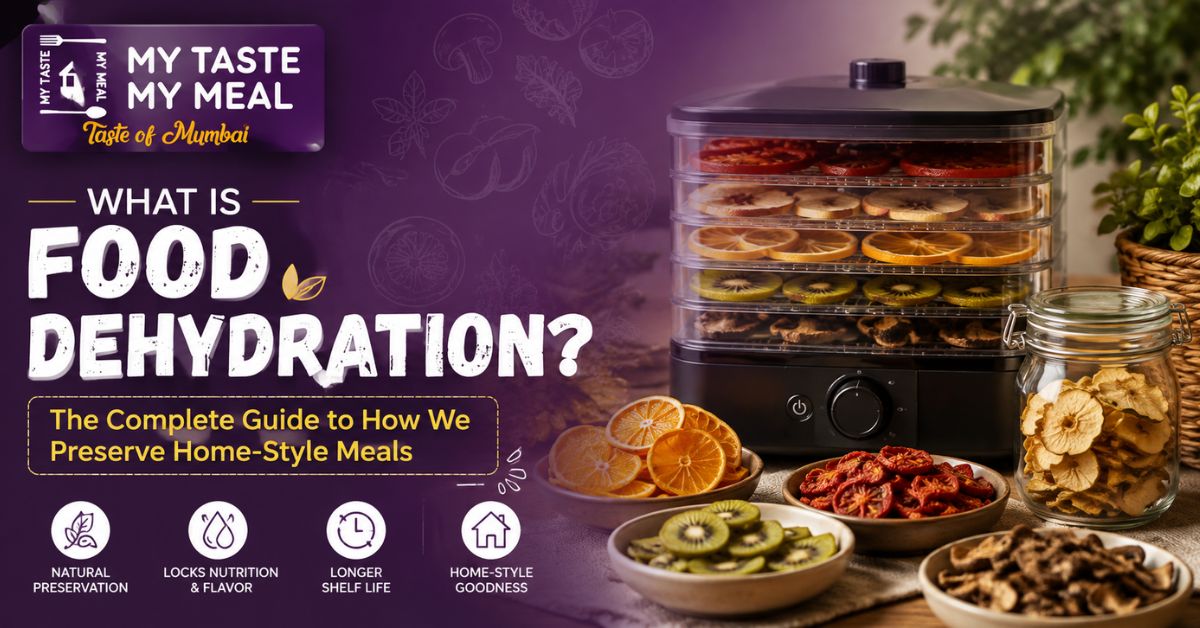
What Is Food Dehydration? The Complete Guide to How We Preserve Home-Style Meals
Ever wondered how a plate of pav bhaji or dal makhani can sit on a shelf for months and still taste like it came off the stove? The answer lies in food dehydration, a preservation method that has fed travellers, soldiers, and hikers for centuries. Today it's the reason you can pack a home-cooked Indian meal in your backpack and eat it three weeks later on a trek in the Himalayas.
This guide breaks down what food dehydration actually is, how it differs from freeze drying, and why it matters if you care about eating real food on the go.
What Is Food Dehydration?
Food dehydration is the process of removing water from food to stop bacteria, yeast, and mould from growing. Less moisture means less room for spoilage. That's the whole idea in one sentence.
Here is why this matters: most microorganisms that spoil food need water to survive and multiply. Pull the water out, and you take away their environment. This is one of the oldest food preservation methods around, older than refrigeration by thousands of years. People dried fruit in the sun, salted and air-dried meat, and left grains out to cure long before anyone had a freezer.
Modern food dehydration uses controlled heat and steady airflow instead of leaving food out in the open. A dehydrator or industrial dryer heats the food gently while air moves across it, carrying moisture away. As the surface dries, water from deeper inside the food migrates outward to replace it. This is why uniform slicing and consistent piece size matter so much in commercial production. Uneven pieces dry unevenly, and that creates weak spots where spoilage can start.
How the Dehydration Process Actually Works
Let's break it down step by step.
The basic sequence looks like this:
-
Preparation. Food gets cleaned, cut, and sometimes blanched to stop enzyme activity that would otherwise cause browning or off flavours.
-
Loading. Pieces go onto trays in a single layer so air can reach every surface evenly.
-
Heating and airflow. The dryer runs at a controlled temperature, often starting a bit higher to drive off surface moisture, then easing down so the food doesn't harden on the outside while staying wet inside. This uneven drying is called case hardening, and it's one of the most common mistakes in home dehydration.
-
Moisture check. Dried vegetables should feel hard and brittle. Fruit usually stays leathery and pliable. Each food has its own target texture.
-
Cooling and packing. Once dried, food needs to cool before it goes into an airtight container. Sealing warm food traps residual moisture and defeats the purpose.
For meat-based products like jerky, there's an extra safety step. According to the USDA Food Safety and Inspection Service, meat should be heated to 160°F and poultry to 165°F before the dehydrating process begins, because bacteria become more heat-resistant once food is dried, and a home dehydrator may never get hot enough to kill them on its own.
Dehydration of Cooked Food vs. Raw Food
Most home dehydration guides focus on raw fruits and vegetables. But dehydration of cooked food is a different, more complex process, and it's the one that matters most for ready-to-eat meals.
When you dehydrate a finished dish like dal fry or veg biryani, you're not just drying a single ingredient. You're working with a mix of starches, proteins, spices, and sauces, each with its own moisture content and drying behaviour. Rice needs different handling than a thick gravy. Legumes behave differently than vegetables. Getting a full cooked meal to dry evenly, without the sauce clumping or the rice turning gummy, takes tighter control over temperature and airflow than drying a tray of sliced apples.
This is also why proper dehydrated food storage matters so much. Even a well-dried meal will pick up moisture from the air if it's not sealed properly, which shortens shelf life and invites spoilage. Airtight, moisture-proof packaging is what keeps a dehydrated meal safe and tasty for months rather than weeks.
What Is the Freeze-Drying Process?
Freeze drying, also called lyophilisation, is a different preservation method that also removes water, but it does the job in a completely different way. Instead of using heat and airflow, the freeze-drying process relies on cold and vacuum pressure.
Here's how it works:
-
Freezing. The food is frozen solid first, locking its structure in place.
-
Vacuum. The frozen food goes into a chamber where pressure is dropped dramatically.
-
Sublimation. Under that low pressure, the ice inside the food turns directly into vapour, skipping the liquid stage entirely. This is the core science behind freeze drying, and it's what makes the process gentler on flavour and texture than heat-based dehydration.
-
Secondary drying. A final low-heat stage removes any remaining bound moisture that didn't sublimate in the first pass.
Because the food never passes through a liquid state during drying, it holds its original shape, colour, and much of its nutritional value better than heat-dried food. A strawberry that's freeze-dried still looks like a strawberry, just lighter and crisp. That's also why freeze-dried meals tend to rehydrate closer to their original texture when you add hot water, something home cooks and campers notice right away.
Dehydration vs. Freeze Drying: Quick Comparison
|
Factor |
Dehydration |
Freeze Drying |
|
Method |
Heat and airflow |
Freezing plus vacuum sublimation |
|
Texture after drying |
Often chewy or leathery |
Light, crisp, retains shape |
|
Rehydration |
Takes longer, texture changes more |
Closer to original texture |
|
Shelf life |
Several months to a year with good packaging |
Often longer, up to a year or more |
|
Energy use |
Lower |
Higher, due to freezing and vacuum equipment |
Both methods extend shelf life. Both cut weight, which is why hikers, students, and frequent travellers reach for dehydrated food and freeze-dried meals instead of packing cans or fresh ingredients.
Why This Matters for Ready-to-Eat Indian Meals
If you've ever tried to carry home-style food on a long trip, you know the problem. Fresh food spoils. Frozen food needs a cooler you don't have. Instant noodles get old fast. This is where properly dehydrated and freeze-dried Indian meals fill a real gap.
At My Taste My Meal, meals are prepared using freeze drying and vacuum packing technology at a processing facility in Mumbai, built around the idea that packaged food doesn't have to taste like packaged food. The lineup includes classics like pav bhaji, dal makhani, and rajma rice, along with Jain-friendly versions of many dishes for travellers who need to stick to specific dietary rules. Meals are designed to rehydrate with hot water in a few minutes, whether you're on a train, in a hostel, or on a trek with no kitchen in sight.
This is a good example of food dehydration services applied to everyday Indian cooking rather than just fruit snacks or trail mix. The goal isn't to reinvent the dish. It's to preserve it well enough that it still tastes like something made at home.
How to Store Dehydrated Food Properly
A few basics go a long way here:
-
Keep dried and freeze-dried food in airtight, moisture-resistant packaging.
-
Store in a cool, dark place. Heat and light both degrade quality faster.
-
Check packaging for damage before storing food long-term. A torn seal lets moisture back in.
-
Use within the shelf life printed on the package. Even well-dried food doesn't last forever.
Final Thoughts
Food dehydration isn't a new trick. It's an old idea, refined with better equipment and tighter process control. Whether it's simple heat-based drying or the more advanced freeze-drying process, the goal stays the same: pull out the water, keep the flavour, and make food that travels well without losing what made it good in the first place. For anyone who wants home-style Indian meals without a stove nearby, that combination of science and cooking is what makes it possible.
Frequently Asked Questions
Is dehydrated food as healthy as fresh food?
Dehydrated food keeps most of its fibre, minerals, and calories. Some heat-sensitive vitamins, like vitamin C, reduce somewhat during drying. Freeze-dried food tends to retain more nutrients since it uses cold rather than heat to remove moisture.
How long does dehydrated food actually last?
Shelf life depends on the food, the drying method, and the packaging. Properly dried and sealed meals commonly last several months to a year. Freeze-dried meals often last even longer when stored in airtight, moisture-proof packaging.
Can you dehydrate a fully cooked meal, not just fruit or vegetables?
Yes. Dehydration of cooked food is common for ready-to-eat meals like dal, rice dishes, and curries. It requires more precise control of temperature and airflow than drying raw produce, since sauces, starches, and proteins dry at different rates.
What's the real difference between dehydrating and freeze-drying?
Dehydration uses heat and airflow to evaporate water. The freeze-drying process freezes food first, then uses vacuum pressure to turn ice directly into vapour. Freeze-drying generally preserves texture, shape, and flavour better, though it costs more to produce.
Do dehydrated Indian meals need refrigeration?
No. That's the point of proper dehydration and freeze drying. Meals like the ones from My Taste My Meal are shelf-stable at room temperature and only need hot water to prepare, making them practical for travel, hostels, and trips without kitchen access.