
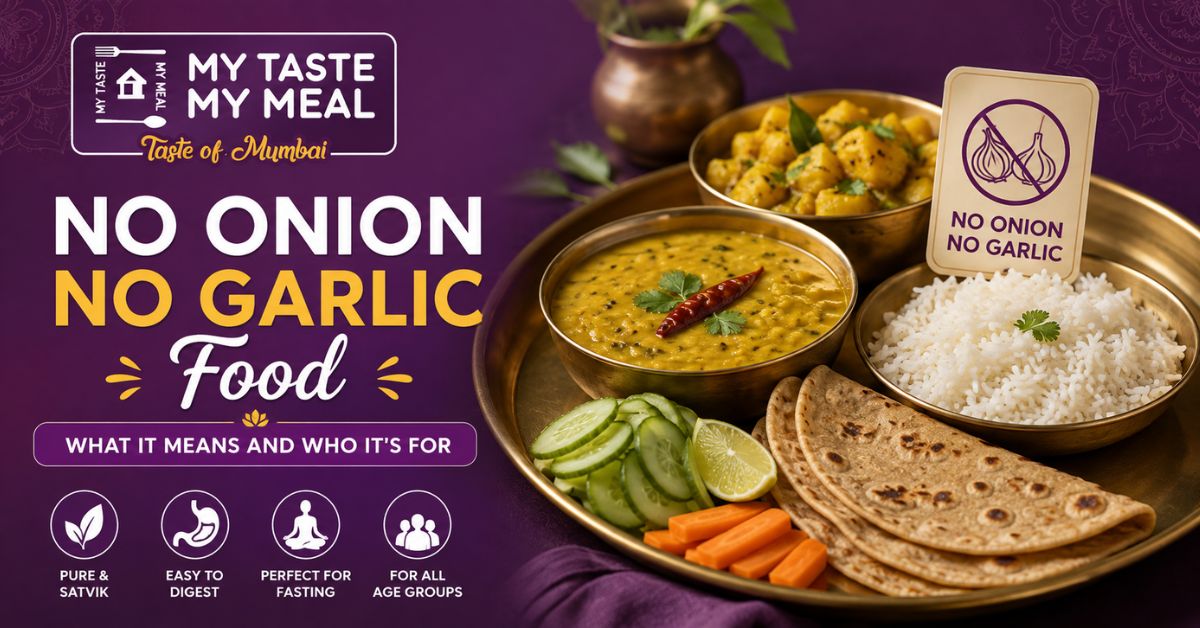
No Onion No Garlic Food: What It Means and Who It's For
Walk into any Jain household in Gujarat or Rajasthan and you'll notice something missing from the kitchen shelf. No onions in the basket. No garlic braids hanging by the stove. This isn't a supply problem. It's a deliberate choice that goes back thousands of years, and it still shapes how millions of people eat today.
If you've come across the term "no onion, no garlic food" and wondered what it actually means or why someone would choose to cook without two of the most common flavour bases in Indian cuisine, this guide breaks it down in plain terms.
What Does "No Onion, No Garlic" Mean?
At its simplest, this style of cooking leaves out onion, garlic, and often other root vegetables like potato, carrot, radish, and beet. The dishes still use ginger substitutes, spices, and vegetables that grow above ground, so the food doesn't lack flavour. It just gets there differently, often with hing (asafoetida), ginger paste, tomatoes, and a stronger hand with whole spices.
This eating style is closely tied to Jain vegetarianism. Jain dietary practice is built on ahimsa, the principle of non-violence toward all living beings. Jain ethics, including food choices, is governed by this principle, and one's thoughts, words, and actions should always work to reduce suffering for other beings. Root vegetables get left out for a specific reason. Harvesting a root vegetable kills the whole plant and can disturb the many microscopic organisms living in the soil and root structure, which goes against that principle. Onion and garlic fall into this category too, since they grow underground and get uprooted the same way potatoes do.
There's a second layer to this as well. Onions and garlic are also seen as tamasic foods in some traditions, believed to bring on dullness and restlessness rather than calm, and eating them is thought to unsettle the mind and slow spiritual focus. That's why you'll see this style of cooking in other traditions too, not just Jain kitchens. Some Hindu households skip onion and garlic during fasting periods or religious observances. Certain Buddhist communities in East Asia follow a similar rule, keeping pungent alliums off the plate during meditation retreats.
Who Actually Eats No Onion, No Garlic Food?
This isn't a niche diet followed by a handful of people.
Here's a quick look at who reaches for it regularly:
-
Jain families and travellers. For strict followers, this isn't optional. It's a daily practice tied to religious belief.
-
Hindus observing vrat, or fasting days. Many people cut out onion and garlic temporarily during festivals like Navratri.
-
Yoga and Ayurveda practitioners. Those following a sattvic diet often reduce or remove pungent foods for mental clarity.
-
People managing digestive sensitivity. Onion and garlic are packed with fructans, a type of carbohydrate that the body can't fully break down. These fructans can trigger bloating, cramping, gas, or diarrhoea in people with IBS or FODMAP sensitivity, even though onion and garlic are otherwise rich in nutrients and prebiotic fibre.
-
Travellers and students abroad. Some just find this food easier on the stomach when they're away from home and eating on the go.
That last group has grown a lot in recent years. Students in hostels, professionals on work trips, and families packing for international travel all look for food that's light, familiar, and doesn't upset a system that's already adjusting to a new place or a new time zone.
Why Cooks Skip Root Vegetables (Not Just Onion and Garlic)
It helps to understand that "no onion, no garlic" is really shorthand for a wider set of rules. Most Jain kitchens also leave out potatoes, carrots, beets, radishes, and ginger in their fresh form. A Jain diet typically avoids onion, garlic, potato, carrot, beet, radish, turnip, yam, fresh ginger, and fresh turmeric, along with meat, seafood, and eggs. Some stricter observances also skip multi-seeded vegetables and fermented foods.
If you're reading a packaged food label with this in mind, the search doesn't stop at the ingredient list. Onions and garlic can hide inside seasonings, spice blends, sauces, broths, and natural flavour additives on modern labels, so a careful check matters. That's one reason many people prefer meals made specifically for this diet instead of trying to adapt a regular recipe on their own.
What Goes Into a Jain Meal Instead?
Take out onion and garlic, and cook lean on other tools to build flavour:
-
Hing (asafoetida) for that savoury, oniony undertone.
-
Tomatoes for body and a touch of tang.
-
Whole and ground spices like cumin, coriander, and garam masala, used generously.
-
Fresh herbs like coriander and curry leaves for brightness.
-
Yoghurt and dairy for richness in gravies, since Jain cooking is lacto-vegetarian.
The result is food that still tastes like home. A Jain-style pav bhaji or dal makhani doesn't taste empty. It just gets its punch from spice work and technique instead of alliums.
Finding Pure Jain Meals Online
Cooking this way from scratch takes planning. You need the right spice mix, fresh vegetables that fit the rules, and time you might not always have, especially if you're studying abroad, travelling for work, or just short on hours in the kitchen. This is where ready-to-eat options come in handy.
My Taste My Meal offers a full range of pure Jain meals online, made without onion, garlic, or other root vegetables, so you don't have to check labels or ask a restaurant to modify a dish. The lineup includes freeze-dried versions of familiar favourites like Dal Fry - Jain, Pav Bhaji - Jain, Veg Kolhapuri - Jain, and Mumbai Misal - Jain, each one ready in about five minutes with hot water. It's a practical option if you're packing for a trip, living in a hostel, or simply want a quick meal that fits Jain dietary rules without any guesswork.
If you're specifically searching for pure Jain meals online because a restaurant menu or grocery aisle keeps falling short, this kind of ready-to-eat format solves the two biggest headaches: finding a place that actually follows the rules and having something on hand when you don't have time to cook.
Tips for Cooking No Onion No Garlic Food at Home
Here's why a few small swaps make a big difference:
-
Replace the onion-garlic base with a generous pinch of hing, added to hot oil at the start of cooking.
-
Build sauce depth with tomato and a longer simmer time instead of a quick sauté.
-
Use ginger-free garam masala blends if you're following a stricter version of the diet.
-
Keep a stock of asafoetida, dried herbs, and a strong spice mix on hand so you're never stuck.
None of this requires special equipment or rare ingredients. It just takes a bit of practice to retrain your instincts away from reaching for the onion first.
Final Thoughts
No onion, no garlic food isn't about giving something up. It's a full cooking style with its own logic, its own techniques, and its own long history behind it. Whether you're following it for religious reasons, managing a sensitive gut, or just curious about trying something new, there's more flavour here than the name suggests. And if you'd rather skip the extra shopping and prep, My Taste My Meal keeps a full Jain-friendly range ready whenever you need it.
FAQs
Is Jain food the same as vegan food?
Not quite. Jain food is lacto-vegetarian, so dairy is generally allowed, while vegan food excludes all animal products, including milk and ghee. Both skip meat, fish, and eggs, but the overlap ends around dairy and honey.
Can I get pure Jain meals online in India?
Yes. Several brands now sell ready-to-eat Jain meals online, including freeze-dried options that skip onion, garlic, and root vegetables entirely. My Taste My Meal is one option offering a wide Jain product range with quick prep.
Why do some people avoid onion and garlic for digestion?
Onion and garlic contain fructans, a carbohydrate that can cause bloating, gas, or discomfort in people with IBS or FODMAP sensitivity. Cutting them out, even temporarily, often eases these symptoms for sensitive eaters.
What can I use instead of onion and garlic for flavour?
Hing (asafoetida), ginger, tomatoes, and a heavier hand with whole spices all work well. Fresh herbs like coriander also add brightness without needing alliums in the mix.
Do all Jains follow the same food rules?
Not exactly. Strictness varies between individuals, families, and sects, and some rules tighten further during festivals or fasting periods. It's always fair to ask someone about their personal practice rather than assume.