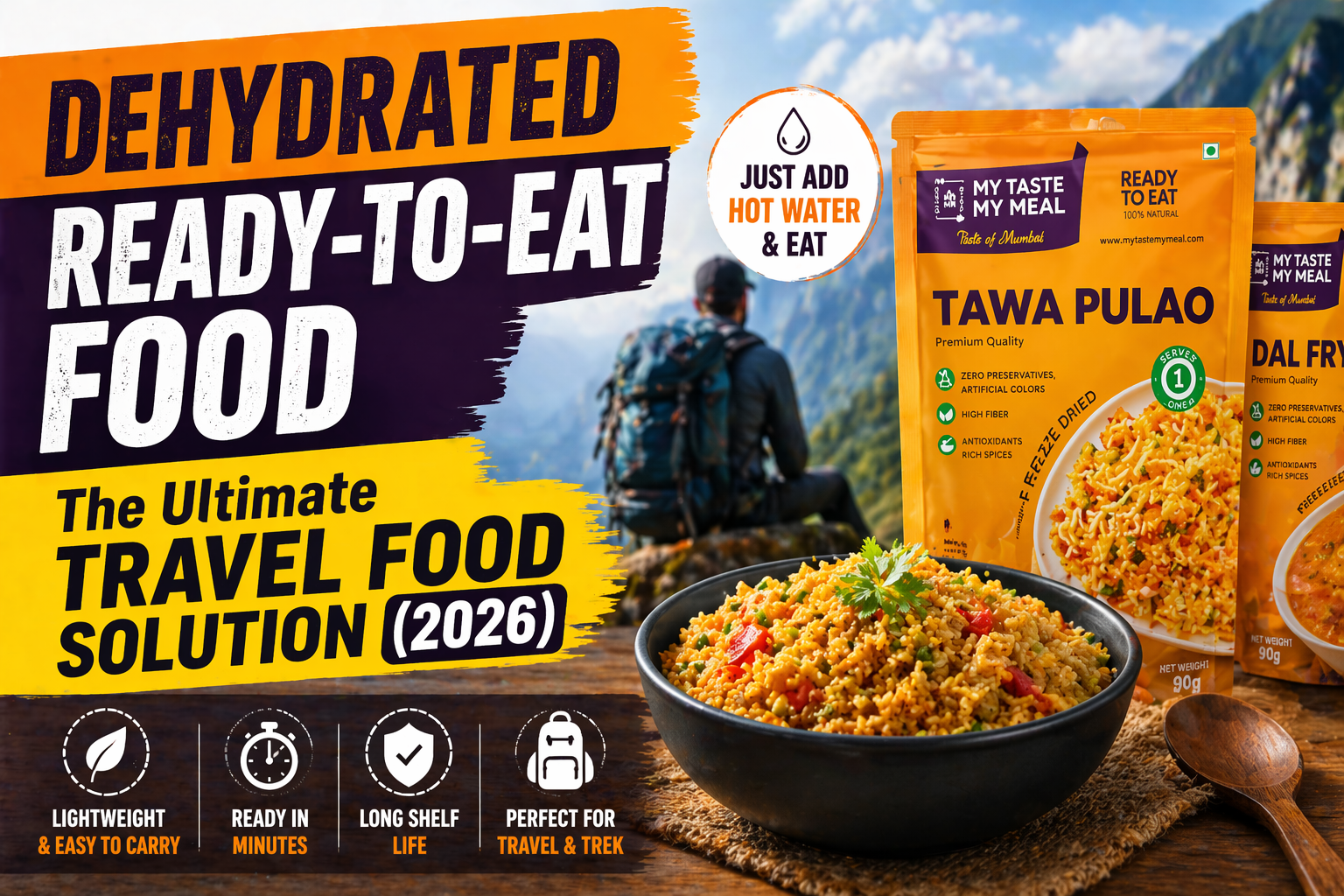
Dehydrated Ready-to-Eat Food: The Ultimate Travel Food Solution in 2026
Whether you're trekking in the Himalayas, catching an overnight train, studying abroad, or stuck in a layover with nothing but overpriced airport sandwiches nearby, one question always comes up: what am I going to eat?
Dehydrated ready-to-eat food has quietly become the answer for millions of travelers, students, and working professionals around the world. In 2026, the category has grown well beyond basic camping rations. You can now find freeze-dried Dal Makhani, Palak Paneer, and Pav Bhaji that taste like they just came off the stove. This guide covers everything you need to know, from how the food is made and why it lasts so long, to what to look for when buying it.
What Is Dehydrated Ready-to-Eat Food, Exactly?
Dehydrated ready-to-eat food is cooked food that has had most of its moisture removed through one of several preservation methods. The absence of water is what matters most here, because water is what allows bacteria, mold, and yeast to grow.
There are a few common methods used in the industry:
Air drying is the oldest method. Heat and airflow gradually pull moisture out of the food. It works, but it can degrade flavor and texture.
Spray drying atomizes food into fine droplets and dries them rapidly. You'll find this in powdered soups and sauces.
Freeze drying (lyophilization) is the gold standard. The food is frozen solid first, then placed in a vacuum chamber where the ice converts directly to vapor without ever becoming liquid. This process, called sublimation, preserves the cell structure of the food far better than heat-based methods. The result is a product that rehydrates quickly, tastes closer to fresh, and retains more of its original nutrition.
According to the Institute of Food Technologists, freeze-dried foods can retain up to 97% of their original nutritional content, compared to significantly lower retention rates in conventionally dried foods. That's a meaningful difference when you're relying on these meals as a primary food source while traveling.
Why Dehydrated Ready-to-Eat Food Makes Sense in 2026
Shelf Life Without Refrigeration
This is the headline feature. Properly packaged dehydrated food can last anywhere from 6 months to several years without refrigeration. For everyday travelers, a shelf life of 12 months is more than enough. It means you can stock up before a long trip and not stress about expiry dates.
Compare that to retort pouch meals (the foil-packed meals that don't require dehydration), which typically last 12 to 18 months but are heavier and bulkier because they retain water. Dehydrated meals are significantly lighter, which matters when every gram counts in a backpack.
Weight and Portability
A single freeze-dried meal packet can weigh as little as 50 to 100 grams before water is added. That's a complete meal you can carry in a jacket pocket. For someone packing for a 10-day trek or an international trip with a weight-restricted carry-on, that difference adds up fast.
No Need for Special Equipment
The best dehydrated ready-to-eat meals are genuinely easy to prepare. Most require one of three methods:
- Stovetop: Empty the packet into a pan, add the specified amount of water, and heat for 3 to 5 minutes on a medium flame.
- Microwave: Pour the packet into a bowl, add water, and microwave for about 2 minutes.
- Hot water method: Add hot water directly to the packet or a bowl, wait a few minutes, and eat.
No cooking skills needed. No special gear.
Dietary Restrictions Are Easier to Handle on the Road
If you follow a Jain diet, are vegetarian, or have specific food sensitivities, eating while traveling internationally can be genuinely stressful. Finding certified Jain food in Singapore or Qatar, for example, is not straightforward. Carrying your own meals removes that stress entirely.
How to Read a Dehydrated Food Label
Not all dehydrated food is made equally. Here's what to check before you buy.
Moisture content: Look for products with a water activity (Aw) below 0.60. At this level, microbial growth is effectively halted. Manufacturers rarely print this number directly, but a long shelf life at room temperature is a reasonable proxy.
Ingredients: The shorter the list, the better. Good freeze-dried food shouldn't need a long list of stabilizers or preservatives. The drying process itself is the preservation mechanism.
Packaging: Barrier packaging (metallized foil or multi-layer laminates) protects against moisture, oxygen, and light, all of which degrade shelf life. Avoid products in thin plastic pouches.
Rehydration ratio: A higher ratio means more actual food once prepared. Check whether the stated weight is pre- or post-rehydration.
Sodium content: This varies widely. Some manufacturers load up on sodium as a flavor shortcut. Compare a few options before settling on one.
Dehydrated Ready-to-Eat Indian Food: A Growing Category
Indian cuisine presents specific challenges for food preservation. The dishes are complex, often involving layered spicing, multiple ingredients with different textures, and sauces with varying water content. For a long time, freeze-dried Indian food was limited to bland, oversimplified versions of the real thing.
That has changed. Indian food preservation technology has caught up, and there are now producers who get the spice balance right even after the freeze-drying process. Dishes like kanda poha, Kolhapuri Misal, Sambhar, Dal Fry, Veg Biryani, and Gajar Halwa are now available in genuine freeze-dried form, not just the compressed, flavor-dulled versions that existed five years ago.
My Taste My Meal is one brand that has built its entire product range around this category, specifically freeze-dried Indian meals across breakfast, dal, rice, meals, desserts, and even chutneys. Their menu includes both standard vegetarian options and dedicated Jain variants, covering dishes like Dal Khichadi Jain and Dal Makhani Jain, which are harder to find in this format elsewhere.
Best Use Cases for Dehydrated Ready-to-Eat Food
Long-Distance Travel (Flights and Trains)
Airport and train food is expensive, inconsistent, and often unsuitable for people with dietary restrictions. A few packets of freeze-dried food in your carry-on solves the problem cleanly.
International Travel for Indian Diaspora
If you're an Indian living abroad or visiting a country where finding familiar food is difficult, carrying dehydrated ready-to-eat meals from home is the most reliable solution. Students going abroad for the first time often rely on this category heavily during their first few months.
Trekking and Outdoor Activities
Weight matters on a trek. So does preparation time, especially at altitude where cooking takes longer. Freeze-dried meals fit both requirements.
Emergency Food Preparedness
Most preparedness guides, including those published by FEMA in the United States and India's National Disaster Management Authority, recommend maintaining a food stock at home that requires no refrigeration. Dehydrated meals are a clean fit for this purpose.
Office Lunches and Busy Weekdays
This use case doesn't get as much attention, but it's real. If you're short on time and the food court near your office is mediocre, having a few good freeze-dried meal packets at your desk is a practical backup.
Common Myths About Dehydrated Food
"It won't taste like real food." This was largely true of older products. Freeze-drying technology has improved significantly, and quality producers now deliver meals that genuinely taste like home-cooked food, not a pale approximation of it.
"It's not nutritious." As mentioned earlier, freeze drying retains most of the food's original nutrients. It's not identical to fresh, but it's not nutritionally empty either.
"It's only for campers and soldiers." The customer base for dehydrated ready-to-eat food now spans students, business travelers, frequent flyers, emergency preparedness planners, and anyone who values convenience without sacrificing food quality.
"It's difficult to prepare." Adding hot water or heating in a pan for a few minutes is about as simple as food preparation gets.
What to Look for When Buying Freeze-Dried Indian Meals
Here's a quick checklist:
- Authentic spice profile: Does the product list specific spices, or just "spice mix"? Specificity usually signals more care in formulation.
- No artificial preservatives: Good freeze-dried food doesn't need them.
- Clear rehydration instructions: A reliable brand will tell you exactly how much water to add and how long to heat.
- Variety: Having options across breakfast, mains, and desserts means you can sustain yourself for days, not just one meal.
- Jain or dietary-specific variants: Important if you or someone you're traveling with has restrictions.
- Reasonable packaging size: Single-serve packets are ideal for travel. Bulk packs work better for stockpiling at home.
Brands like My Taste My Meal have built their catalog around these exact points, offering over 50 freeze-dried Indian meal options, including Jain-specific variants, chutneys, and even Indian breads, all designed to be travel-ready.
How to Store Dehydrated Ready-to-Eat Food at Home
Storage is straightforward but worth getting right.
- Keep packets away from direct sunlight.
- Store at a consistent room temperature (below 25°C is ideal).
- Avoid humid areas like under the kitchen sink.
- Do not puncture or compress the packaging.
- Check the expiry date before packing for a trip, especially if you bought in bulk months ago.
The Bottom Line
Dehydrated ready-to-eat food has moved past its survival-ration image. In 2026, it's a genuinely practical food option for anyone who travels, studies abroad, spends time outdoors, or simply wants a reliable backup meal at home or at work.
The technology has improved. The variety has expanded. And for Indian food specifically, there are now options that actually taste like the dishes they're meant to be, not like a freeze-dried ghost of them.
If you haven't stocked a few packets yet, it's worth starting before your next trip. You'll be glad you did when you're sitting in a train somewhere without a good food stall in sight, and you've got a Dal Makhani that's ready in five minutes.
Frequently Asked Questions
1. How long does dehydrated ready-to-eat food last?
Most quality freeze-dried meals have a shelf life of 12 to 24 months when stored correctly. Keep them away from heat, moisture, and direct sunlight. Always check the packaging for the manufacturer's specific expiry date before traveling.
2. Is dehydrated ready-to-eat food allowed on flights?
Yes, in most cases. Dry or sealed food packets are generally permitted in both carry-on and checked baggage. That said, customs rules vary by country, so check the import regulations of your destination, especially for animal-derived ingredients.
3. Does freeze-dried food retain its nutritional value?
Freeze drying preserves a large portion of the original nutrients, particularly vitamins and minerals. Some heat-sensitive vitamins like Vitamin C see minor losses, but overall, freeze-dried food is nutritionally far closer to fresh food than air-dried or canned alternatives.
4. Can I prepare dehydrated meals without a stove?
Yes. Most freeze-dried Indian meals can be prepared with just hot water. Pour boiling water into the packet or a bowl, cover for a few minutes, and the meal is ready. This makes them genuinely usable in hotel rooms, trains, and anywhere you have access to a kettle.
5. Are there good Jain options in freeze-dried Indian food?
Yes, this category has grown. You can now find Jain-specific variants of popular dishes like Dal Fry, Dal Makhani, Dal Khichadi, and others. My Taste My Meal offers a dedicated Jain collection with clear labeling, which makes it easier to shop without having to read through every ingredient list.