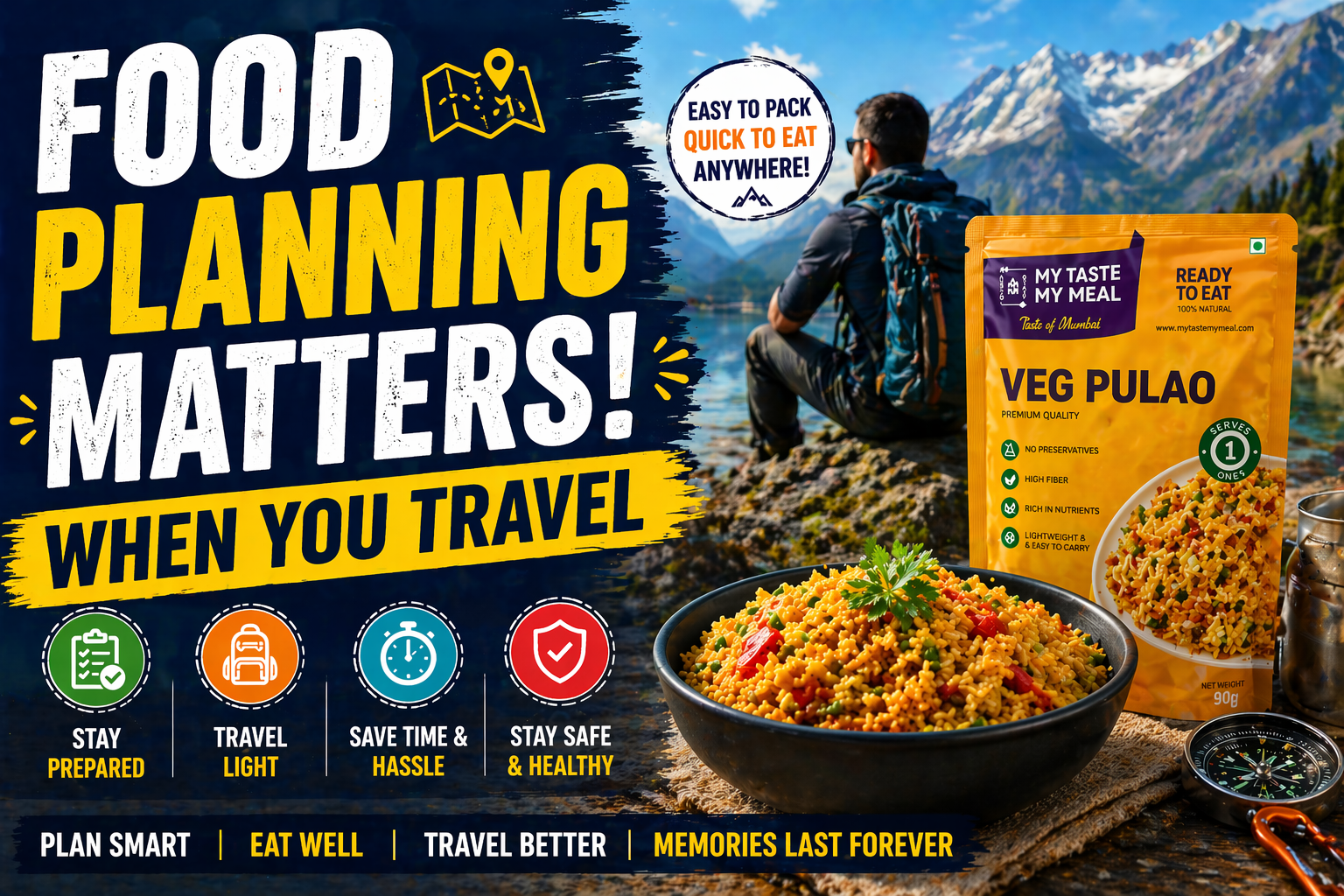
What to Eat While Traveling? Easy Ready-to-Eat Meal Solutions
Traveling is exciting until hunger hits and your only options are an overpriced airport sandwich or questionable roadside food. Whether you're on a long train ride, hiking through the mountains, studying abroad, or just stuck on a layover, eating well on the go is a real challenge. And if you follow a specific diet, like Jain food, the struggle gets even harder.
The good news? The ready-to-eat food category has come a long way. You don't have to settle for chips and biscuits anymore. Here's a practical guide to eating smart while you travel, including what types of food actually work, what to look for, and how freeze-dried Indian meals have become a go-to for travelers who want real food without the fuss.
Why Food Planning Matters When You Travel
Most people spend hours planning flights, hotels, and itineraries. Meals? An afterthought. But what you eat while traveling directly affects your energy, mood, and digestion. Eating irregularly or relying on unfamiliar street food can leave you feeling sluggish or unwell, especially on long trips.
Here is why planning your travel meals matters:
- You avoid overpaying for mediocre food at airports, train stations, and tourist spots
- You stay on track if you follow dietary restrictions (Jain, vegetarian, gluten-free, etc.)
- You maintain energy throughout the day without relying on heavy, oily meals
- You always have a backup when good food isn't available
The simplest solution is to carry food that doesn't need refrigeration, cooks fast or requires no cooking at all, and still tastes like a proper meal.
Types of Travel-Friendly Food to Consider
Not all packaged food is created equal. Here's a breakdown of your main options.
1. Freeze-Dried Meals
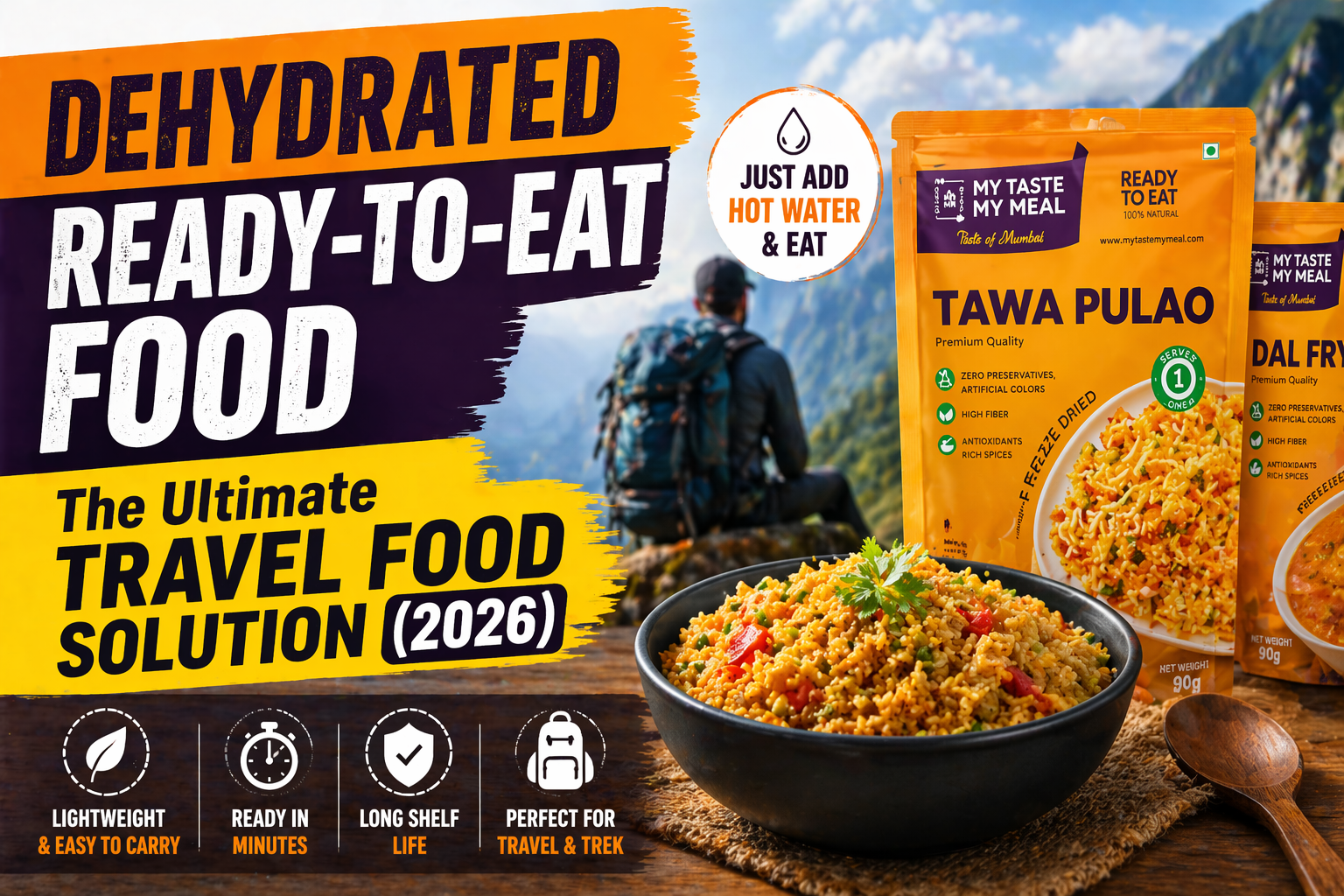
Freeze drying removes moisture from cooked food using low temperatures and a vacuum process. The result is a lightweight packet that retains the food's original flavor, texture, and nutrients. Add hot water or heat on a gas stove, and you have a proper meal in 3 to 5 minutes.
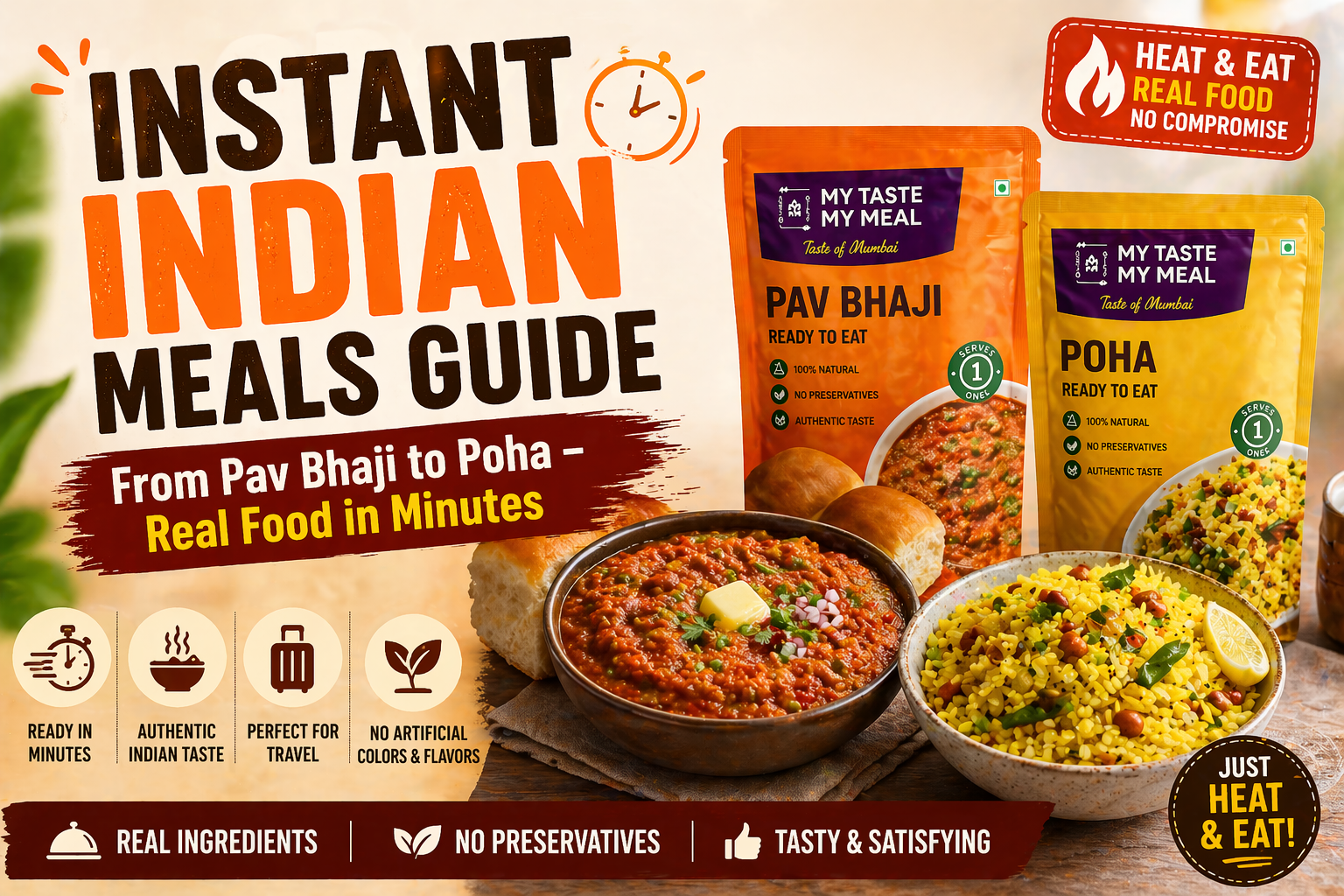
Freeze-dried home made meals are the best bet for anyone who wants home-style food while traveling. Think Dal Makhani, Palak Paneer, Pav Bhaji, or Veg Biryani all ready to eat in minutes, with a shelf life of up to 12 months.
2. Retort Pouches (Vacuum-Packed Ready Meals)
These are heat-processed pouches that don't require refrigeration. They're heavier than freeze-dried options and tend to have a softer texture, but they're widely available and reasonably priced.
3. Dry Snacks and Trail Mix
Good as fillers between meals nuts, seeds, dried fruits, makhana, roasted chickpeas. These won't replace a proper meal but help you stay energized.
4. Instant Noodles and Soups
Convenient but limited in nutrition. Fine for one meal in a pinch, but relying on these for an entire trip leaves you feeling drained.
5. Energy Bars and Protein Bars
Useful for quick energy, especially if you're trekking or doing physical activity. Not a replacement for meals.
What Makes a Good Travel Meal?
When choosing what to pack, run your options through this checklist:
- Shelf life: Can it last the full length of your trip without refrigeration?
- Weight and size: Will it fit in your bag without taking up too much room?
- Preparation: Does it need cooking, or just hot water?
- Taste: Will you actually enjoy eating it?
- Diet compatibility: Does it match your dietary requirements?
For Indian travelers especially, finding food that matches home-style flavors abroad is a real concern. That's where ordering ready to eat meals online before your trip makes complete sense you pack exactly what you want, at a better price than buying at the airport.
Freeze-Dried Indian Meals: A Closer Look
Freeze drying has been used for decades in the food and pharmaceutical industries. The process freezes the food first, then uses a vacuum to remove the ice through sublimation (direct conversion from solid to vapor). This leaves the food structure intact while eliminating the moisture that causes spoilage.
The result is food that:
- Weighs significantly less than its fresh equivalent
- Has a shelf life of 6 to 12 months (or longer) at room temperature
- Rehydrates quickly with hot water
- Retains most of the original taste and color
According to the Institute of Food Technologists, freeze drying retains more nutrients and flavor compared to other preservation methods like dehydration or canning. That's why freeze-dried food is standard issue for military rations, NASA missions, and serious trekkers and increasingly popular with everyday travelers.
How to Eat Well at Every Stage of a Trip
Let's break it down by travel scenario.
On the Train or Bus
Long journeys are where food planning pays off most. Carry at least two proper meals and some dry snacks. A freeze-dried meal only needs hot water — most train pantry cars will give you that for free or at minimal cost. Pack a small insulated flask to keep water hot.
Good options to pack: Dal Fry, Jeera Rice, Veg Biryani, Kanda Poha for breakfast.
On a Flight
You can't heat food on a flight, so focus on things that taste good at room temperature or cold. Carry sealed dry snacks and an easy breakfast option. Freeze-dried items won't work here mid-flight, but they're excellent for when you land and need something before you find a restaurant.
While Trekking or Camping
Weight is everything here. Freeze-dried meals are ideal — they're light, nutritious, and require minimal cooking. A small camping stove and your meal packets are enough to eat properly even at altitude. Products like Rajma Rice or Dal Khichadi make a satisfying hot meal after a long day on the trail.
Studying or Working Abroad
Students and working professionals abroad often miss home food the most. Carrying ready to eat meals online from India means you can have Dal Makhani or Palak Paneer even when you're thousands of miles from home. Meals that need just 2 to 5 minutes of preparation fit perfectly into a busy schedule.
What to Look for When You Buy Ready-to-Eat Meals Online
The market for packaged travel food has grown a lot, and not every product lives up to its claims. Here is what to check before you buy.
Ingredient list: The shorter, the better. Real food should have recognizable ingredients, not a long list of preservatives and artificial flavors.
Preparation method: Products that can be prepared with just hot water are the most travel-friendly. Some also work on a gas stove or in a microwave.
Dietary labeling: If you follow a Jain diet, vegetarian diet, or have allergies, check labels carefully. Look for products that clearly state what's in them.
Packaging: Look for airtight, moisture-proof packaging. This is what extends shelf life and keeps the food safe.
Reviews: Real customer feedback is the best indicator of taste and quality. If multiple people are complaining about flavor or texture, take that seriously.
My Taste My Meal, for example, offers over 50 freeze-dried Indian meals covering breakfast, main meals, dal, rice, desserts, and soups. They stock a dedicated Jain range, which is genuinely rare in the travel food space. Customers who've traveled to Qatar, Singapore, and other international destinations have written about carrying their packets as their primary food supply particularly useful where Indian vegetarian food is hard to find.
Smart Travel Meal Planning: A Simple Approach
You don't need to overthink this. Here's a practical system:
- Calculate the number of meals you need for days when you won't have easy access to restaurants.
- Plan by meal type — breakfast, lunch, dinner, snacks. Don't just pack dinner and forget breakfast.
- Mix it up — pack different flavors so you're not eating the same thing every day.
- Account for dietary needs — if you're Jain or vegetarian, pack enough to cover the whole trip, especially for international travel.
- Pack more than you think you need — travel delays happen. An extra day's worth of food is never wasted.
- Always carry a backup — even if you plan to eat out most days, having one or two meal packets as a backup saves you from scrambling.
Indian Food While Traveling Internationally
This deserves its own mention. Indian food abroad is either very expensive, very inauthentic, or simply unavailable. For vegetarians and especially for Jain travelers, international trips can mean days of making do with whatever veg options happen to exist.
Carrying freeze-dried Indian meals solves this. You know exactly what you're eating, it tastes like home, and it's ready in minutes. A family of four traveling to Singapore, for example, might pack 100+ meal packets across breakfast, lunch, and dinner options to cover the full trip — as several customers of My Taste My Meal have shared in their reviews.
The shelf life advantage is also real for international travel: meals stay fresh throughout multi-week trips without any special storage requirements.
Eating well while traveling takes about 20 minutes of planning before you leave, and it pays off every single day of your trip. Pack smart, include food you actually enjoy, and don't assume you'll always find the right meal on the road.
FAQs: What to Eat While Traveling
Q1. What are the best ready-to-eat foods to carry while traveling?
Freeze-dried meals are the top choice for real, filling food that's easy to prepare. Dal, rice, sabzi, and breakfast options like Poha or Upma work well. Pair these with dry snacks like nuts and seeds for between-meal hunger. Always pick items that match your dietary restrictions.
Q2. Can I carry ready-to-eat Indian meals on international flights?
Most commercially sealed, packaged food is allowed in checked baggage on international flights. Customs rules vary by country, so check the destination country's food import rules before you travel. Dry or freeze-dried packaged foods generally have fewer restrictions than wet or fresh products.
Q3. How long do freeze-dried ready-to-eat meals last?
Quality freeze-dried meals typically last 6 to 12 months when stored at room temperature in a cool, dry place. This makes them practical for long trips, multi-destination travel, or stocking up at home between trips.
Q4. Are there ready-to-eat options for Jain travelers?
Yes. Jain-specific packaged food is available from some brands. My Taste My Meal has a full Jain range that includes Dal Fry, Dal Makhani, Dal Khichadi, and other dishes made without root vegetables, which is genuinely hard to find in travel food. It's worth ordering ready to eat meals online in advance if you follow a Jain diet.
Q5. How do freeze-dried meals compare nutritionally to fresh food?
Research from the Institute of Food Technologists suggests freeze drying retains significantly more nutrients than methods like canning or conventional dehydration. While no preservation method perfectly replicates fresh cooking, freeze-dried meals retain most of the protein, carbohydrates, and minerals from the original ingredients.