Ready to Eat Meals India: Why Pre-Made Indian Food is Becoming a Daily Convenience
There was a time not too long ago when the idea of eating Dal Makhani or Pav Bhaji from a pouch felt like a compromise. Something you’d do only on a long train journey or when there was no other option. That perception is quietly but steadily changing.
Across India in metro apartments, hostel rooms, corporate campuses, and even mountain trails ready to eat Indian food is showing up not as a last resort, but as a first choice. The reasons behind this shift are worth understanding.
The Numbers Behind the Shift
The Indian ready to eat meals market tells its own story. According to Market Research Future, the market was valued at around USD 6.34 billion in 2024 and is projected to grow at a compound annual growth rate of over 10% through 2035. That is not niche growth. That is a category maturing fast.
Several forces are driving this. India’s urban population is swelling. More people are living alone in cities away from family, and nuclear households are becoming the norm rather than the exception. The female workforce participation rate crossed 27% in 2024 according to a report by Ken Research and with more working households comes less time to cook from scratch every evening.
Add to this the growing number of students going abroad or to colleges in different cities, where ghee-tempered dals and home-style sabzis are simply not available. For them, a shelf-stable pouch of Dal Fry or Veg Biryani is not a convenience. It is comfort food.
What Has Actually Changed: The Technology
The older generation of packaged Indian food retort pouches heated in boiling water, or canned curries with watery textures earned their skepticism. The taste was passable at best. But the category has moved on.
Freeze-drying has changed the game in a meaningful way. The process works by freezing the cooked food and then removing its moisture through sublimation where ice converts directly to vapor without passing through liquid form. According to the University of Minnesota Extension, this technique avoids high heat treatment entirely, which means the food’s original flavor, colour, and texture are largely preserved.
Since no high temperatures are involved, heat-sensitive nutrients like Vitamin C and B vitamins remain more intact compared to conventional dehydration methods, which typically use high heat and can destroy a significant portion of nutritional value.
The result is a meal that genuinely tastes close to freshly cooked, rehydrates in minutes, and does not need refrigeration. Commercially prepared freeze-dried meals can carry a shelf life of up to 25 years under the right storage conditions, though most everyday products aim for a window of one to three years for daily consumer use.
For pre-made meals in a country with India’s climate diversity from coastal humidity to high-altitude dryness a product that doesn’t need a cold chain is practically significant.
Who Is Actually Buying Ready to Eat Indian Food?
The consumer base is broader than most people assume. Here is a quick breakdown of who is driving demand:
Working professionals in cities:Long office hours and commutes leave little time for cooking. A quick meal that’s ready in five minutes on a gas stove, microwave, or just hot water fits seamlessly into weeknight routines.
Students studying abroad or in other cities: This is a large and emotionally motivated segment. Homesickness is real, and the craving for sabzi-roti or a good Sambhar doesn’t go away just because you’re in a hostel in Germany or a paying guest in Pune.
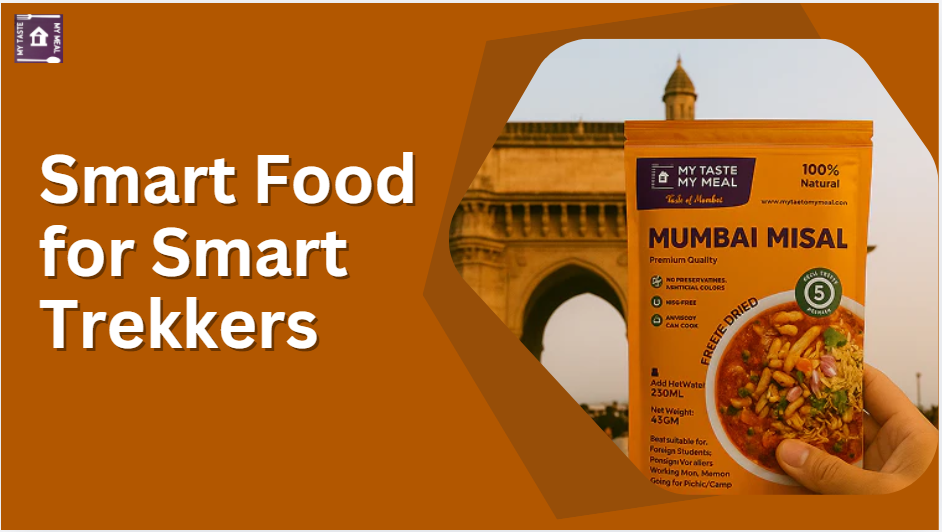
Travellers and trekkers:Whether it’s a 24-hour train journey to Rajasthan or a high-altitude trek in Himachal Pradesh, carrying a few meal pouches solves the problem of eating well without depending on what’s available at the next stop.
Jain and dietary-restricted eaters:For the Jain community in particular, finding compliant food while travelling internationally is genuinely hard. Platforms that offer Jain-specific versions of Dal Makhani, Dal Khichdi ,and other staples fill a real gap.
Regional Flavours, Now Portable
One of the more interesting things about how the ready to eat Indian food space has evolved is the range of regional representation. It is no longer just dal and plain rice. Today you can find Kanda Poha, Kolapuri Misal, Pav Bhaji, Gujarati Dal, Sambhar, and even regional breakfast options all in shelf-stable form.
This matters because Indian food is not one cuisine. It is dozens. Someone from Maharashtra is going to want their Misal Pav, not a generic curry. The availability of region-specific dishes makes these products culturally relevant, not just convenient.
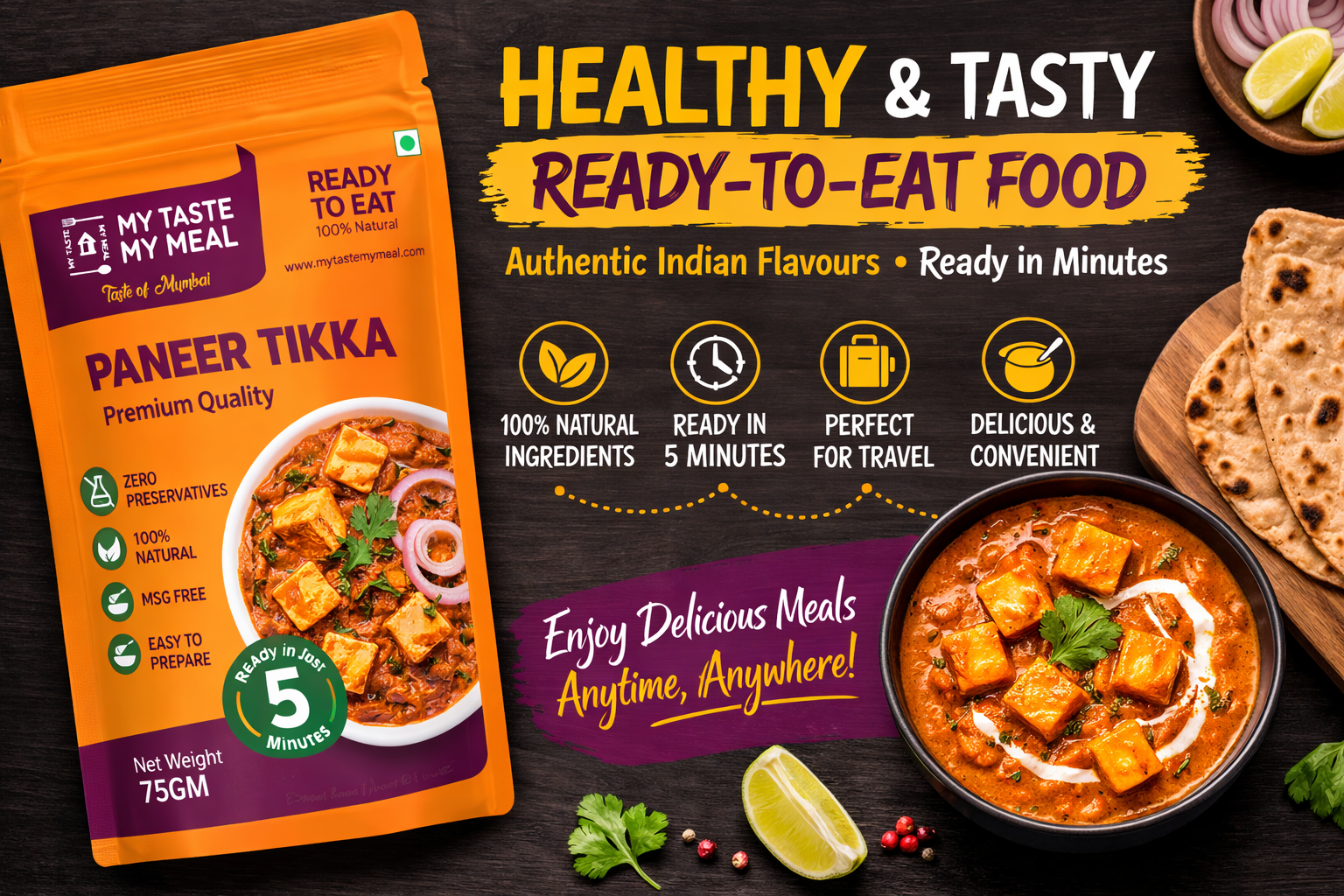
My Taste My Meal, a Mumbai-based brand, has built its catalogue around exactly this idea. Their range spans over 50 products across categories meals, dals, rice dishes, breakfasts, desserts, soups, and Jain Food options covering everything from Dal Fry to Paneer Bhurji to Veg Kolhapuri. Products are prepared using freeze-drying and can be ready in three to five minutes using a gas stove, microwave, or just hot water.
How Pre-Made Meals Are Prepared at Home: A Quick Guide
One of the most common questions people have is how these meals actually work. Here is a simple three-step process that applies to most freeze-dried Indian meal pouches:
- Empty the packet into a pan or microwave-safe bowl.
- Add water as specified on the packaging the amount varies by dish and desired consistency.
- Heat for three to five minutes on medium flame, or two minutes in a microwave. Stir gently and serve.
For those without a stove or microwave common while travelling many products also work with just hot water added directly to a bowl. It takes a little longer, but the result is still a warm, proper meal.
The Nutrition Question
A fair concern people raise about packaged food is whether it is actually good for you. The answer for freeze-dried Indian meals, specifically, is more reassuring than for heavily processed alternatives.
Because freeze-drying does not use heat, it avoids the kind of nutrient destruction that canning and conventional dehydration can cause. Products made without artificial preservatives or added colours rely on moisture removal itself as the preservation mechanism. When stored away from direct sunlight, heat, and moisture, they maintain their quality without chemical intervention.
That said, it is worth reading labels. Products vary. A well-made freeze-dried Dal Makhani made from whole lentils, real spices, and no artificial flavouring is a different product from a highly processed instant sachet that mimics the taste with flavour enhancers. Consumers are becoming better at telling the difference and that is pushing brands to be more transparent about ingredients.
The Practical Case for Keeping Pre-Made Meals at Home
Even for people who cook regularly, there is a practical argument for having a few ready to eat meals in the pantry. Think of them as genuine food insurance not for apocalyptic scenarios, but for the mundane kind:
- The evening when you are too tired to cook and don’t want to order delivery.
- A guest who arrives unexpectedly and stays for dinner.
- A sick day when you can barely get out of bed.
- A power cut that kills the fridge and leaves nothing to cook with.
Shelf-stable, pre-made Indian meals with long storage lives handle all of these situations without any planning required. For regular travellers, they are simply part of the packing list.
What to Look for When Buying
Not all ready to eat Indian food is made the same way. Here are a few things worth paying attention to:
- Ingredients list: Shorter and more recognisable is better. Look for real spice names, not “mixed spices” or “flavour enhancers.”
- Preservation method: Freeze-dried products generally taste better and carry fewer additives than retort or canned alternatives.
- Serving size and portion: Some pouches are single-serve; others are designed for two people. This affects value for money.
- Special dietary needs: If you follow a Jain diet, look for verified Jain options that exclude root vegetables.
Brands like My Taste My Meal carry a dedicated Jain range alongside their regular vegetarian products, making it easier for dietary-specific buyers to shop without cross-checking each product manually.
Frequently Asked Questions
- Are ready to eat meals in India healthy?
The healthiness depends on how the meal is made. Freeze-dried Indian meals that use real ingredients without artificial preservatives tend to retain most of their original nutritional value. Because freeze-drying avoids high heat, vitamins and minerals are better preserved compared to conventionally canned or dehydrated alternatives. Reading the ingredients list is the best way to judge.
- How long do pre-made Indian food pouches last?
Shelf life varies by brand and preservation method. Commercially freeze-dried meals typically have a shelf life of one to two years at room temperature under normal storage conditions. Keep them away from direct sunlight, heat, and moisture for best results. Once opened, consume the product promptly.
- What are the best ready to eat Indian meals for travel?
Lightweight, non-refrigerated pouches work best for travel. Dal-based dishes like Dal Fry and Dal Makhani, rice preparations like Veg Biryani and Tawa Pulav, and breakfast options like Kanda Poha travel well. For those following specific diets, Jain-friendly options from platforms like My Taste My Meal are worth exploring.
- Can ready to eat Indian food be prepared without a stove?
Yes. Many freeze-dried meal pouches can be prepared using just hot water, a significant advantage for trekkers, hostel students, or travellers without kitchen access. Simply add the specified amount of hot water to a bowl, stir, and wait three to five minutes before eating.
- Is ready to eat Indian food expensive compared to cooking at home?
On a per-meal basis, pre-made Indian meal pouches are generally more expensive than cooking from raw ingredients at home. The value is in convenience, zero wastage, and portability. For working professionals in cities or frequent travellers, the time saved often justifies the price difference. Prices vary by brand, with quality freeze-dried options typically starting around Rs. 150 to Rs. 250 per serving.