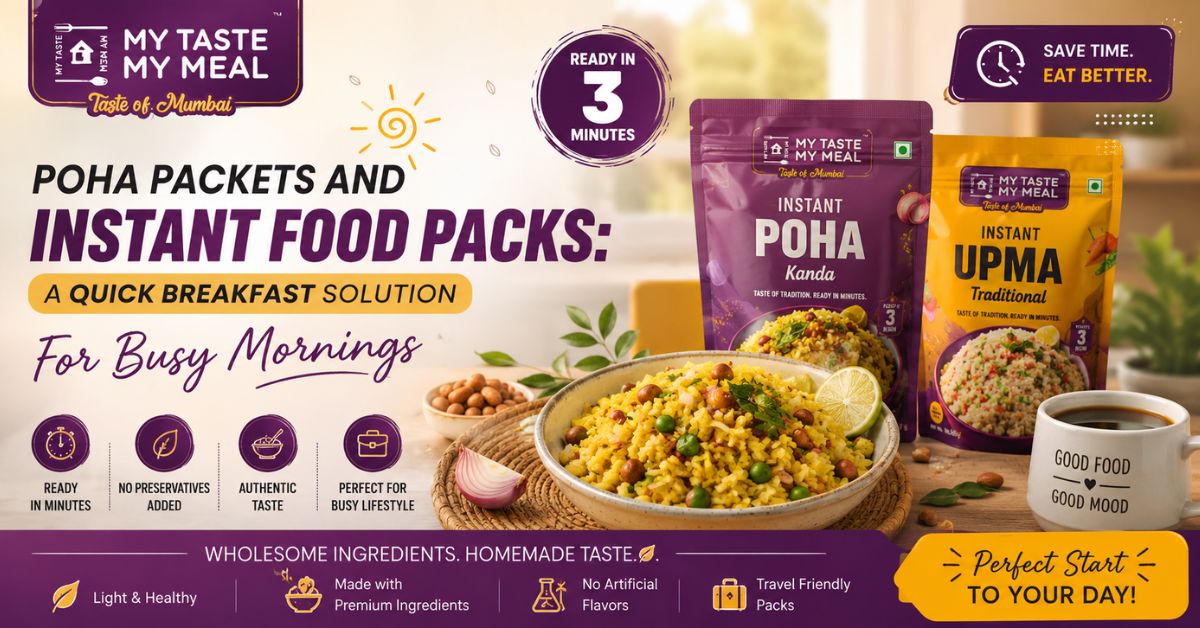
Poha Packets and Instant Food Packs: A Quick Breakfast Solution for Busy Mornings
Mornings in most Indian households follow the same pattern. Someone oversleeps. The commute doesn't wait. School drop-off has a hard deadline. And somewhere in the middle of all that, everyone needs to eat something before stepping out.
Fresh Indian breakfasts are wonderful when you have the time. Poha takes a minimum of fifteen minutes when you account for washing, draining, and tempering. Idli batter needs overnight fermentation. Dosa requires prep the night before. Upma is quick, but only if the vegetables are already chopped. On a genuinely rushed morning, none of this is realistic.
That's the gap that poha packets and instant food packets fill. A properly made, well-preserved breakfast pack gets you from packet to plate in five minutes. You get a real Indian breakfast, not a biscuit or a banana grabbed at the door.
This post covers every breakfast option available as a ready-to-eat or instant pack, why each one works, and what to look for when choosing ready-to-make food packets for your daily routine or travel needs.
Why Indian Breakfasts Work Well in Packet Format
Not every dish survives packaging and reheating well. Indian breakfasts, when done right, actually hold up better than most people expect. Here is why.
Most traditional Indian breakfasts are grain-based: flattened rice (poha), semolina (upma), and rice batter (idli, dosa). These grains absorb spices and seasoning deeply during cooking, which means the flavour is locked into the grain itself, not sitting on the surface where it can evaporate or degrade.
The tempering method used in Indian cooking also helps. When mustard seeds, curry leaves, green chilli, and turmeric hit hot oil and then coat the main ingredient, the spice flavour bonds with the oil and distributes evenly. This kind of flavour doesn't fade the way fresh herb garnishes do.
The result is that a good poha ready-to-eat pack, made with the right ingredients and preserved well, tastes remarkably close to freshly made. The same applies to upma, idli sambar, and the other options in a solid breakfast range.
Let's break down each one.
Kanda Poha: The Classic Maharashtra Morning
Poha is the undisputed breakfast champion of Maharashtra. It's eaten from Mumbai to Pune to Nagpur, from street carts to home kitchens to office canteens. The word "poha" refers to flattened rice, made by soaking and rolling rice until thin and light.
'Kanda Poha' specifically means poha made with onion ('kanda' is Marathi for onion).
The preparation:
Flattened rice is washed and drained, then tossed in a tempering of mustard seeds, green chilli, turmeric, and curry leaves in oil, with sliced onion cooked until soft. Lemon juice and fresh coriander finish the dish. Some versions add roasted peanuts for crunch and protein.
Why it works as a packet: Poha is one of the most travel-friendly breakfast options because it rehydrates and heats evenly. The spice base holds well in a sealed pack. The texture after reheating stays soft and light rather than going sticky or dense.
Who it's for: Anyone who grew up eating Maharashtra-style breakfast. It also works as a light dinner or a midday snack when you want something filling but not heavy.
Nutritional note: Flattened rice is a good source of carbohydrates and iron. It's easy to digest and lower in fat compared to fried breakfast options.
Available at My Taste My Meal: Kanda Poha is priced at Rs. 75. Check current availability on the website before ordering.
Mumbai Upma: Semolina Breakfast Done the City Way
Upma is made from roasted semolina (rava or sooji) cooked with vegetables, mustard seeds, green chilli, ginger, and curry leaves. The Mumbai version tends to be slightly coarser in texture than South Indian upma, with a more pronounced tempering and often a squeeze of lemon to finish.
It's a breakfast that feels more substantial than poha. The semolina absorbs water and swells during cooking, giving it a porridge-like consistency that's genuinely filling. Add vegetables like peas, carrots, and capsicum, and you have a complete, balanced morning meal.
Why it works as a packet: Semolina holds its structure well through the preservation process. Unlike rice-based dishes that can sometimes turn mushy if overcooked, well-prepared upma maintains its slightly grainy texture even after reheating.
Who it's for: People who want something filling enough to get through a long morning without snacking. Good for children's tiffin boxes too, since the mild spice level makes it accessible for most palates.
Available at My Taste My Meal: Mumbai upma is priced at Rs. 75 and is available to order with options. It represents one of the most affordable instant food packets in the breakfast range.
Idli Sambar: South India's Most Portable Breakfast
Idli sambar is the combination that defines South Indian mornings. Soft, steamed idlis made from fermented rice and urad dal batter, served with a tangy, spiced lentil soup made from toor dal, tamarind, tomatoes, and a South Indian spice blend.
As a packaged product, this is one of the more ambitious breakfasts to get right. Idli needs proper fermentation and steaming to get the right spongy texture. Sambar needs a proper spice blend, good tamarind balance, and the right consistency.
Why it works as a packet: When made using freeze-drying or dehydration, both idlis and sambar preserve well. The sambar spice base is robust enough to hold its character. The idli, when properly dehydrated and rehydrated with hot water, returns to a soft, slightly spongy texture.
Who it's for: South Indian food lovers who travel frequently or live in cities where good South Indian breakfast is hard to find. Also ideal for anyone who wants a complete protein-carbohydrate breakfast without cooking from scratch.
Available at My Taste My Meal: Idli Sambar is priced at Rs. 175. Check availability before ordering.
Mumbai Misal: A Breakfast That's More of an Experience
Miscal is not a gentle breakfast. It's a bold, spicy Maharashtra dish made from sprouted moth beans (matki) cooked in a fiery rassa (gravy) and topped with farsan (crunchy savoury mix), fresh onion, tomato, coriander, and lemon. Pune misal is different from Kolhapur misal, which is different again from Mumbai misal, each with varying spice levels and toppings.
Mumbai misal sits in the medium-to-hot range. The rassa is made with a special masala blend including coconut, red chilli, and goda masala. The farsan topping provides texture contrast. Pav (bread rolls) traditionally accompany it, making it a full meal rather than a light breakfast.
Why it works as a packet: Misal is one of those dishes where the spice base does the heavy lifting. A good misal masala, properly preserved, retains its depth when reheated. The sprout component is protein-rich and holds up well through preservation.
Who it's for: People who prefer a strong, savoury breakfast with real spice. Not for light eaters or anyone sensitive to heat. Excellent for travel when you want a meal that feels like proper food, not just a snack.
Available at My Taste My Meal: Mumbai Misal is priced at Rs 175. Check current availability on the website.
Sev Khamni: Gujarat's Morning Favourite
Sev Khamni is a Gujarati breakfast made from chana dal (split chickpeas). The dal is soaked, ground, and steamed into a soft cake, then broken apart and tempered with mustard seeds, green chilli, and a light sugar balance. It's topped with sev (thin fried chickpea noodles) and fresh coriander.
The flavour profile sits between savoury and mildly sweet, which is characteristic of Gujarati cooking. It's lighter than upma but more textured than plain poha and higher in protein than most grain-based breakfasts because of the chana dal base.
Why it works as a packet: Steamed chana dal preparations preserve and rehydrate well. The sev topping is naturally shelf-stable. The mild flavour profile also means it doesn't need heavy spicing to taste good, making it easier to replicate in a packaged format.
Who it's for: Anyone who enjoys Gujarati breakfast flavours. Also good for people who want more protein in the morning without relying on eggs or dairy.
Available at My Taste My Meal: Sev Khamni is priced at Rs. 180 and is available to order with options.
Dry Paper Dosas: A Completely Different Approach to Breakfast Packaging
The three paper dosa options in the breakfast range take a different approach from the heat-and-eat format. These are dry dosas, meaning the dosa has been made thin and crisp (paper dosa style) and preserved in dry form.
They come in three variants:
Dry Butter Paper Dosa (Rs. 250): The classic plain paper dosa with a butter finish. Thin, crisp, and best eaten with sambar or coconut chutney.
Dry Mysore Paper Dosa (Rs. 250): Made with the Mysore red chutney spread applied before crisping. The chutney is a blend of red chilli, garlic, and spices that gives Mysore dosa its distinctive reddish colour and mild heat.
Dry Cheese Paper Dosa (Rs. 250): A modern variant with a cheese layer baked into the dosa. Appeals to people who want a more indulgent breakfast option.
Why do these work as packets: Paper dosas are inherently dry and crisp, making them natural candidates for preservation. Unlike soft idlis or saucy upma, a thin, dry dosa holds its structure well without refrigeration and can be eaten as-is or quickly warmed.
Who they're for: Dosa lovers who want a restaurant-style breakfast experience at home or on the go. Also good as a travel snack, since dry dosas don't require heating.
Note on availability: All three dosa variants are currently sold out on the website. Check My Taste My Meal for restock updates.
Comparing All Eight Breakfast Options at a Glance
|
Breakfast Pack |
Base Ingredient |
Spice Level |
Preparation Style |
Price |
|
Kanda Poha |
Flattened rice |
Mild |
Heat and eat |
Rs. 75 |
|
Mumbai Upma |
Semolina |
Mild-Medium |
Heat and eat |
Rs. 75 |
|
Idli Sambar |
Rice and lentil |
Mild |
Heat and eat |
Rs. 175 |
|
Mumbai Misal |
Sprouted moth beans |
Hot |
Heat and eat |
Rs. 175 |
|
Sev Khamni |
Chana dal |
Mild-Sweet |
Heat and eat |
Rs. 180 |
|
Dry Butter Paper Dosa |
Rice batter |
Mild |
Ready to eat / warm |
Rs. 250 |
|
Dry Mysore Paper Dosa |
Rice batter |
Medium |
Ready to eat / warm |
Rs. 250 |
|
Dry Cheese Paper Dosa |
Rice batter + cheese |
Mild |
Ready to eat / warm |
Rs. 250 |
How to Choose the Right Instant Food Packet for Your Morning
Next steps: match the pack to your situation.
Short on time and need something light: Kanda Poha or Mumbai Upma. Both are mild, filling enough to get through the morning, and priced at Rs. 75 each.
Travelling overnight by train: Mumbai Misal or Sev Khamni. Both are complete, protein-rich meals that hold up well and feel satisfying after a night in transit.
Working from home but no time to cook: Idli Sambar. It's the most complete of the hot breakfast options, with the sambar providing enough flavour and nutrition to replace a full breakfast spread.
Want something you can eat without heating: Any of the dry paper dosas (when back in stock). These are genuinely portable and need no preparation at all.
Stocking up for the week: A mix of Poha, Upma, and Sev Khamni covers variety without spending too much. These three collectively cover Maharashtra, South Indian, and Gujarati breakfast styles.
What to Check Before Buying Breakfast Food Packets Online
Here is a practical checklist before placing an order for ready-to-make food packets:
-
Ingredient list: Real grains and vegetables should appear at the top. Avoid products where flavour enhancers or starch appear before the main ingredient.
-
Preservation method: Freeze-dried and vacuum-packed options retain more nutritional value and better texture than heat-processed alternatives.
-
Preparation time: Most good instant food packets take 3 to 5 minutes with hot water or a microwave. If the prep time is listed as longer, check the instructions before buying for travel.
-
Allergen information: Sev Khamni contains chickpea (gluten-free, but a legume allergen). Cheese dosa contains dairy. Check before buying for people with specific dietary needs.
-
Shelf life: A well-preserved packet should last several months. Short shelf life on a supposedly shelf-stable product is a quality signal worth paying attention to.
FAQs About Poha Packets and Instant Breakfast Food Packs
Q1. Is poha ready to eat actually as good as freshly made poha?
A good quality poha packet made with proper ingredients and preserved through vacuum sealing or freeze-drying comes very close to being freshly made. The key factors are the quality of flattened rice used and the spice balance in the tempering. Cheaper versions cut corners on both, and the difference shows.
Q2. How do I prepare a poha packet or instant food packet when travelling?
Most heat-and-eat breakfast packets need either hot water for 3 to 5 minutes or a microwave for 2 minutes. On a train, the hot water from a chai vendor or pantry car works for most packs. Always check the specific preparation method printed on your pack before you travel.
Q3. Are instant food packets healthy enough for daily breakfast use?
Traditional Indian breakfast items like poha, upma, and idli sambar are genuinely nutritious, with good carbohydrate and protein balance and relatively low fat. The quality of a packaged version depends on the ingredients used. Packets made without artificial preservatives, stabilisers, or excessive sodium are suitable for regular use.
Q4. What is the difference between a ready-to-eat pack and a ready-to-make food packet?
Ready-to-eat packs are fully cooked and only need heating. Ready-to-make packs contain pre-measured ingredients that still require some preparation, like adding hot water and resting for a few minutes. Most breakfast packs from quality brands fall into the ready-to-eat category.
Q5. Can children eat these packaged breakfast options regularly?
Yes, for most options. Kanda Poha, Mumbai Upma and Idli Sambar are mild enough for children. Mumbai Misal is spicier and not ideal for young children. Check ingredients for allergens specific to your child before buying.